

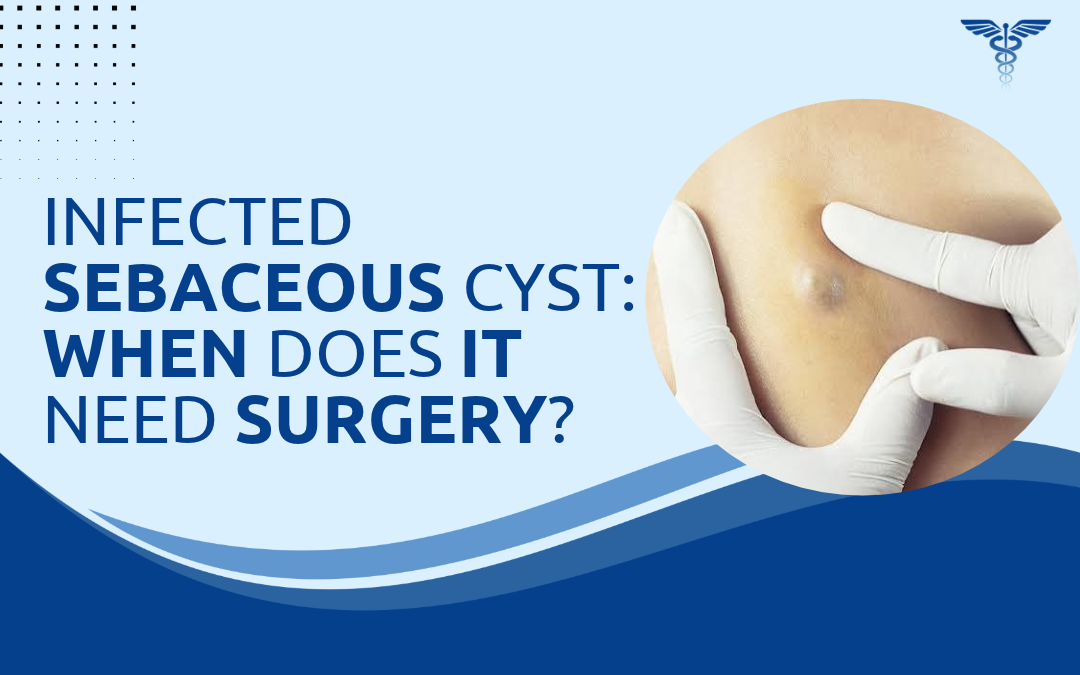
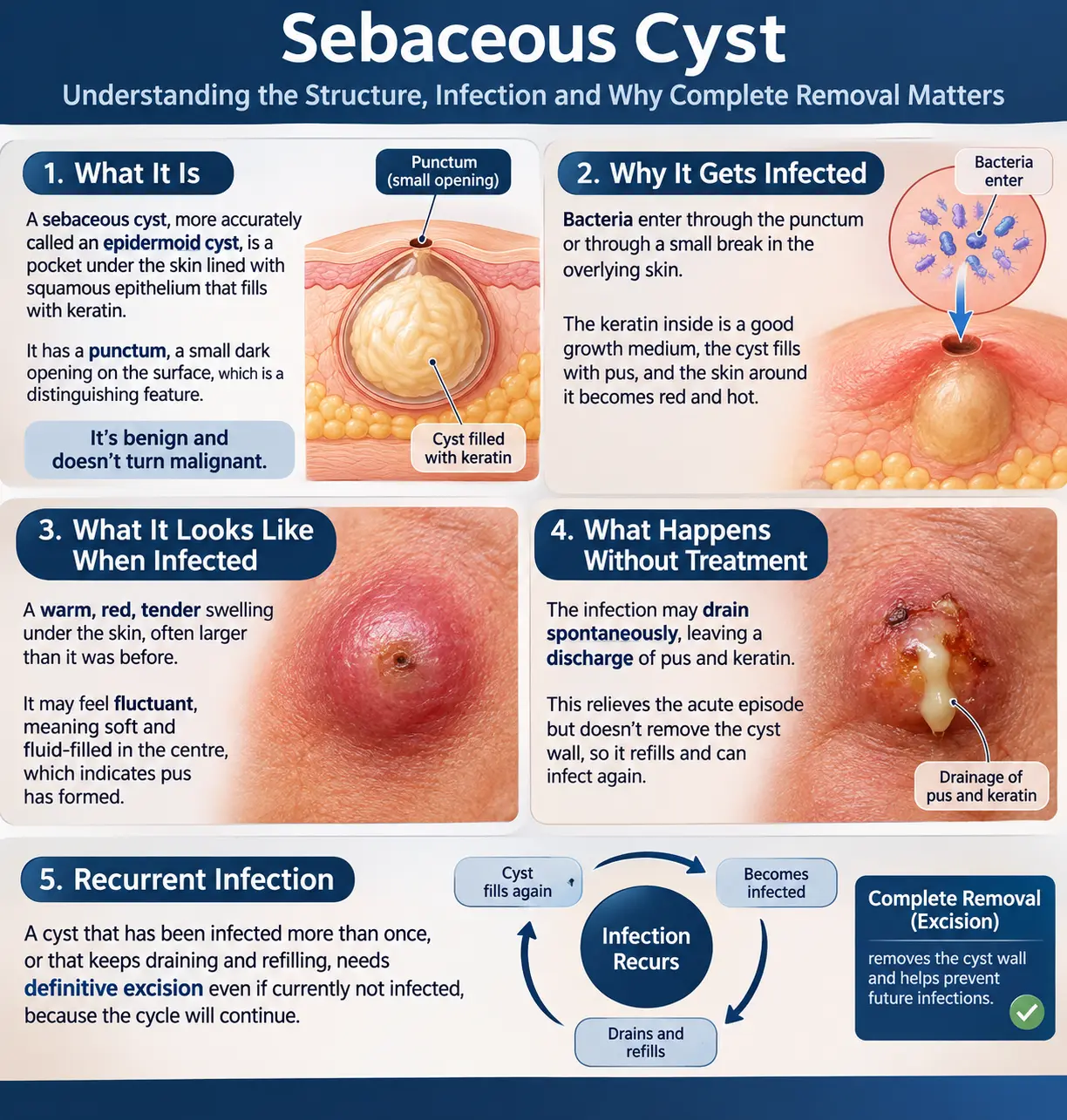
A sebaceous cyst is a benign sac under the skin filled with keratin debris. Most sit quietly for years without trouble. When infected, the cyst fills with pus and the overlying skin becomes red, tender, and swollen. It needs draining once pus has formed but draining and complete removal are two separate procedures. Doing both during an acute infection produces worse results than staging them.
According to Dr. Rajeev Premnath, General and Laparoscopic Surgeon in Banglore, “Patients want the cyst removed when it’s infected, but operating on inflamed tissue is harder, the planes are distorted, and the risk of leaving part of the cyst wall behind is much higher. Leave the wall and it comes back. So I drain the pus first, let the inflammation settle, and excise the whole cyst wall cleanly a few weeks later. That’s what actually solves the problem.”
What Is a Sebaceous Cyst and Why Does It Get Infected?
For a full overview of minor surgical procedures, our skin glue services section covers what wound closure and minor skin procedures involve.
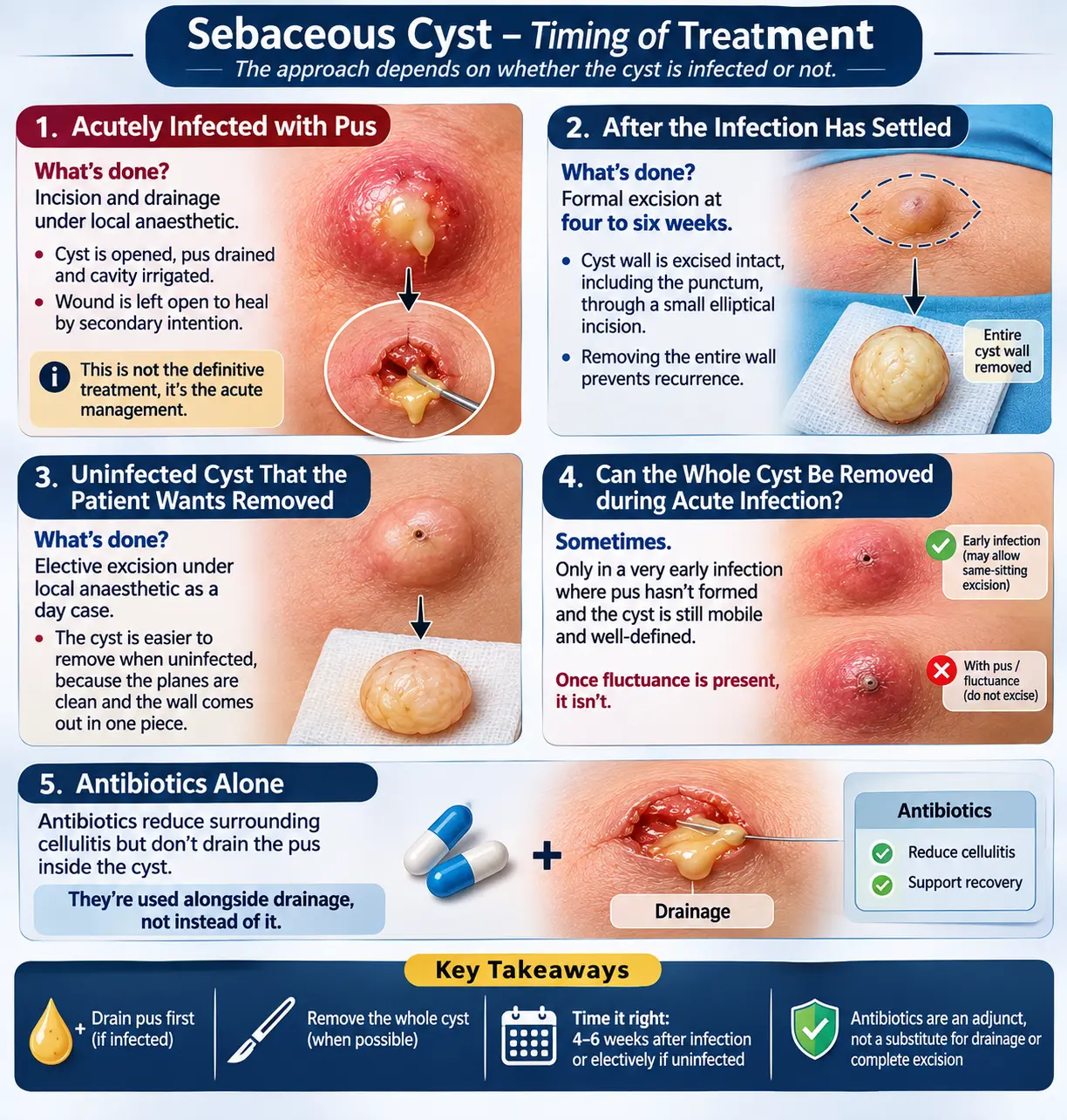
When Does a Sebaceous Cyst Need Surgery and What Does It Involve?
Our blog on skin glue aftercare covers wound care after minor skin procedures including cyst excision.
What Determines the Right Treatment Approach?
The state of the cyst at presentation and the patient’s overall health shape the plan.
- Fluctuance present: Drain first, excise later no exceptions. Incising into an infected, non-fluctuant cyst without pus causes more harm than benefit. Examination determines whether drainage is appropriate.
- Surrounding cellulitis only, no fluctuance: Oral antibiotics first. If infection settles, elective excision is planned. If pus forms despite antibiotics, drainage follows.
- Size and location: Large cysts on the scalp, back, or face need careful excision to avoid visible scarring. Cysts near the eye, ear, or cosmetically sensitive areas may need plastic surgery referral.
- Recurrent cysts: A cyst infected multiple times or incompletely excised previously may have distorted planes from scarring. Complete removal of all epithelial lining requires careful dissection.
- Immunocompromised patients: Diabetics and immunosuppressed patients are more prone to rapid spread IV antibiotics alongside drainage rather than oral antibiotics alone may be needed.
Wound management after drainage follows the same principles as any open wound closure for a related read on how closure decisions are made in different patient groups, is skin glue suitable for children’s wounds covers how the approach is adjusted based on patient and wound type.
Red, swollen lump under the skin that’s getting more painful?
FAQs
Should an infected sebaceous cyst be removed straight away?
Not when it’s actively infected with pus. Drainage first, then excision four to six weeks later gives the best result and the lowest recurrence.
Can antibiotics cure an infected sebaceous cyst?
Antibiotics treat the surrounding skin infection but don’t drain the pus inside. Drainage is needed once pus has formed.
Will a sebaceous cyst come back after removal?
If the entire cyst wall is removed including the punctum, recurrence is uncommon. Leaving part of the wall behind is the main reason cysts return.
How long after drainage can the cyst be properly removed?
Usually four to six weeks, once the inflammation has fully settled and the tissue planes have returned to normal.