

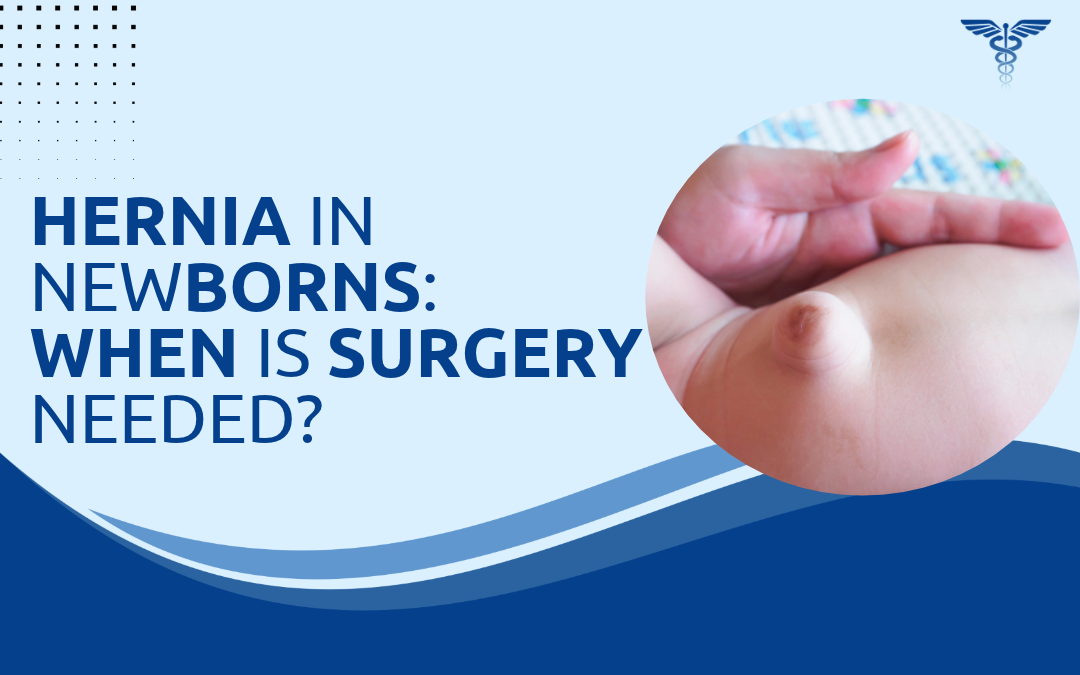
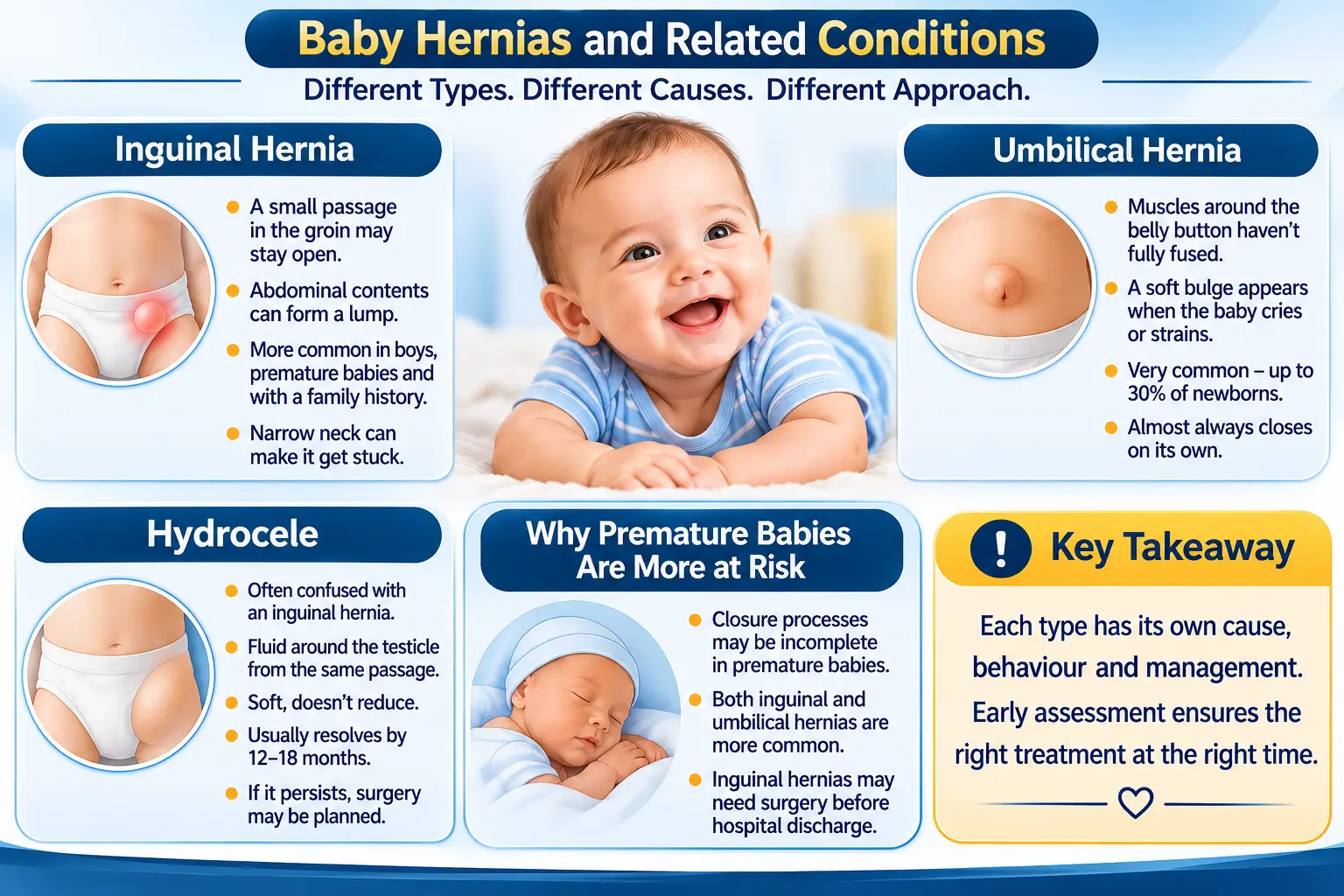
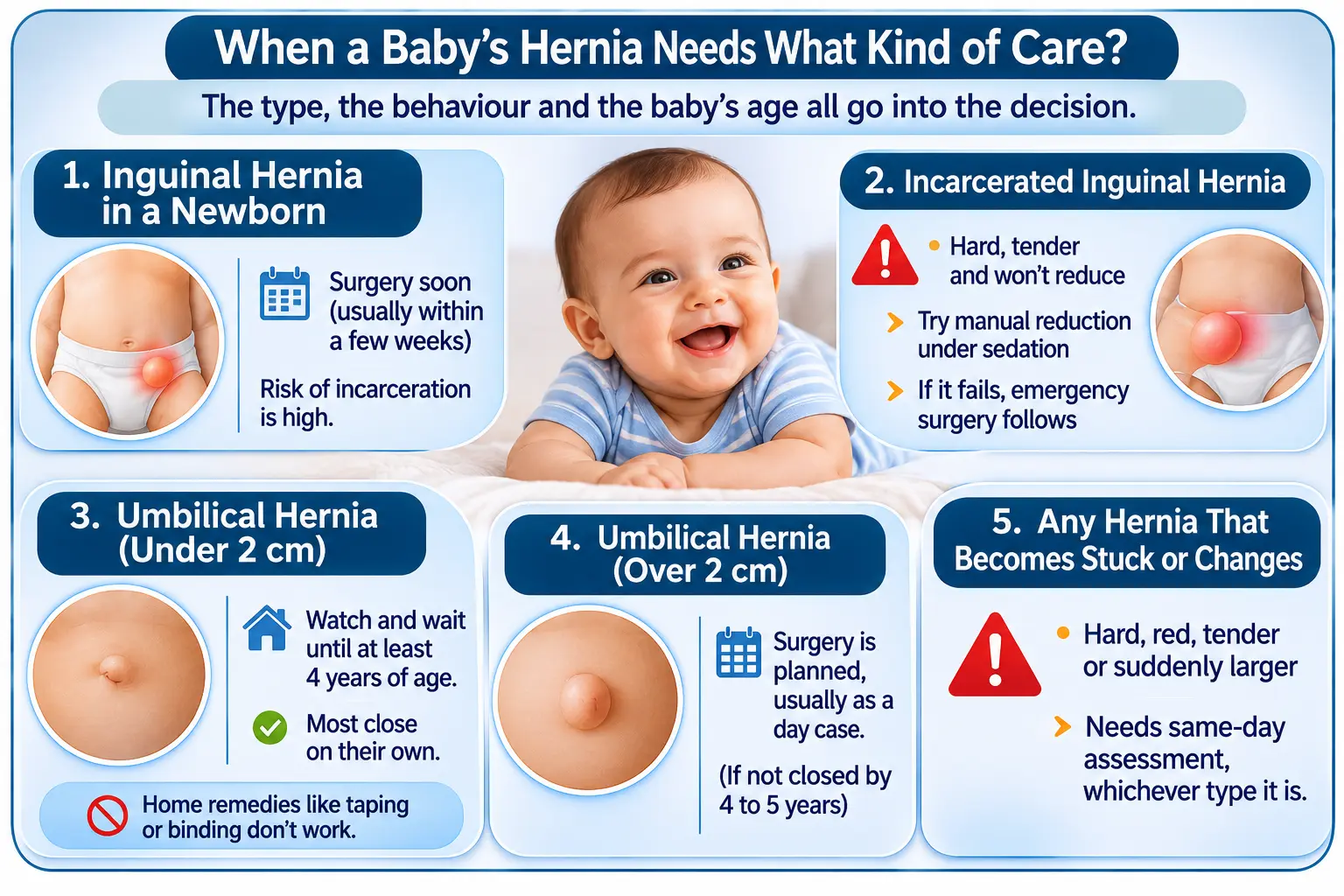
Two types of hernia appear in newborns: inguinal and umbilical. They look different, behave differently, and are managed differently. Inguinal hernias need surgery usually within weeks of diagnosis because incarceration risk is high in young infants. Umbilical hernias are watched, as most close on their own by age four or five.
According to Dr. Rajeev Premnath, a General and Laparoscopic Surgeon, “An inguinal hernia in a small baby needs early repair. If it gets stuck, it can cut off blood supply to the bowel or testicle very quickly. An umbilical hernia almost always closes by itself I’d rather not put a baby through surgery unless it has to happen.”
What Types of Hernia Appear in Newborns and Why?
For a full overview of hernia types, symptoms, and repair options, visit our dedicated hernia surgery section covering everything from diagnosis to recovery.
When Does a Newborn's Hernia Need Surgery?
For more information, read our blog on hernia surgery in elderly patients covers how hernia management changes across different patient groups.
What Determines the Right Treatment Approach?
The baby’s gestational age, the hernia type and the urgency all shape the operative plan.
- Premature babies: Inguinal hernia repair is often done before hospital discharge, because taking a premature baby home with an unrepaired inguinal hernia and bringing them back for surgery carries more risk than operating before discharge.
- Age and weight at surgery: Most paediatric surgeons prefer to operate at a weight of at least three to four kilograms. Very small babies are at higher anaesthetic risk, so the timing balances the risk of waiting against the risk of the operation itself.
- Bilateral inguinal hernias: Both sides are repaired in the same sitting to avoid a second anaesthetic.
- Laparoscopic vs open repair: Both are safe in infants. Laparoscopic repair has the advantage of identifying a hernia on the other side at the time of surgery. The choice depends on the surgeon’s experience and the baby’s size.
- Umbilical hernia repair: A small incision in the crease below the belly button, the defect is closed, and the baby goes home the same day.
Gallbladder polyp found on scan and not sure what to do next?
FAQs
Do hernias in newborns go away on their own?
Umbilical hernias usually do, by four to five years. Inguinal hernias don’t, and need surgery.
Is hernia surgery safe in newborns?
Yes, when done by an experienced paediatric surgeon. The risk of not operating on an inguinal hernia outweighs the anaesthetic risk in most cases.
What happens if a newborn's hernia gets stuck?
It becomes an emergency. The bowel or testicle can lose its blood supply quickly, so same-day surgical assessment is needed.
How long does umbilical hernia repair take?
Usually thirty to forty-five minutes as a day case. The baby goes home the same day in most cases.