

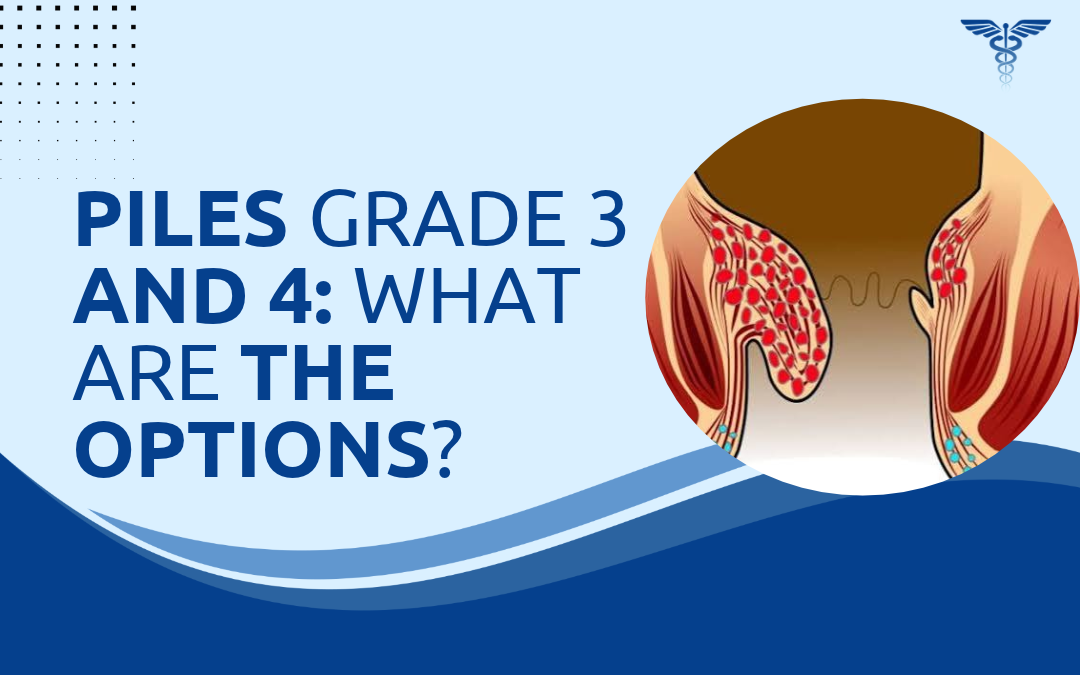
An anal fissure after childbirth is a small tear in the lining of the anal canal, caused by pressure and straining during delivery. Prolonged pushing, a large baby, an assisted birth and hard stools all raise the risk. It shows up as sharp pain during a bowel movement and a streak of bright red blood. And it’s common. Around 40% of women have a haemorrhoid or fissure problem in late pregnancy or soon after birth. Most fissures heal in a few weeks. Some don’t.
According to Dr. Rajeev Premnath, General and Laparoscopic Surgeon in Banglore anal fissure treatment, “New mothers often put up with fissure pain for weeks because they assume it’s normal after delivery, but one that hasn’t healed by eight weeks needs a proper look.”
Why Do Anal Fissures Happen After Childbirth?
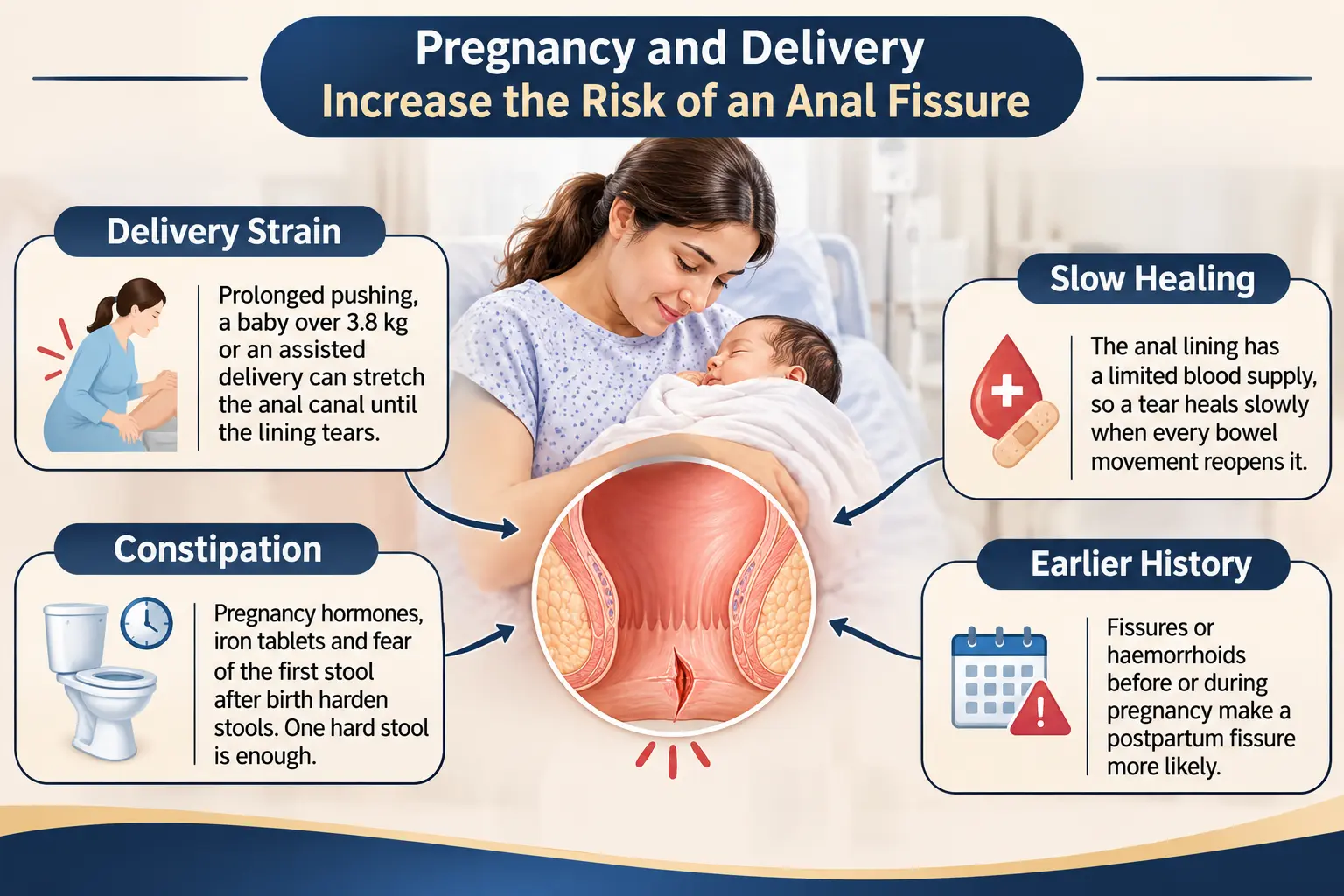
Most postpartum fissures appear within the first two months, though pain can start with the very first stool after delivery. If bleeding or discharge keeps returning, early fissure treatment is worth considering before the fissure progresses to a fistula.
How Is a Fissure After Childbirth Treated?
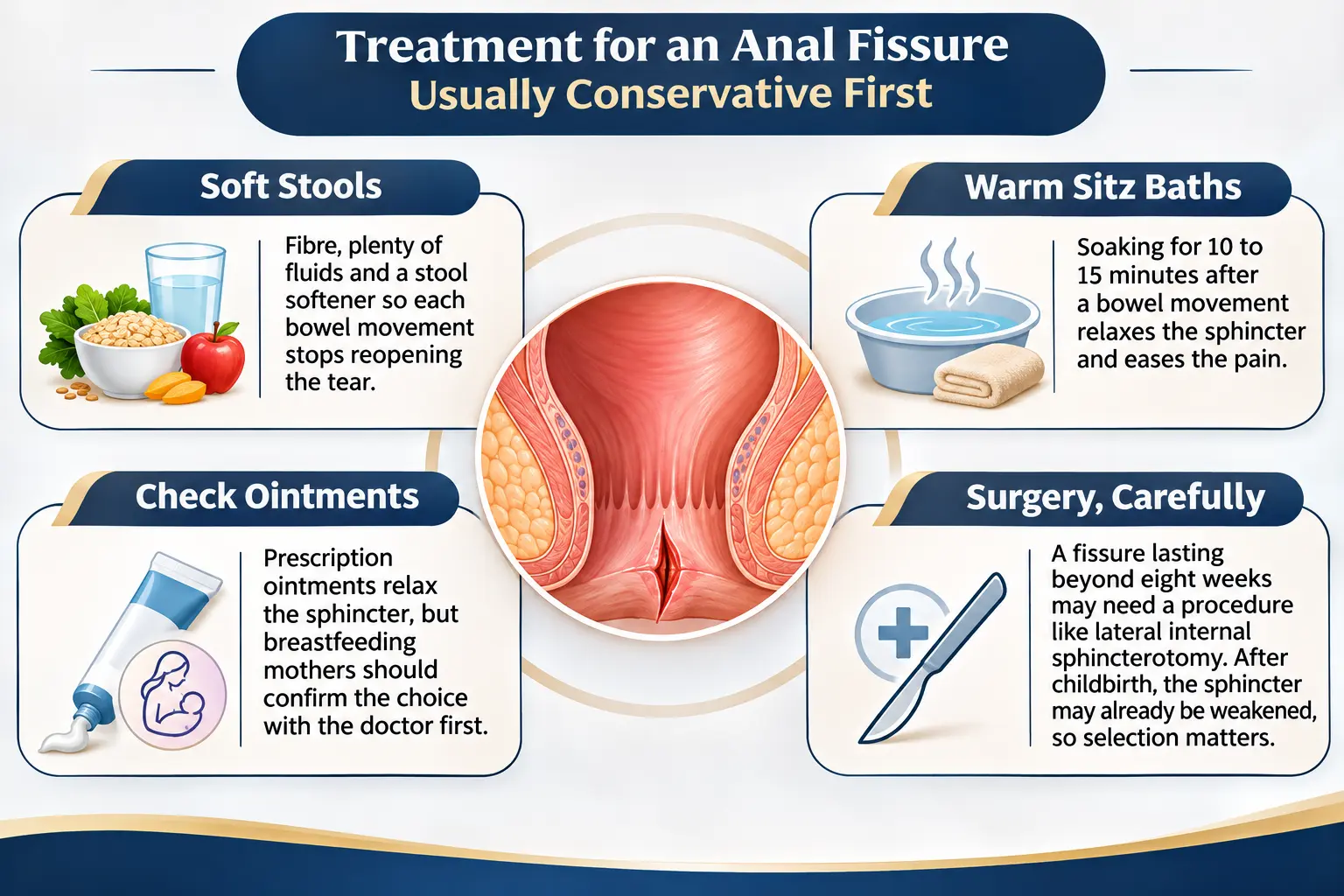
A fissure that won’t heal usually has a reason, and finding it matters more than repeating the same cream. Bleeding can also come from piles, so read how internal and external haemorrhoids differ.
What Determines the Right Treatment Approach?
The right plan depends on how long the fissure has been there, how the body is healing, and what else is going on postpartum.
- Duration: An acute fissure under eight weeks is managed conservatively with stool softening, sitz baths, and prescription ointment. A fissure beyond eight weeks is chronic and usually needs a procedure.
- Sphincter integrity: After childbirth, the sphincter may already be weakened from delivery. Lateral internal sphincterotomy is effective but carries a small continence risk patient selection after childbirth requires more care than in a standard fissure case.
- Breastfeeding status: Some prescription ointments used for sphincter relaxation need to be confirmed safe for breastfeeding before use. The treatment plan accounts for this from the start.
- Ruling out piles: Bleeding and pain after delivery can come from a fissure or haemorrhoids sometimes both. A proper examination settles which is present before any treatment is started, because the management differs.
A fissure that hasn’t healed by eight weeks needs examination, not more cream. For patients also experiencing bleeding that may be coming from haemorrhoids rather than a fissure, our piles treatment section covers how the two conditions are assessed and managed differently.
Still having sharp pain and bleeding with bowel movements weeks after delivery?
FAQs
Is anal fissure common after childbirth?
Yes, about a third of women develop a fissure or thrombosed pile after delivery.
How long does a postpartum fissure take to heal?
Most acute fissures heal within a few weeks with stool softening and sitz baths.
Can a fissure after childbirth become chronic?
Yes, a fissure lasting beyond eight weeks is chronic and often needs further treatment.
Should fissure pain after delivery be ignored?
No, pain lasting beyond a few weeks needs examination.