

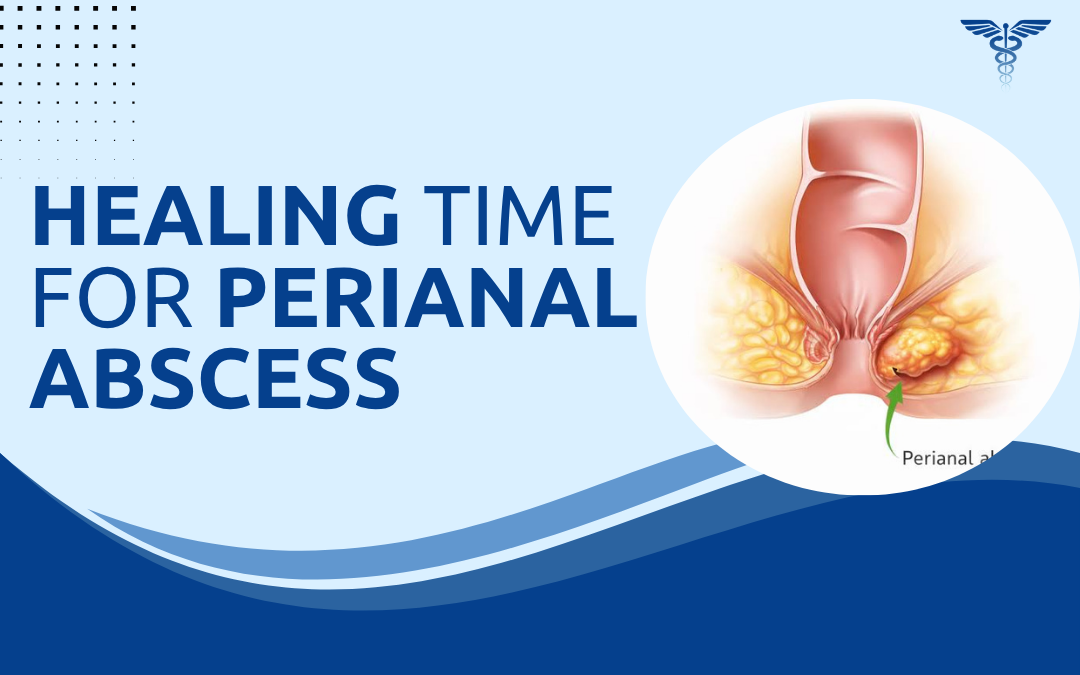
A perianal abscess typically heals within two to four weeks after drainage, closing gradually rather than sealing right away. Antibiotics alone don’t resolve it; drainage comes first, and the timeline depends on size, location, and wound care. The bigger concern isn’t how long healing takes, but whether it’s complete, since roughly a quarter of patients are left with a persistent tract a fistula after dranage.
According to Dr. Rajeev Premnath, a trusted General and Laparoscopic Surgeon in Bangalore, “Patients expect the wound to close like a cut within days. A perianal abscess cavity actually heals from the inside out over weeks, and that’s normal. What isn’t normal is persistent discharge, recurring swelling, or a wound that stops shrinking after the first couple of weeks that’s usually a sign a fistula has formed underneath, and needs a separate assessment.”
What Does the Healing Timeline Actually Look Like?
Healing after perianal abscess drainage follows a fairly consistent staged pattern, even though the total duration varies from patient to patient.
- First 48–72 hours: Pain and swelling reduce significantly almost immediately after drainage, since the pressure from the trapped pus is relieved at the time of surgery this is usually the point of greatest symptomatic relief, even though the wound itself remains open.
- First one to two weeks: The open cavity is cleaned daily or as advised, and granulation tissue begins filling the space from the base upward; most of the visible reduction in wound size happens during this window.
- Two to four weeks: For most straightforward abscesses, the cavity has largely closed by this point, with only superficial skin healing remaining, and patients are typically back to full normal activity well before complete closure.
- Beyond four weeks: Larger, deeper, or horseshoe-shaped abscesses, and those in patients with diabetes or Crohn’s disease, often take longer to fully close and need closer follow-up to rule out a persistent tract.
Research shows routine cavity packing doesn’t speed healing and tends to cause more pain, which is why many surgeons now leave the cavity open unless packing is needed for bleeding control. Understanding fistula treatment also helps explain why some cavities turn out larger or more complex at drainage.
What Slows Down Healing or Points to a Fistula?
Several factors can extend the expected healing timeline, and some of them specifically raise the likelihood that a fistula has developed underneath the healing skin.
- Size and depth of the abscess cavity: Larger abscess spaces have consistently been shown to take longer to heal and carry a higher risk of incomplete resolution compared with small, superficial collections.
- Persistent or recurrent discharge: Continued discharge, recurrent swelling at the same site, or a wound that appears to heal on the surface while still draining internally are the classic signs that a fistula tract has formed and needs formal evaluation.
- Underlying conditions: Diabetes and inflammatory bowel disease, particularly Crohn’s disease, are both associated with slower wound healing and a higher likelihood of recurrence or fistula formation after abscess drainage.
- Surgical technique at drainage: Adequate exploration and drainage at the time of the original procedure, including identifying any internal opening where possible, has been shown to reduce the chance of incomplete healing and subsequent fistula formation.
A wound that has stopped improving by the two-week mark, or one that briefly closes and then reopens, is not something to wait out it warrants a follow-up examination. Our blog on Can Fistula Surgery Cause Incontinence? covers what happens when an abscess evolves into a fistula and what treatment involves at that stage.
Why Choose Dr. Rajeev Premnath?
Dr. Rajeev Premnath is a General and Laparoscopic Surgeon with MBBS, MS (Gen Surg.), FRCS (Glasg.), FEBS, FICS, FACS, FIAGES, FMAS, and a Diploma in Laparoscopy from France. He has been managing perianal abscesses and their complications at Ramakrishna Super Speciality Hospital for over 20 years, with particular attention to identifying internal openings at the time of drainage and following patients closely afterward to catch early signs of fistula formation before they become a bigger problem.
Patients treated here receive clear guidance on what normal healing should look like week by week, along with structured follow-up, so a wound that isn’t progressing as expected gets picked up early rather than being dismissed as slow healing.
Persistent swelling, pain, or discharge near the anus?
FAQs
How long does a perianal abscess take to heal after drainage?
Most straightforward perianal abscesses heal within two to four weeks after surgical drainage. Larger, deeper, or complex abscesses can take longer, sometimes four to six weeks or more.
Can a perianal abscess heal without surgery?
No. A perianal abscess needs to be surgically drained to heal. Antibiotics alone do not resolve the underlying collection of pus and are generally used only alongside drainage in specific situations.
Does packing the wound help it heal faster?
No. Evidence shows that routine packing of the abscess cavity does not improve healing time and is associated with more pain during dressing changes compared with leaving the cavity open.
What increases the chance a perianal abscess will turn into a fistula?
Larger abscess size, underlying conditions such as diabetes or Crohn’s disease, and inadequate drainage or identification of the internal opening at the time of surgery all increase the likelihood of fistula formation.