

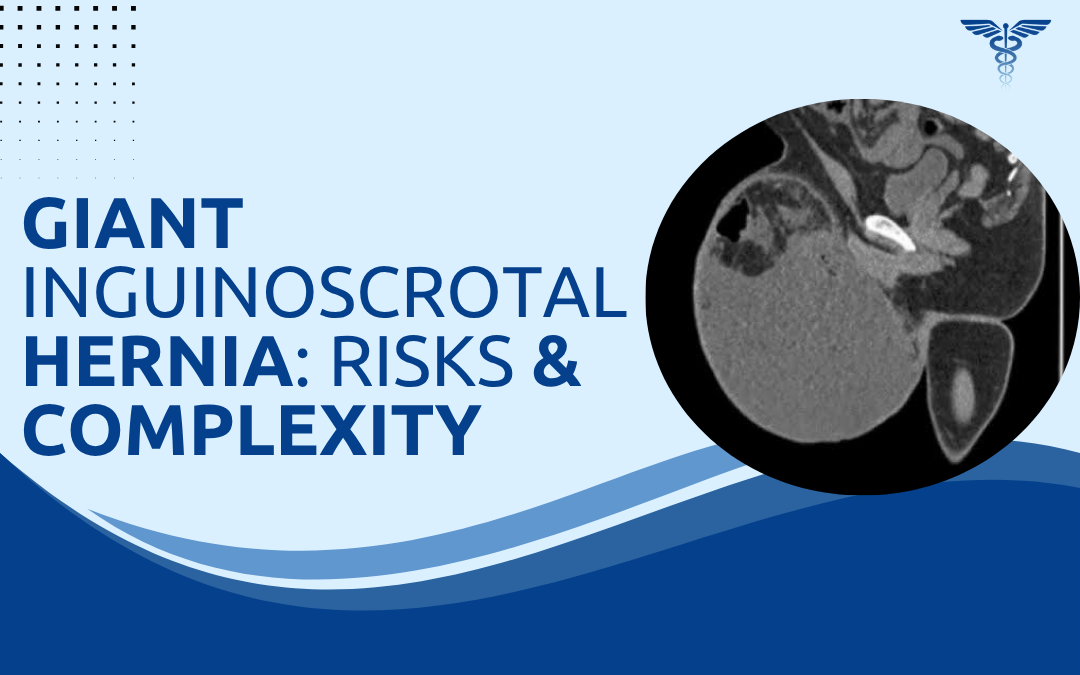
A giant inguinoscrotal hernia develops when an inguinal hernia enlarges over years until bowel, omentum, or bladder descends into the scrotum in large volumes. By the time patients present, operative complexity is completely different from standard hernia repair. Contents outside the abdominal cavity long enough create a physiological problem when returned not just a technical one.
According to Dr. Rajeev Premnath, a trusted General and Laparoscopic Surgeon in Bangalore, “This is not a bigger version of the same operation. Bowel that’s been in the scrotum for years has lost its place in the abdomen. Pushing everything back creates pressure the diaphragm can’t accommodate. Pneumoperitoneum conditioning, staged repair, nutritional optimisation these aren’t optional. They’re what separates a safe recovery from an ICU admission.”
Large scrotal swelling present for years and considering surgery?
Repair in an unprepared patient carries avoidable mortality risk. For the full range of options, visit our hernia surgery page.
What Does Surgery Involve and What Is Recovery Like?
- Operative approach: Open repair is standard laparoscopic repair is not appropriate given the volume of contents and need for full visualisation.
- Mesh placement: A large mesh is required. Component separation may be needed to close the abdominal wall without tension.
- Post-operative monitoring: Intra-abdominal pressure monitoring and respiratory support are standard. Some patients require elective overnight ventilation.
- Recovery: Hospital stay of five to seven days. Full activity at six to twelve weeks. Scrotal swelling persists for months and resolves without intervention in most cases.
Our blog on high risk hernia surgery covers the pre-operative assessment pathway for complex hernia presentations.
How Do Surgeons Assess Fitness for Giant Inguinoscrotal Hernia Repair?
Fitness assessment for giant hernia repair is more detailed than for standard surgery; the patient population and operative demands are both different.
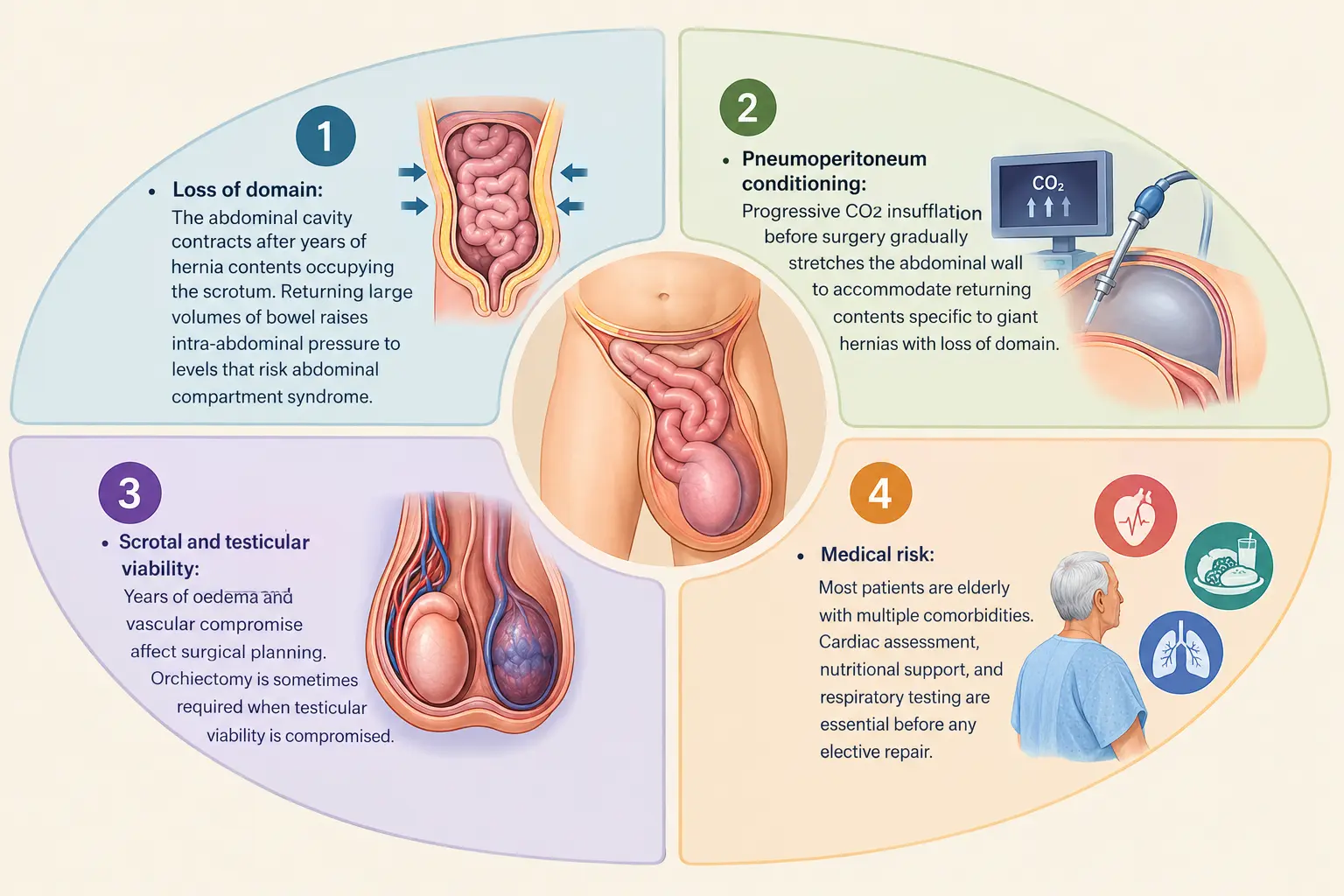
- Nutritional status: Serum albumin below 30g/L significantly raises wound complication and mortality rates. Nutritional support before elective repair is standard, not optional.
- Cardiac and respiratory assessment: ECG, echocardiogram, and pulmonary function tests completed before any operative date is confirmed. Abdominal compartment syndrome after repair places immediate demands on both baseline function needs documenting and optimising first.
- Pneumoperitoneum conditioning: Where loss of domain is significant, progressive pneumoperitoneum starts days to weeks before the planned repair. The date is set when conditioning targets are met, not on a fixed calendar.
- Consent and expectation setting: Patients are counselled on conversion risk, orchiectomy possibility, prolonged scrotal swelling, seroma, and recovery timeline. Higher complication and mortality rates than standard repair patients need to understand this before consenting.
Assessment determines the operative date. For patients with significant comorbidities, a dedicated assessment is done before any plan is confirmed. Visit our high-risk inguinal hernia surgery page for more.
Large scrotal swelling present for years and considering surgery?
FAQs
What is a giant inguinoscrotal hernia?
An inguinal hernia that has enlarged over years until abdominal contents descend into the scrotum in large volumes, often causing significant scrotal enlargement.
Why can't a giant inguinoscrotal hernia be repaired like a normal hernia?
The abdominal cavity contracts when contents migrate out for years; returning them creates abdominal compartment syndrome if the repair isn’t carefully planned.
What is pneumoperitoneum conditioning for hernia?
A pre-operative technique where carbon dioxide is progressively injected into the abdomen over days to weeks to stretch the abdominal wall before giant hernia repair.
How long does recovery take after giant inguinoscrotal hernia repair?
A hospital stay of five to seven days is common, with full recovery taking six to twelve weeks and scrotal swelling persisting for several months.