

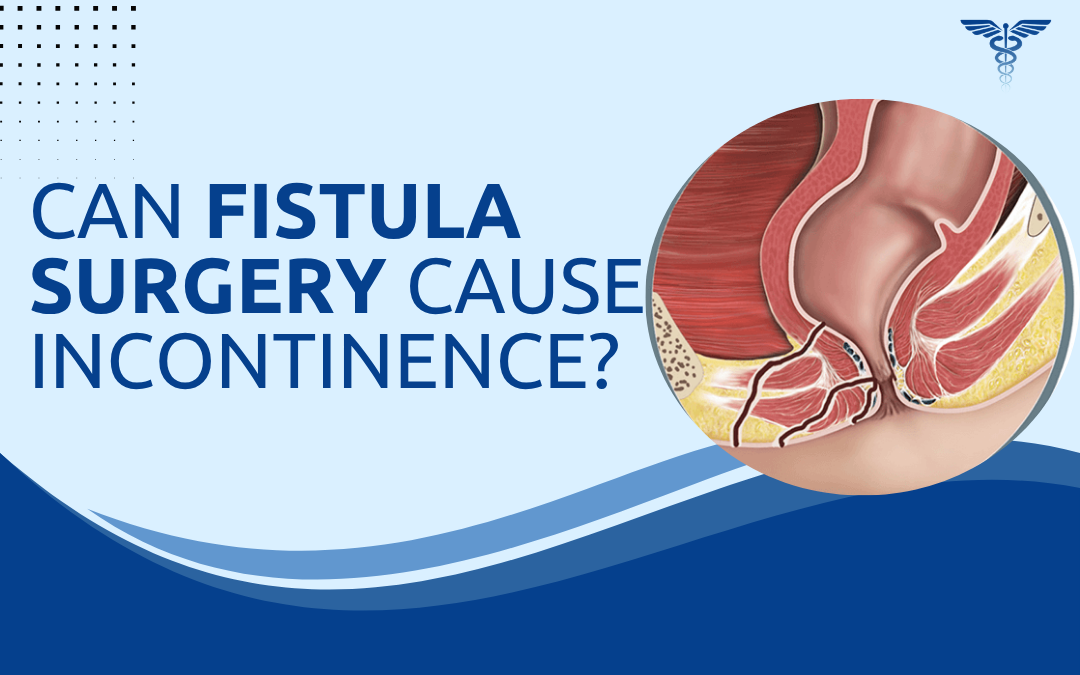
Fistula surgery can cause incontinence, an important risk to understand before choosing a procedure. Reported rates range from about ten to over forty percent, depending on the fistula type, sphincter involvement, and technique used. A simple, low fistula treated with fistulotomy carries modest risk, usually minor soiling. A complex, high fistula through much of the sphincter carries far higher risk, since cutting that muscle can permanently affect continence.
According to Dr. Rajeev Premnath, a leading General and Laparoscopic Surgeon in Bangalore, “Patients are often told fistula surgery ‘might’ affect continence, without being told why. It comes down to how much sphincter muscle the tract crosses and how much has to be divided to cure it. For a low, simple fistula, that risk is small. For a high, complex fistula, it’s a real trade-off between curing it completely and preserving sphincter function one that needs to be discussed before surgery, not after.”
How Does Fistula Surgery Cause Incontinence?
Incontinence after fistula surgery is almost always tied to sphincter muscle disruption, not a random complication.
- Sphincter division in fistulotomy: Curing a fistula means cutting through any sphincter muscle the tract crosses the more muscle involved, the greater the impact on continence.
- Fistula height and complexity: High transsphincteric and suprasphincteric fistulas, which cross more of the sphincter complex, carry substantially higher incontinence risk than low or simple intersphincteric fistulas.
- Pre-existing continence status: Patients with unrecognised impaired continence before surgery face a much higher risk of noticeable deterioration afterward, making pre-operative evaluation essential.
- Repeat surgery: Each additional operation on the same tract, especially after a failed first attempt, further weakens the sphincter and compounds the risk.
Most postoperative continence problems involve minor soiling or trouble controlling gas rather than loss of solid stool control, though major incontinence can occur with high or recurrent fistulas. Before any procedure is planned, patients should first understand fistula treatment and how the tract’s path is mapped relative to the sphincter.
How Can the Risk of Incontinence Be Reduced?
The surgical technique chosen is the biggest factor a surgeon can control to reduce incontinence risk while still curing the fistula.
- Sphincter-sparing techniques: Procedures like advancement flap, LIFT, and fistula plugging avoid cutting the sphincter altogether, trading a somewhat lower cure rate for lower continence risk.
- Seton placement: A seton can slowly cut through muscle over weeks instead of all at once, or simply drain a complex fistula while a sphincter-preserving procedure is planned both reducing the abruptness of muscle division.
- Combined approaches: Fistulotomy paired with primary sphincteroplasty, where the divided muscle is immediately repaired, shows notably lower rates of major incontinence than fistulotomy alone in complex cases.
- Accurate pre-operative mapping: Precise imaging of the tract relative to the sphincter lets the surgeon choose the least disruptive technique that still achieves a durable cure.
The right technique depends on fistula anatomy, prior surgery, and baseline continence it’s rarely the same for every patient. Our blog on Anal Fissure vs Anal Fistula explains how these two commonly confused conditions differ and why accurate diagnosis matters before deciding on treatment.
Why Choose Dr. Rajeev Premnath?
Dr. Rajeev Premnath is a General and Laparoscopic Surgeon with MBBS, MS (Gen Surg.), FRCS (Glasg.), FEBS, FICS, FACS, FIAGES, FMAS, and a Diploma in Laparoscopy from France. He has been managing simple and complex anal fistulas at Ramakrishna Super Speciality Hospital for over 20 years, with experience across fistulotomy, sphincter-sparing techniques, and combined procedures selected on the basis of individual fistula anatomy rather than a one-size-fits-all approach.
Patients considering fistula surgery here undergo careful pre-operative assessment of both the fistula tract and their existing continence status, so the technique chosen is the one that offers the best realistic balance between cure and preserved sphincter function for their specific case.
Dealing with a fistula and worried about surgery affecting continence?
FAQs
Can fistula surgery cause incontinence?
Yes. Reported rates vary from roughly ten to over forty percent depending on fistula complexity and technique used, with most cases being minor soiling rather than major loss of bowel control.
Are there fistula surgery options that avoid this risk?
Sphincter-sparing techniques such as advancement flaps, LIFT, and fistula plugging avoid dividing the sphincter muscle, significantly lowering incontinence risk, though sometimes with a lower cure rate than fistulotomy.
Who is most at risk of incontinence after fistula surgery?
Patients with high or complex fistulas, those with pre-existing continence issues, women with anterior fistulas, and patients undergoing repeat surgery on a recurrent fistula face the greatest risk.
Is incontinence after fistula surgery permanent?
It can be, particularly after fistulotomy for complex high fistulas. Minor soiling often improves over time, but significant sphincter division can cause lasting impairment, which is why technique selection matters so much.