

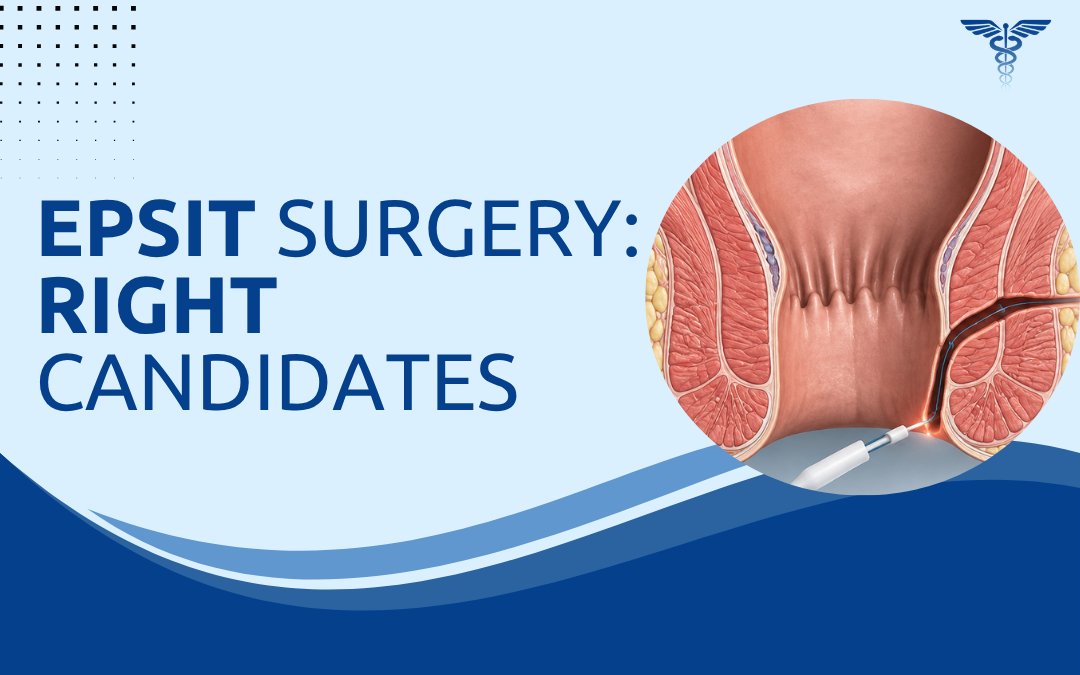
EPSiT Endoscopic Pilonidal Sinus Treatment is a minimally invasive procedure that treats pilonidal sinus by destroying the sinus tract from inside using an endoscope, without cutting out a large block of tissue. It doesn’t leave an open wound. Recovery is significantly shorter than open excision. It’s the preferred approach for most patients with an uncomplicated pilonidal sinus who haven’t had multiple failed prior surgeries.
According to Dr. Rajeev Premnath, a trusted General and Laparoscopic Surgeon, “EPSiT changed what pilonidal sinus treatment looks like for most patients. The old approach meant a wide excision, weeks of open wound care, and time away from work that patients really couldn’t afford. With EPSiT, most patients go home the same day and are back to their routine within a week. The right candidate makes all the difference though — it’s not for every sinus presentation.”
What Does EPSiT Surgery Involve and How Does It Work?
EPSiT treats the pilonidal sinus endoscopically the tract is visualised from inside and destroyed without a large external incision.
- Approach: A small endoscope is passed into the sinus opening, giving direct 360-degree visualisation of the tract, its branches, and any hair or debris inside nothing is done blindly.
- Destruction: The tract lining is cauterised under direct vision using electrocautery, destroying the epithelium that keeps the sinus active and preventing it from draining and refilling.
- Closure: The external opening is trimmed and the internal tract sealed no wide excision, no suturing of a large wound, no cavity left open to heal by secondary intention.
- Recovery: Most patients are discharged the same day and return to desk work within five to seven days, compared to four to six weeks of wound care after open excision.
EPSiT recurrence rates in suitable candidates sit between 5% and 15% in published series comparable to open excision, with significantly better wound outcomes. For the full range of procedures available, visit our fistula treatment page.
Who Is the Right Candidate for EPSiT Surgery?
Patient selection determines outcome. EPSiT works well for a defined group and isn’t appropriate outside it.
- Primary pilonidal sinus: Patients presenting with their first episode of symptomatic sinus, without extensive branching or abscess, are the strongest candidates the tract is usually well-defined and the endoscope can map it cleanly.
- Recurrent sinus after drainage: Patients who’ve had an abscess drained but still have a persistent discharging sinus are good candidates for EPSiT, provided the tract hasn’t been significantly disrupted by prior surgery.
- Active abscess present: EPSiT isn’t performed in the acute abscess phase drainage and a waiting period of six to eight weeks is required before the endoscopic procedure can be planned safely.
- Complex or previously failed surgery: Extensive branching tracts, multiple previous excisions, or wide scarring from prior open surgery reduce the suitability for EPSiT open revision or Karydakis flap reconstruction is more appropriate in these cases.
EPSiT addresses the root cause the epithelialised tract without the tissue sacrifice that traditional surgery requires. For background on the condition itself, our blog on pilonidal sinus covers what causes it and who’s most likely to develop it.
Why Choose Dr. Rajeev Premnath?
Dr. Rajeev Premnath is a General and Laparoscopic Surgeon with MBBS, MS (Gen Surg.), FRCS (Glasg.), FEBS, FICS, FACS, FIAGES, FMAS, and a Diploma in Laparoscopy from France, with over 20 years of experience in laparoscopic and proctological surgery at Ramakrishna Super Speciality Hospital, Jayanagar, Bangalore.
Every pilonidal sinus case is assessed individually before any operative plan is confirmed sinus complexity, prior treatment history, and patient recovery requirements all factor into whether EPSiT, open excision, or a flap repair is the right call.
Diagnosed with pilonidal sinus or getting recurrent flare-ups near the tailbone?
FAQs
What is EPSiT surgery?
EPSiT is an endoscopic procedure that destroys the pilonidal sinus tract from inside without open excision or large wounds.
Is EPSiT suitable for all pilonidal sinus cases?
No. It works best for primary or recurrent sinus without extensive branching or active abscess.
How long does recovery take after EPSiT?
Most patients return to desk work within five to seven days, compared to weeks with open surgery.
Can pilonidal sinus come back after EPSiT?
Yes. Recurrence rates sit between 5% and 15% in published series, similar to open excision in suitable candidates.