
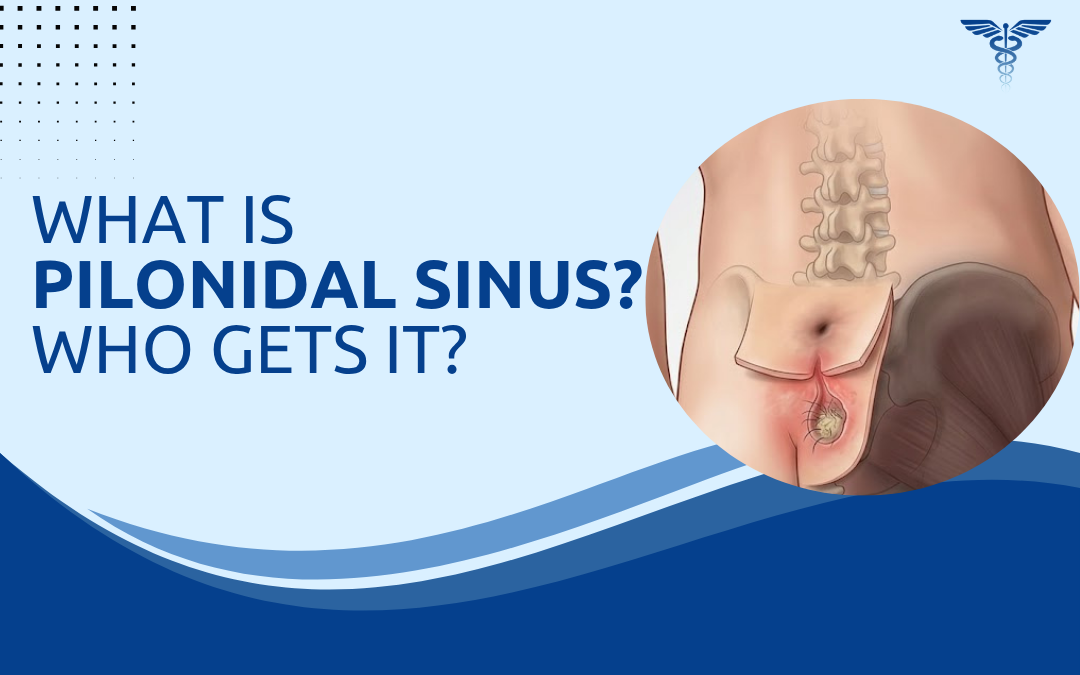
Pilonidal sinus is a small channel or cyst in the natal cleft containing hair, debris, and infected material. The body treats trapped hair as a foreign object, mounts an inflammatory response, and a chronic tract forms. That tract gets infected, drains, settles, then infects again. Simple cases become complex multi-tract sinuses when left alone long enough, and those are significantly harder to treat than the original presentation would have been.
According to Dr. Rajeev Premnath, a leading proctologist in Bangalore, Pilonidal sinus is common in young people who sit for long hours and dismiss the early symptoms as a minor skin problem. By the time they present, many have already had multiple abscess episodes that have made the tract more complex than it needed to be.
What Exactly Is a Pilonidal Sinus and How Does It Form?
It’s not a random occurrence. The natal cleft anatomy creates specific conditions that drive this process consistently.
- The natal cleft: Sitting and movement create a suction effect in the crease between the buttocks. Loose hair gets pulled into skin pits near the tailbone where gland openings are widest. Not everyone’s anatomy does this equally, but in susceptible patients it happens with every hour spent sitting.
- Hair as foreign body: The immune system walls off penetrated hair, forms a cyst, and that cyst fills with more debris over time. The discharge patients notice is that process breaking down and draining outward.
- Abscess formation: Acute infection turns the tract into a painful abscess. Draining it relieves pressure immediately. But the tract is still there. The next episode usually comes within months.
- Complex tracts: Every drainage episode leaves a more distorted field behind. Secondary branches form. A simple single-tract sinus that was easy to treat becomes a branching multi-tract problem needing endoscopic clearance.
The longer the condition runs, the more tracheobronchial branches develop. Early assessment and proper pilonidal sinus treatment prevent a straightforward case from becoming a complex one.
Who Is Most Likely to Develop a Pilonidal Sinus?
The risk profile is consistent. Knowing it helps identify who needs assessment before the first abscess rather than after the third.
- Young men: Males aged 15 to 35 are the dominant group. Androgenic hormones drive coarser hair growth in the natal cleft and the gland openings are wider in this demographic. Women develop it too, but at a fraction of the rate.
- Sedentary lifestyle: Eight hours at a desk, behind a wheel, or in a lecture hall creates sustained friction in the natal cleft throughout the day. IT professionals, students, and drivers show up in this patient population disproportionately. That’s not a coincidence.
- Coarse body hair: Thick, coarse hair penetrates skin pits more readily and sheds more in the natal cleft region. Of all physical risk factors, hair texture is the most consistent predictor across presentations regardless of age or weight.
- Obesity and deep cleft: Excess weight deepens the natal cleft, amplifies friction, and reduces air circulation. Each factor independently raises risk, and in combination they explain why obese patients tend to present with more severe initial disease.
Pilonidal sinus shares some overlap in presentation with perianal conditions. Our previous blog on anal fistula covers why accurate diagnosis before any treatment decision matters.
Why Choose Dr. Rajeev Premnath?
Dr. Rajeev Premnath is a General and Laparoscopic Surgeon with MBBS, MS (Gen Surg.), FRCS (Glasg.), FEBS, FICS, FACS, FIAGES, FMAS, and a Diploma in Laparoscopy from France. He trained under Dr. Piercarlo Meinero in Italy specifically for EPSiT and has been performing endoscopic pilonidal sinus treatment at Ramakrishna Super Speciality Hospital for over 20 years across both straightforward and complex multi-tract presentations.
Pilonidal sinus cases here don’t get sent for simple drainage and discharged. The underlying tract gets addressed with a definitive minimally invasive approach from the first surgical encounter.
Recurring pain, swelling, or discharge near the tailbone that keeps coming back?
FAQs
What is a pilonidal sinus?
A small channel or cyst at the natal cleft containing hair and debris that causes recurrent infection and discharge.
Who is most at risk of developing a pilonidal sinus?
Young men aged 15 to 35 who sit for long hours, have coarse body hair, or carry excess weight.
Can a pilonidal sinus heal on its own?
Minor cases may settle temporarily but the tract remains. Recurrent infections are almost inevitable without surgical treatment.
Is pilonidal sinus the same as an abscess?
No. An abscess forms when the sinus gets acutely infected. The sinus tract is the underlying problem that persists after drainage.
Disclaimer:
This blog is for educational and informational purposes only and should not be considered professional advice.