

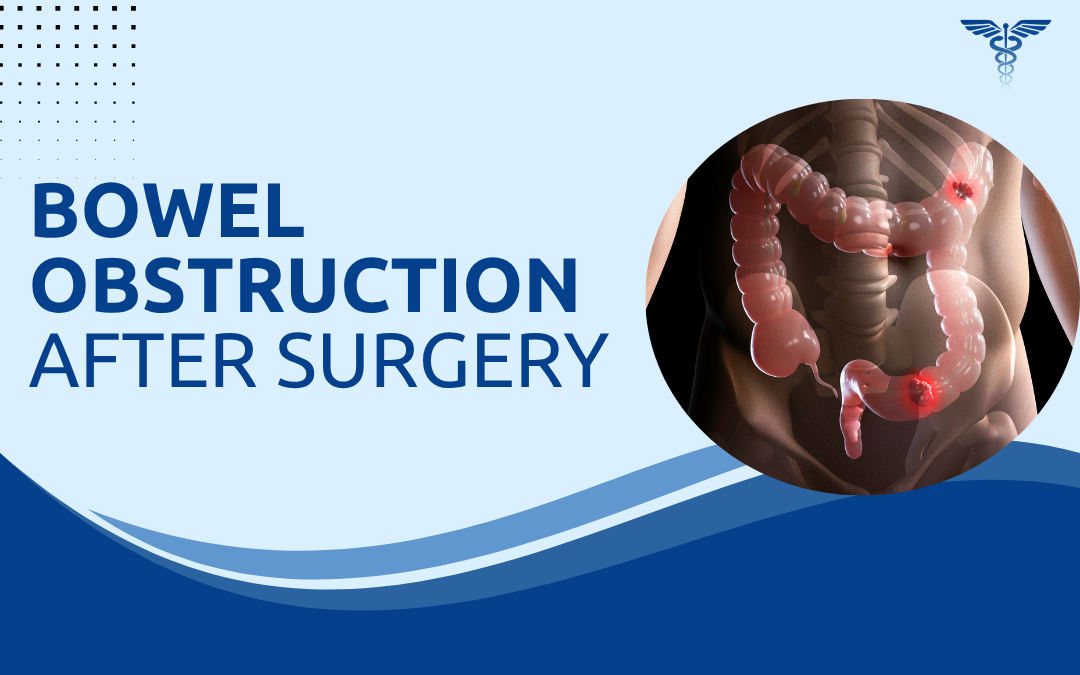
Post-surgery adhesions are the leading cause of small bowel obstruction, accounting for over 60% of cases. Fibrous scar tissue forms between organs and the abdominal wall after almost every open abdominal operation, but most adhesions remain silent. When one tightens around a loop of bowel and blocks intestinal flow, the result is an adhesive small bowel obstruction, which can occur weeks, years, or decades after the original procedure.
According to Dr. Rajeev Premnath, a trusted General Surgeon in Bangalore, “Adhesive obstruction is one of those complications that patients never expect because the original surgery went well and they recovered without problems. Then months or years later they present with severe cramping, vomiting, and a distended abdomen. The adhesion has been there the whole time it just finally caught a loop of bowel in the wrong position.”
How Do Post-Surgery Adhesions Lead to Bowel Obstruction?
Adhesions form as part of the normal peritoneal healing response to surgical trauma, but the fibrous tissue produced does not discriminate between scar and adjacent bowel.
- Band formation: Individual fibrous bands that bridge between two peritoneal surfaces can loop around a segment of small bowel, acting as a fixed external constriction that narrows the lumen progressively as intestinal peristalsis pulls the bowel against the band.
- Kinking mechanism: Adhesions anchoring a bowel loop to the abdominal wall or to adjacent viscera restrict the normal mobility of the intestine, causing it to kink at a fixed point and block transit without any external compression from a discrete band.
- Cumulative risk: Each additional abdominal operation increases adhesion burden, and patients who have undergone multiple procedures carry substantially greater risk of obstruction than those who have had a single surgery, with colorectal operations carrying the highest individual procedural risk.
- Delayed presentation: Obstruction from adhesions can appear at any point from days to decades after the original surgery, with studies documenting cases presenting more than ten years later, meaning a remote surgical history remains clinically relevant whenever a patient presents with features of bowel obstruction.
Adhesions involving the small intestine are more likely to become obstructive than those affecting the omentum or large bowel, and this anatomical predisposition explains why the small bowel accounts for the overwhelming majority of adhesive obstruction cases. Patients with a prior history of appendix treatment or other lower abdominal procedures should be aware that adhesive obstruction remains a long-term possibility even after uncomplicated recovery.
When Does Adhesive Bowel Obstruction Need Surgery?
the bowel is simply obstructed or whether its blood supply is at risk.
- Conservative first: Stable patients without signs of bowel ischaemia are initially managed with bowel rest, nasogastric decompression, and intravenous fluid resuscitation, and the majority of partial obstructions resolve within forty-eight hours without requiring an operation.
- Strangulation signals: Fever, tachycardia, localised abdominal tenderness, rising white cell count, or metabolic acidosis indicate that the obstructed segment may have lost its blood supply, and surgical intervention becomes urgent rather than elective in this setting.
- Failed conservative trial: When conservative management does not produce resolution within forty-eight hours, or when a water-soluble contrast study shows no passage through to the colon, operative adhesiolysis is indicated to prevent progressive ischaemia and bowel necrosis.
- Recurrent obstruction: Patients who have been managed conservatively for repeated adhesive obstructions face increasing risk with each episode, and surgical lysis of the responsible adhesions, ideally by mini laparoscopy, offers more durable relief than repeated non-operative admissions.
Surgical intervention when indicated carries a small but real risk of creating new adhesions, and the decision to operate must always weigh the immediate risk of bowel ischaemia against the long-term risk of recurrent obstruction. Our blog on Gallbladder Surgery vs Stone Dissolution discusses how minimally invasive approaches reduce peritoneal trauma and therefore lower adhesion formation compared with open procedures.
Why Choose Dr. Rajeev Premnath?
Dr. Rajeev Premnath is a General and Laparoscopic Surgeon with MBBS, MS (Gen Surg.), FRCS (Glasg.), FEBS, FICS, FACS, FIAGES, FMAS, and a Diploma in Laparoscopy from France. He has been managing adhesive bowel obstruction and its complications at Ramakrishna Super Speciality Hospital for over 20 years, including cases requiring emergency adhesiolysis and complex re-do abdominal surgery in patients with extensive prior operative histories.
Patients presenting with suspected adhesive obstruction here receive prompt CT assessment, a structured trial of conservative management where appropriate, and timely surgical intervention when clinical signs indicate strangulation or failed non-operative treatment.
Abdominal cramping, bloating, or vomiting after previous abdominal surgery?
FAQs
Can post-surgery adhesions cause bowel obstruction?
Yes. Post-surgical adhesions are the leading cause of small bowel obstruction, accounting for more than sixty percent of cases. They can cause obstruction weeks, years, or even decades after the original operation.
What are the symptoms of adhesive bowel obstruction?
Cramping abdominal pain, nausea, vomiting, abdominal distension, and inability to pass gas or stool. Severe continuous pain, fever, or rapid heart rate suggests strangulation and requires emergency assessment.
How is adhesive bowel obstruction treated?
Stable patients are managed conservatively with bowel rest, nasogastric decompression, and intravenous fluids. Surgery is required when conservative management fails, when strangulation is suspected, or when the obstruction recurs repeatedly.
Which surgeries carry the highest risk of adhesive obstruction?
Colorectal surgery, ileal pouch procedures, and open lower abdominal operations carry the highest risk. Gynaecological procedures also carry significant risk, particularly open procedures involving the adnexa.