

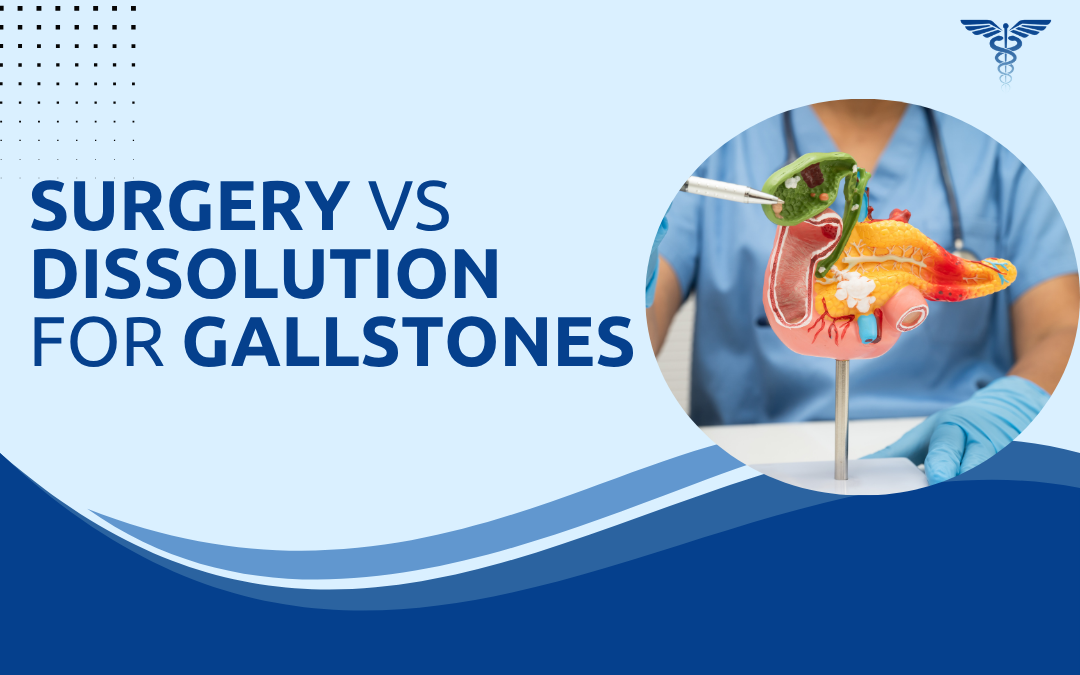
Surgery is better for most patients with symptomatic gallstones. Laparoscopic cholecystectomy removes the gallbladder permanently, eliminates recurrence, and is a day-care procedure with a two-week recovery. Stone dissolution using ursodeoxycholic acid only works for small pure cholesterol stones, takes six to twenty-four months, and carries a recurrence rate of up to fifty percent within five years of stopping. The dissolution option exists for patients who can’t have surgery or decline it. For everyone else, surgery is the definitive answer.
According to Dr. Rajeev Premnath, a trusted Laparoscopic Surgeon in Bangalore, “Dissolution therapy is not an alternative to surgery for most patients. It’s a temporary measure for a narrow group who genuinely can’t undergo cholecystectomy. Patients who choose it over surgery to avoid an operation usually end up needing surgery anyway, just later and in more complicated circumstances.”
How Do Surgery and Dissolution Compare?
Different mechanisms, different outcomes, different patient profiles. The comparison isn’t close for most presentations.
- Mechanism: Cholecystectomy removes the gallbladder permanently. No recurrence possible. Dissolution shrinks cholesterol stones temporarily. The gallbladder stays and reforms stones once treatment stops.
- Success rate: Cholecystectomy resolves symptoms in over ninety-five percent of cases. Dissolution achieves complete clearance in thirty to forty percent of suitable candidates only. Pigment and mixed stones don’t respond.
- Recurrence: Zero after cholecystectomy. Up to fifty percent within five years after dissolution. Many patients are back to square one within months of stopping medication.
- Time: Cholecystectomy is a forty-five-minute day procedure. Dissolution requires six to twenty-four months of daily medication with no guaranteed outcome.
|
Feature |
Surgery |
Stone Dissolution |
|
Permanence |
Definitive |
Temporary |
|
Recurrence |
None |
Up to 50% at 5 years |
|
Duration |
Day procedure |
6 to 24 months |
|
Stone types |
All |
Small cholesterol only |
A clinical assessment for gallbladder surgery confirms which option fits the clinical picture.
When Is Dissolution the Only Realistic Option?
Surgery is the first choice. Dissolution suits a narrow subset where cholecystectomy isn’t feasible.
- Surgical unfitness: Severe cardiac, pulmonary, or coagulation conditions preventing general anaesthesia. Operative risk must be genuinely prohibitive, not merely elevated.
- Stone criteria: Stones under 1cm, pure cholesterol on CT, functioning gallbladder confirmed on scan. All three required. One absent and dissolution is unlikely to work.
- Patient refusal: Structured counselling is mandatory. Recurrence rates, monitoring burden, and ongoing complication risk must be understood before declining surgery.
- After failed dissolution: No clearance or recurrence after a completed course brings the patient back to surgery. The delay hasn’t improved the operative situation.
Dissolution as a long-term strategy fails most patients eventually. Our blog ongallbladder stones covers which presentations require surgery and which can be observed.
Why Choose Dr. Rajeev Premnath?
Dr. Rajeev Premnath is a General and Laparoscopic Surgeon with MBBS, MS (Gen Surg.), FRCS (Glasg.), FEBS, FICS, FACS, FIAGES, FMAS, and a Diploma in Laparoscopy from France. He has been performing laparoscopic cholecystectomy including SILS cholecystectomy at Ramakrishna Super Speciality Hospital for over 20 years, with same-day discharge as the standard for uncomplicated gallstone disease across all surgical fitness categories.
Patients here get an honest assessment of whether surgery is appropriate. Stone type, gallbladder function, and operative fitness all factor into the decision before any plan is made.
Upper abdominal pain after meals or known gallstones and considering your options?
FAQs
Is gallbladder surgery better than stone dissolution?
For most symptomatic patients yes. Surgery is definitive. Dissolution has up to fifty percent recurrence and suits only a narrow group.
Who is suitable for gallstone dissolution therapy?
Patients unfit for surgery with small pure cholesterol stones and a functioning gallbladder. Not suitable for pigment or large stones.
Does stone dissolution eliminate the need for gallbladder surgery?
Rarely. Recurrence rates are high and most patients with symptomatic stones eventually require cholecystectomy.
How long does gallstone dissolution therapy take?
Six to twenty-four months of daily medication with no guarantee of complete stone clearance at the end of the course.