

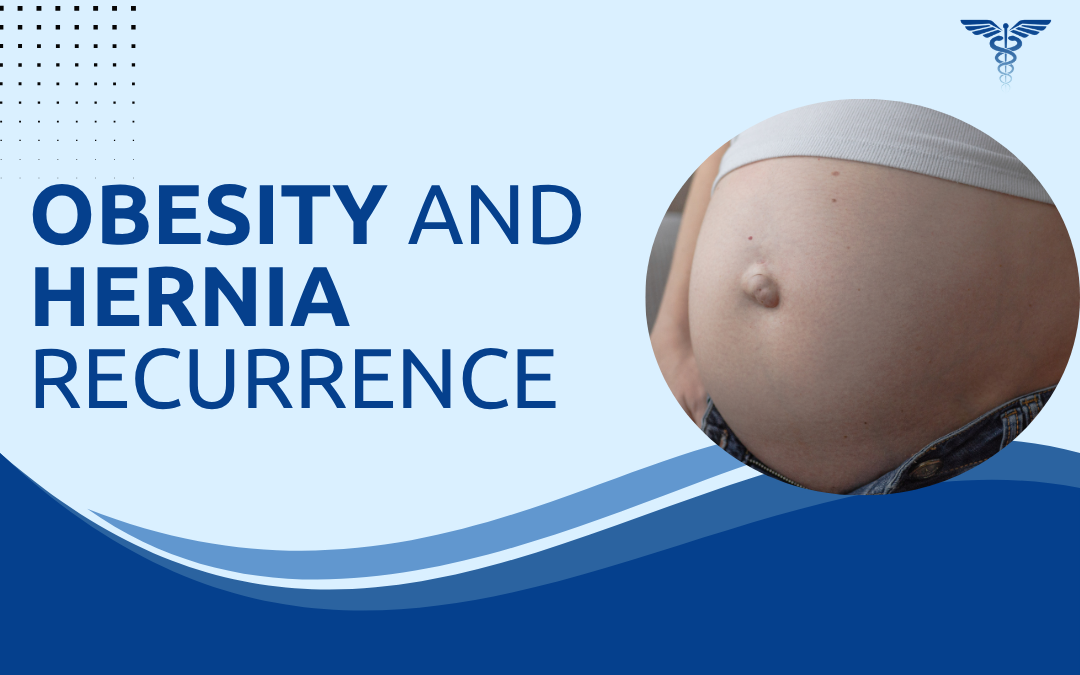
Obesity is an independent risk factor for hernia recurrence, confirmed across multiple large studies regardless of repair technique or mesh use. Each unit increase in BMI above normal carries a measurable rise in recurrence rate, with severely obese patients facing nearly three times the recurrence risk after the same repair. The mesh does not fail on its own. Without addressing the underlying pressure and tissue factors beforehand, no repair can fully overcome the abdominal wall environment obesity creates.
According to Dr. Rajeev Premnath, a trusted Hernia Specialist in Bangalore, “Obesity does not just make the surgery harder. It keeps working against the repair after the patient leaves the theatre. The raised intra-abdominal pressure, the impaired tissue healing, the sheer mechanical load on the abdominal wall these are not solved by placing a mesh. They have to be managed before the operation, not ignored until the recurrence happens.”
Why Does Obesity Make Hernia Recurrence More Likely?
Obesity creates a combination of mechanical, vascular, and tissue-level conditions that act against the repair simultaneously, none of which is corrected by the procedure itself.
- Pressure overload: Excess visceral fat increases baseline intra-abdominal pressure chronically, applying continuous outward force on the repair from the moment the patient wakes from anaesthesia, well before any mesh has integrated with the surrounding tissue.
- Impaired healing: Adipose tissue is poorly vascularised, meaning the fascial and mesh interface in obese patients receives less blood supply during the critical integration window, slowing the fibrous in-growth that gives the repair its long-term strength.
- Larger defects: Abdominal wall defect size correlates with BMI, and the true fascial gap in obese patients is consistently larger than clinical examination suggests, meaning the repair is already working against a bigger structural problem than was apparent before incision.
- Wound complications: Obese patients have significantly higher rates of surgical site infection, seroma, and wound dehiscence after hernia repair, each of which directly disrupts mesh integration and raises the probability of recurrence at the same site.
Recurrence in obese patients is a predictable consequence of operating in a mechanically hostile environment without first reducing the underlying pressure load. Patients planning hernia surgery with a high BMI should discuss whether weight reduction before the procedure meaningfully changes the repair outcome.
What Surgical Factors Increase Recurrence Risk in Obese Patients?
Technical difficulties during hernia repair in obese patients compound the biological risk factors, affecting both what can be achieved and how reliably the repair holds.
- Visualisation limits: Deep subcutaneous fat obscures fascial landmarks during open repair and reduces the working space available in laparoscopic surgery, making accurate mesh placement and adequate overlap of the defect margins technically harder to achieve.
- Mesh fixation: In obese patients with thick abdominal walls, securing mesh with adequate tension distribution is more difficult, and poorly anchored mesh is more likely to migrate or buckle under the chronic pressure load described above.
- Suture repair failure: Suture-only repair in obese patients is associated with substantially higher recurrence rates than in non-obese patients, and evidence consistently supports mesh reinforcement as the correct approach for this group, a principle followed in all high risk inguinal hernia surgery.
- Recovery compliance: Obese patients with limited mobility, chronic breathlessness, or co-existing conditions find post-operative activity restriction harder to maintain, and repeated early strain on an integrating repair is one of the most direct mechanical causes of recurrence.
Surgical technique adapted specifically for the obese patient, including appropriate mesh choice, wider overlap, and pre-operative optimisation, reduces but does not eliminate the elevated recurrence risk in this group. Our blog on 3D Mesh vs Flat Mesh for Hernia covers how mesh selection affects long-term recurrence outcomes.
Why Choose Dr. Rajeev Premnath?
Dr. Rajeev Premnath is a General and Laparoscopic Surgeon with MBBS, MS (Gen Surg.), FRCS (Glasg.), FEBS, FICS, FACS, FIAGES, FMAS, and a Diploma in Laparoscopy from France. He has been managing primary and recurrent hernias including complex cases in obese patients at Ramakrishna Super Speciality Hospital for over 20 years, with specific expertise in 3D and bilayer mesh repair techniques that reduce recurrence risk in mechanically demanding abdominal wall environments.
Obese patients here are assessed for defect size, intra-abdominal pressure factors, and comorbidities before a repair plan is made. Weight optimisation advice is given where it changes the surgical outcome. Mesh selection and fixation technique are adapted to the patient, not standardised.
Noticed a bulge returning at a previous hernia repair site?
FAQs
Why do obese patients have higher hernia recurrence?
Obesity raises intra-abdominal pressure chronically, impairs tissue healing through poor vascular supply to adipose tissue, produces larger fascial defects, and increases wound complication rates each factor independently raising the probability that a repair will fail.
Does losing weight before hernia surgery reduce recurrence risk?
Yes. Reducing BMI before repair lowers baseline intra-abdominal pressure, improves wound healing capacity, and allows more accurate assessment and closure of the true defect size.
Is mesh repair always used for hernias in obese patients?
Mesh repair is the appropriate choice for obese patients given consistently higher recurrence rates with suture-only repair in this group. The type of mesh and fixation technique is adapted based on defect size and patient factors.
Can a hernia recur even after mesh repair in obese patients?
Yes. Severe obesity is an independent predictor of recurrence even after mesh repair, with recurrence rates nearly three times higher than in non-obese patients undergoing the same procedure.