

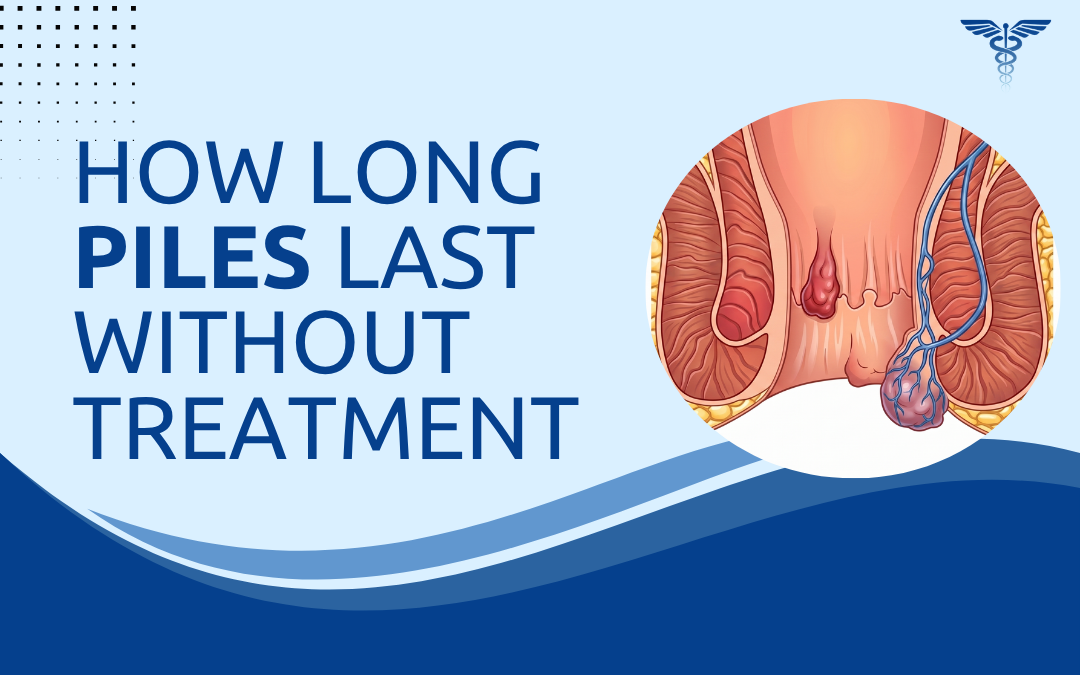
Mild piles usually clear up on their own somewhere between a few days and one week. Grade 2 haemorrhoids can hang around for several weeks when bowel habits and diet aren’t sorted. Grade 3 and 4 piles almost never settle without medical help and they often drag on for months or just become chronic. Adding more fibre, drinking enough water and sitting in a warm sitz bath can speed things up for early-stage cases.
According to Dr. Rajeev Premnath, piles specialist in Bangalore, I routinely see patients who’ve sat on this for 6 to 8 months hoping it would just go away, and by then the grade has moved well past what conservative care can handle.
What Decides How Long Untreated Piles Last?
A few things determine whether your piles fade out quietly or stick around and get worse.
- Grade: Grade 1 might settle in a week with better food choices. Grade 3 and 4 won’t budge with fibre alone, and they just keep getting bigger.
- Straining: This one’s straightforward. Push too hard on the toilet regularly and you’re keeping constant pressure on those swollen cushions, which turns a short episode into a months-long problem nobody wants.
- Diet: Low fibre makes stools hard. And hard stools scrape against inflamed tissue every single time, so the bleeding keeps coming back and healing never really starts.
- Sitting habits: Desk workers who don’t move for 8 to 10 hours have sluggish blood flow in the rectal veins, which is exactly why their piles outlast everyone else’s by weeks.
Getting checked by a proctologist early on stops the grade from climbing and keeps treatment simple.
When Should You Stop Waiting and See a Surgeon?
There’s a real difference between something that fades in a couple of days and something your body is telling you it can’t fix alone.
- Bleeding: Two weeks of bright red blood on the toilet paper or in the bowl means it’s time to get it looked at. Not everything that bleeds down there is piles, and that’s exactly the point.
- Prolapse: If tissue is bulging out and not going back in on its own anymore, home remedies aren’t going to cut it. That ship has sailed.
- Thrombosis: A hard painful lump that shows up suddenly near the anus is a clot inside the haemorrhoid. Waiting around with this one usually backfires.
- Tears too: Chronic piles and anal fissures often show up together because all that straining damages more than one spot, and fixing only one means the other keeps flaring.
If 4 to 6 weeks of sitz baths and fibre haven’t changed anything, read about non-surgical options for early-stage piles before you’re looking at a bigger procedure.
Why Choose Dr. Rajeev Premnath?
Dr. Rajeev Premnath has been doing this for over 20 years. FRCS from Glasgow, FEBS, FACS, FIAGES. He did Karnataka’s first VAAFT surgery and handles stapled haemorrhoidopexy and laser work at Ramakrishna Super Speciality Hospital regularly.
Most patients are back to their routine in 2 to 3 days. It’s day care surgery so you go home the same day. Recurrence stays low because the procedure actually goes after the root cause, not just the symptoms.
Bleeding that won’t quit or a lump that keeps coming back?
FAQs
Do piles go away permanently without treatment?
Grade 1 may resolve temporarily, but recurrence is common without lifestyle changes.
How long do grade 3 piles last untreated?
Grade 3 piles rarely resolve on their own and typically worsen over months.
Can untreated piles become dangerous?
Yes, they can cause thrombosis, anaemia or strangulated haemorrhoids over time.
What is the fastest treatment for piles?
Laser haemorrhoidoplasty and stapled procedures offer same-day recovery for most patients.