

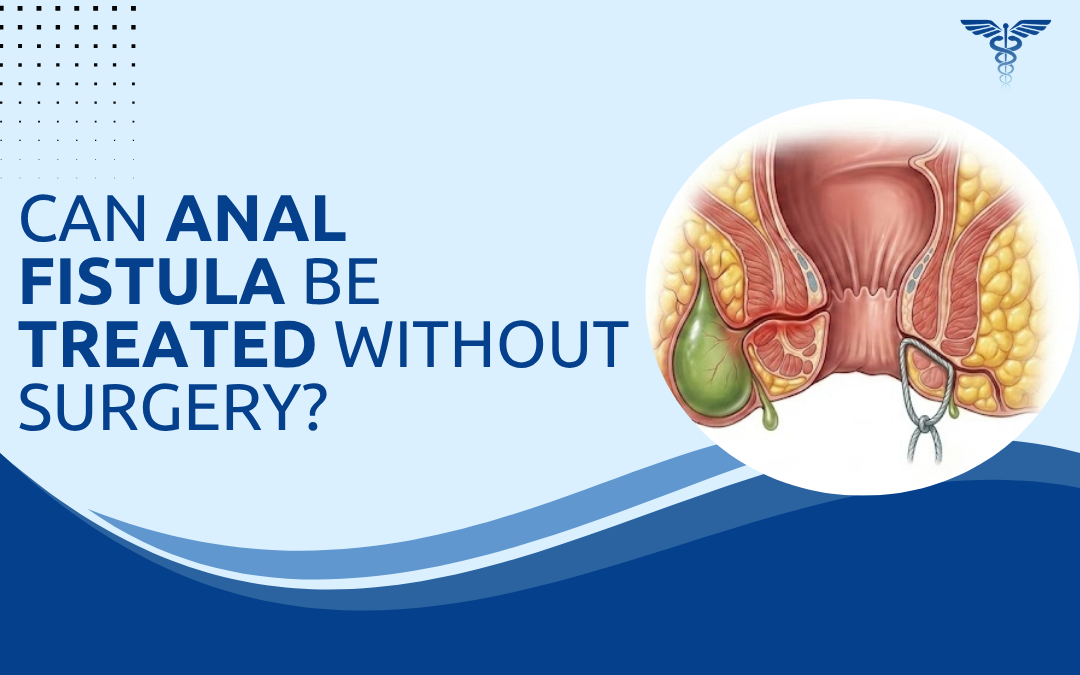
No, antibiotics cannot cure an anal fistula. They handle the infection around it. The tract itself stays put. That tunnel between the anal canal and the skin doesn’t close because a pill tells it to, and gut bacteria keep wandering back in. Surgery is what shuts it down for good.
According to Dr. Rajeev Premnath, a leading expert in fistula treatment in Bangalore, Antibiotics calm the infection around a fistula, but they don’t seal the tract. Surgery is what actually heals the condition.
Why Do Antibiotics Alone Fail To Heal An Anal Fistula?
A fistula is a structural problem, not just an infection and antibiotics alone cannot resolve it. Only surgery can permanently close the tract.
Tract stays: Swelling goes down, pus clears, you feel fine for a bit, but the tunnel hasn’t gone anywhere and it’ll fill right back up.
Bugs return: Stop the course and gut bacteria are back inside within days. Same loop. Different week.
Bad blood flow: Fistula walls barely get any circulation, so whatever drug you’re swallowing doesn’t really reach where it needs to be.
Skin-like lining: Older tracts grow their own lining inside. That stuff doesn’t fuse on its own. It has to come out.
So antibiotics are a bridge, not the destination. When piles show up alongside, piles treatment often gets folded into the same surgical plan.
When Are Antibiotics Actually Useful In Fistula Cases?
They’re not useless. Far from it. There are moments where antibiotics genuinely earn their place.
Active abscess. Pus pocket forming, pain climbing? Antibiotics plus drainage procedures cool things down before any operation can safely happen.
Pre-op buffer. A short course before surgery cuts bacterial load in the area. Lower infection risk after. Simple math.
Crohn’s fistulas. Inflammatory bowel disease changes the equation. Long-term antibiotics work as part of the larger treatment, not as a standalone fix.
Weakened immunity. Diabetics, anyone immunocompromised, need that infection contained before it spreads deeper into tissue. Drugs buy time. Nothing more.
Drag your feet on surgery and the tract keeps draining. Sometimes for years. Complications stack up quietly. Worth a look at the future of minimally invasive surgery if open procedures worry you.
Why Choose Dr. Rajeev Premnath?
Dr. Rajeev Premnath is a General and Laparoscopic Surgeon and Proctologist with nearly two decades of fistula work behind him. He did Karnataka’s first VAAFT. Trained in minimal access surgery in France and Singapore. More background here: about Dr. Rajeev Premnath.
Recurrent fistulas, failed drainage, chronic discharge that just won’t quit. Those are the cases that walk in. Sphincter preservation comes first, then full closure. No shortcuts taken for the sake of speed.
Still leaking pus weeks after your antibiotics ended?
FAQs
Can antibiotics shrink a fistula completely?
No, antibiotics only reduce infection but cannot close the abnormal tract.
How long can someone live with an untreated fistula?
Indefinitely, but with ongoing discharge, pain, and risk of complications like abscess or sepsis.
Do anal fistulas heal on their own?
No, anal fistulas don’t heal naturally and require surgical correction.
Can a fistula turn cancerous?
Long-standing untreated fistulas carry a small but real risk of malignant change.