

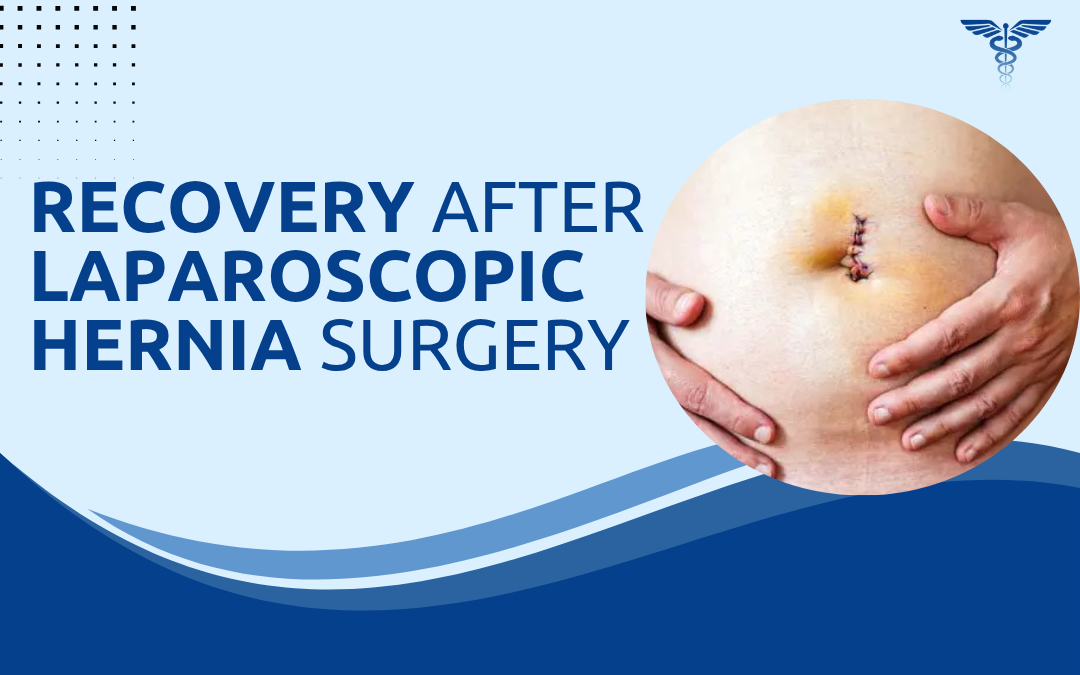
Laparoscopic hernia surgery, patients need only one to two days of true rest before resuming light activity and can typically return to desk-based work within two to three days, a clear advantage over open repair, which usually requires one to two weeks away from work, since the smaller incisions cause far less tissue trauma and allow faster healing; the exact timeline still depends on what “rest” needs to cover, as desk work, physical labour, driving, and exercise all recover at different rates.
According to Dr. Rajeev Premnath, a trusted Hernia Specialist in Bangalore, “Patients often ask me for a single number, but recovery isn’t one timeline it’s several running in parallel. Walking around the house comfortably by day two is normal. Sitting at a desk by day three is normal. Lifting a suitcase or going back to gym training is a completely different question, and rushing that part is what actually causes problems.”
How Long Should You Actually Rest After Laparoscopic Hernia Surgery?
Recovery after laparoscopic hernia repair follows a fairly predictable, staged pattern rather than a single fixed number of days.
- First 24–48 hours: This is the only period requiring genuine rest — most discomfort, tenderness at the port sites, and mild fatigue from anaesthesia settle within this window, and gentle walking around the house is encouraged rather than strict bed rest, since movement supports circulation and reduces the risk of clot formation.
- Desk work and light duties: Patients with sedentary jobs can typically return within two to three days, provided they are off narcotic pain medication and can sit comfortably without needing frequent breaks.
- Driving: Most patients can resume driving once they can perform an emergency stop or sudden turn without pain at the incision sites, which is usually within four to seven days, and never while still taking prescription pain medication.
- Heavy lifting and physical labour: Jobs or activities requiring lifting beyond light objects, prolonged standing, or manual exertion generally need two to four weeks before resuming at full intensity, since the deeper layers of the abdominal wall continue strengthening well after the visible incisions have healed.
Studies comparing recovery advice after laparoscopic inguinal hernia repair found that patients told to return to activity in one to two days recovered just as safely as those given longer rest, with no added pain, complications, or recurrence. Extended rest doesn’t make the repair more durable; it just delays getting back to normal life. Patients should also understand what day care inguinal hernia surgery involves, since most laparoscopic repairs are same-day procedures with discharge on the day of surgery.
What Affects How Many Rest Days You Actually Need?
The one-to-two-day figure is a starting point, not a guarantee, and several factors shift it in either direction.
- Type of hernia and repair technique: Straightforward unilateral inguinal hernias treated with TEP or TAPP laparoscopic hernia surgery typically recover faster than larger ventral or recurrent hernias, which involve more extensive dissection and mesh placement even when performed laparoscopically.
- Occupation and physical demand: A patient in a desk job can often be back at work within days, while someone whose work involves heavy lifting, prolonged standing, or manual exertion needs a longer graduated return, sometimes extending to four to six weeks for full unrestricted duty.
- Age and baseline health: Older patients and those with co-existing conditions such as poorly controlled diabetes or chronic cough tend to heal more slowly and are generally advised a more cautious, staged return to activity.
- Adherence to post-operative advice: Patients who follow wound care instructions, avoid straining, and progress activity gradually rather than in sudden jumps tend to have a smoother, more predictable recovery curve with fewer setbacks.
Getting this balance right enough rest to protect the repair without unnecessary prolonged inactivity is part of why a structured post-operative plan matters as much as the surgery itself. Our blog on Mesh vs No Mesh for Hernia Repair covers how the repair technique chosen can also influence how quickly a patient is comfortable resuming normal activity.
Why Choose Dr. Rajeev Premnath?
Dr. Rajeev Premnath is a General and Laparoscopic Surgeon with MBBS, MS (Gen Surg.), FRCS (Glasg.), FEBS, FICS, FACS, FIAGES, FMAS, and a Diploma in Laparoscopy from France. He has been performing laparoscopic hernia repair at Ramakrishna Super Speciality Hospital for over 20 years, with a strong focus on day-care protocols and structured post-operative recovery plans that get patients back to normal life as quickly as it is safe to do so.
Patients here receive a clear, individualised recovery timeline before surgery not a generic handout based on their hernia type, occupation, and overall health, so they know exactly what to expect on day one, day three, and week two.
Groin pain or discomfort and planning hernia surgery?
FAQs
How many days rest are needed after laparoscopic hernia surgery?
Most patients need one to two days of true rest before returning to light activity, and can typically resume desk work within two to three days. Physical labour or heavy lifting generally needs two to four weeks.
Is laparoscopic hernia surgery recovery faster than open surgery?
Yes. Laparoscopic repair generally allows return to work and normal activity in days rather than the one to two weeks typically needed after open hernia repair.
When can I lift heavy objects again after laparoscopic hernia surgery?
Heavy lifting is usually restricted for two to four weeks, since the deeper abdominal wall layers continue strengthening after the incisions themselves have healed.
Does resting longer than a few days improve the outcome of hernia surgery?
Not necessarily. Research comparing recovery advice found that shorter, non-restrictive recommendations of one to two days did not increase pain, complications, or recurrence compared with longer rest periods.
References:
- Bay-Nielsen M, Kehlet H. Convalescence after laparoscopic inguinal hernia repair: a qualitative systematic review. Hernia, 2016.
- Laparoscopic Management of Inguinal Hernia: A Systematic Review and Updated Network Meta-Analysis of Randomized Controlled Trials. NIH National Library of Medicine, PMC, 2024.