

A hiatus hernia doesn’t cause symptoms in everyone, but when it does, acid reflux is the main one. The stomach pushes through the diaphragm, weakening the valve that keeps acid down. Diet doesn’t fix the hernia, but it directly affects how much acid comes back up. The right foods reduce acid production and stomach pressure; the wrong ones relax the lower oesophageal sphincter, increase acid, or slow gastric emptying.
According to Dr. Rajeev Premnath, General and Laparoscopic Surgeon, “Most patients manage well with diet and lifestyle changes alone. Smaller meals, staying upright for two hours after eating, and avoiding personal trigger foods make the biggest difference. I ask patients to keep a food diary for two weeks that tells me more than any generic list.”
What Foods Make Hiatus Hernia Symptoms Worse?
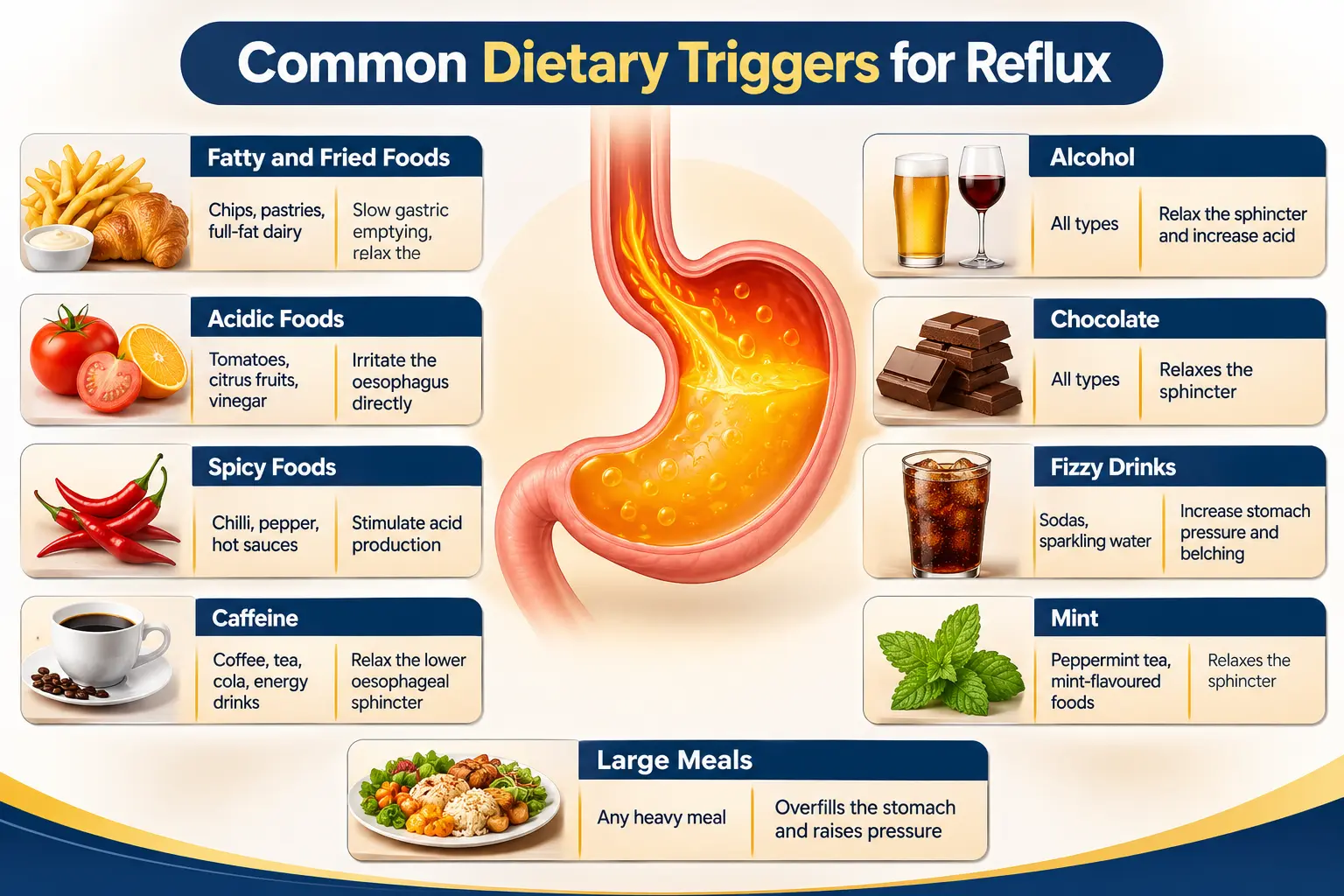
For a full overview of treatment options for hiatus hernia, our hernia surgery section covers what surgery involves when diet alone isn’t enough.
What Foods Help With Hiatus Hernia?
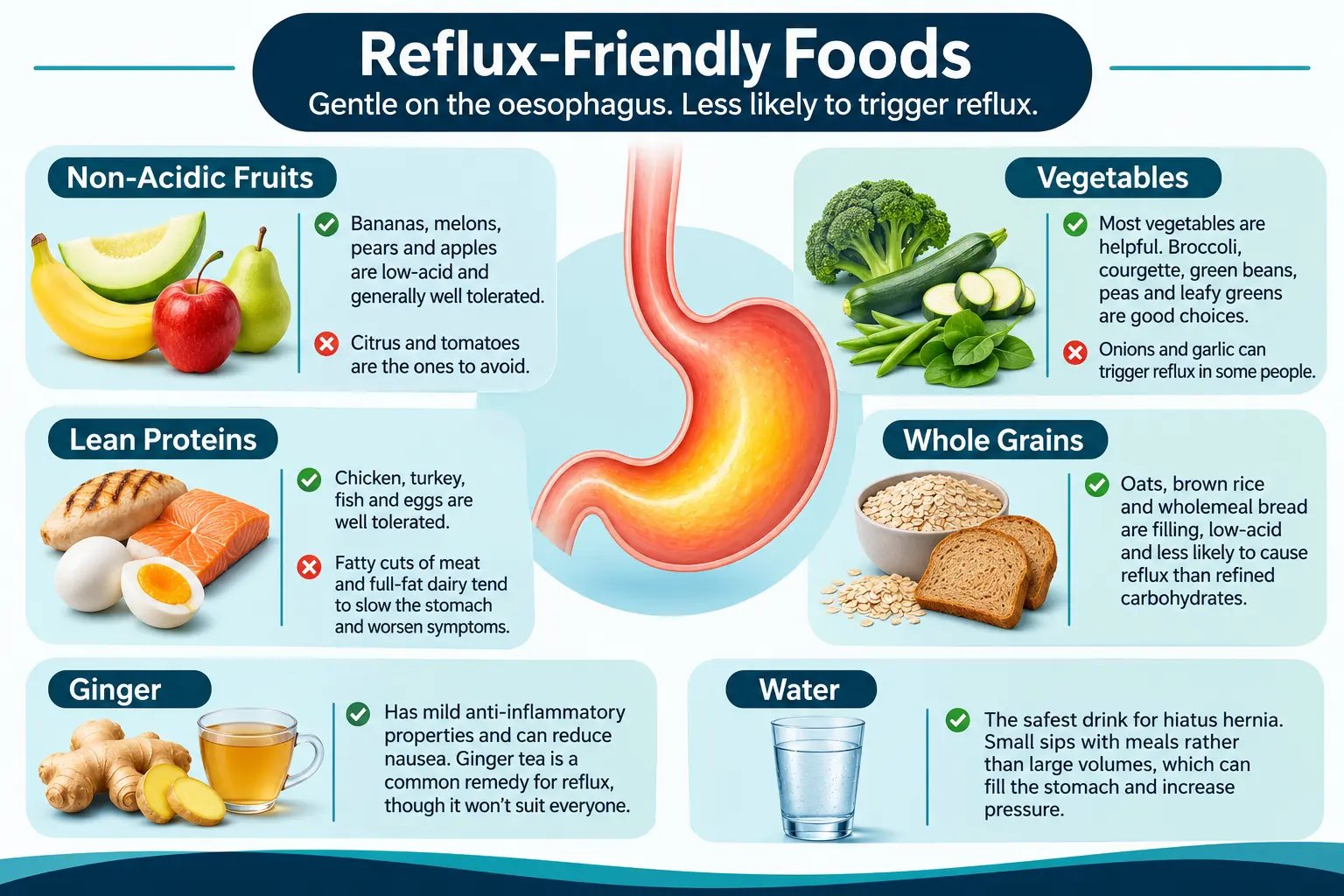
Our blog on can you eat normally after gallbladder removal covers how dietary changes after upper abdominal surgery compare with hiatus hernia management.
What Determines the Right Treatment Approach?
Diet is first line, but some patients need more.
- Meal size and timing: Smaller, more frequent meals reduce gastric pressure. Nothing to eat within two to three hours of lying down. The stomach empties faster when upright.
- Sleeping position: Raising the head of the bed by fifteen to twenty centimetres reduces nocturnal reflux. Extra pillows don’t achieve the same effect because they bend the body rather than tilting it.
- Weight: Excess weight increases intra-abdominal pressure and pushes the stomach up. Even a modest reduction in weight can noticeably reduce symptoms.
- Medications alongside diet: Proton pump inhibitors reduce acid production and are often used with dietary changes. They treat the symptoms, not the hernia. If symptoms break through despite diet and medication, surgery is discussed.
- Surgery: Laparoscopic fundoplication wraps part of the stomach around the lower oesophagus to restore the valve. It’s considered when symptoms don’t respond to diet and medication, or when the hernia is large.
Reflux or chest discomfort from a hiatus hernia?
FAQs
What is the best diet for a hiatus hernia?
Small, low-fat, low-acid meals eaten at regular intervals, staying upright after eating and avoiding known triggers such as caffeine, alcohol and chocolate.
Can I drink coffee with a hiatus hernia?
Coffee relaxes the lower oesophageal sphincter and increases acid, so it’s one of the first things to cut back on. Decaffeinated coffee is better tolerated by most people.
Does a hiatus hernia diet cure the hernia?
No. Diet manages the symptoms of reflux but doesn’t change the hernia itself. Surgery is the only way to correct it.
Is spicy food always a trigger with hiatus hernia?
Not for everyone. Spicy food is a common trigger, but individual responses vary, which is why a personal food diary is more useful than a universal avoid list.