

Pain after gallbladder removal affects 10% to 15% of patients a group of findings called post-cholecystectomy syndrome. The gallbladder is gone, but the biliary system, surrounding structures, and gut remain, and any of these can drive ongoing symptoms. Some causes are surgical. Others were never gallbladder-related to begin with. Finding the source takes systematic assessment.
According to Dr. Rajeev Premnath, a trusted General and Laparoscopic Surgeon in Bangalore, “The first thing I establish is whether the pain feels the same as before surgery or different same pain usually means the gallbladder wasn’t the cause; different pain points toward a biliary or surgical issue that needs investigation.”
What Are the Biliary Causes of Pain After Gallbladder Surgery?
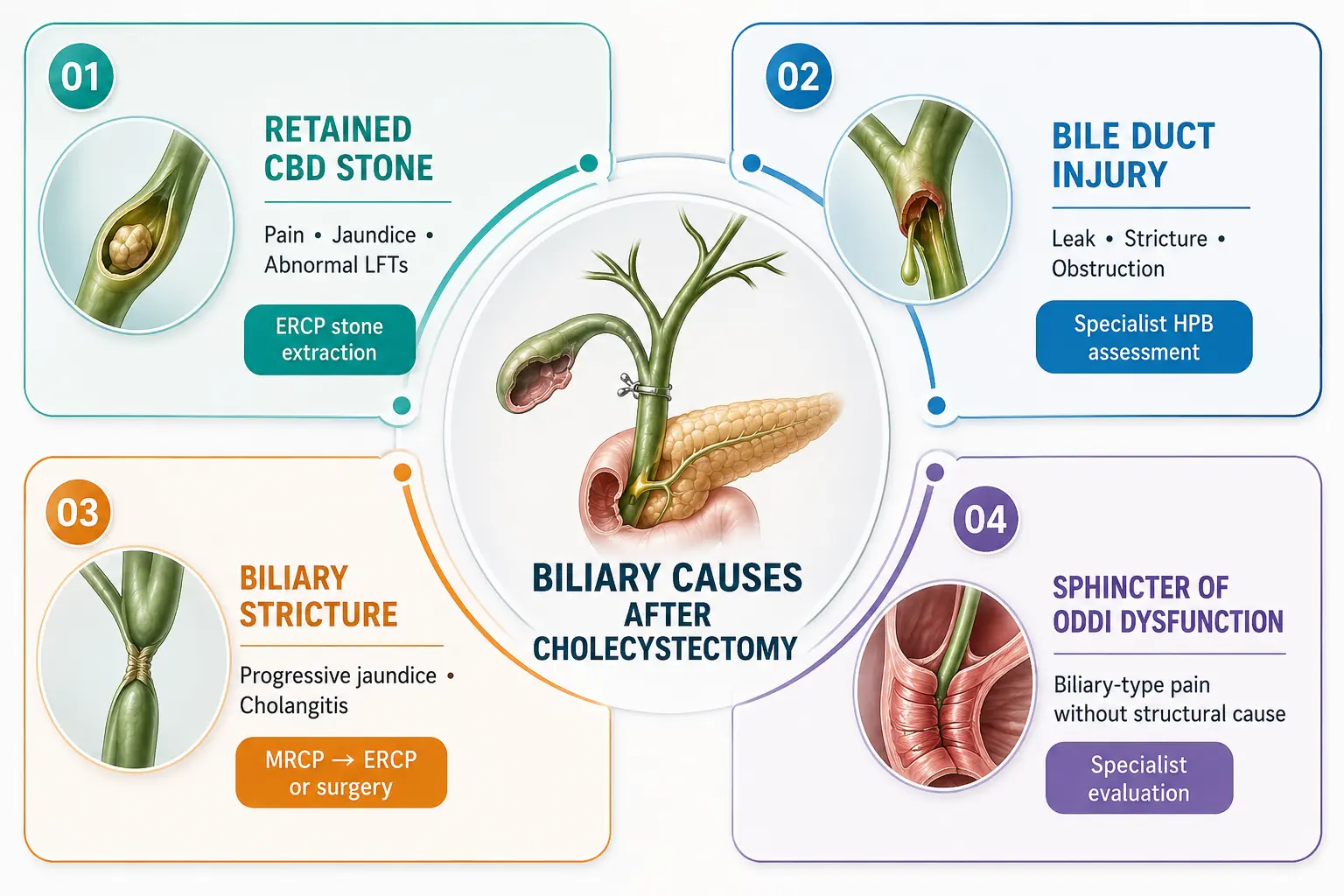
Biliary causes show up on liver function tests, ultrasound, and MRCP in most cases. Gallbladder stone removal explains the biliary anatomy and why surgery remains the definitive treatment for gallstone disease.
What Are the Non-Biliary Causes of Recurring Pain After Gallbladder Surgery?
Not all post-cholecystectomy pain comes from the biliary tree; non-biliary causes are common and missed when the workup is too narrow.
- Misdiagnosed condition: IBS, peptic ulcer disease, GORD, and functional dyspepsia all mimic gallstone symptoms; if one of these was the actual cause, removing the gallbladder changes nothing and the same pain continues.
- Post-operative diarrhoea: Without bile storage, continuous bile secretion into the small intestine causes bile acid malabsorption in some patients, producing chronic diarrhoea and cramping that respond to bile acid sequestrants, not surgery.
- Port site hernia: A hernia at a laparoscopic port site causes localised pain that worsens with exertion, is palpable on examination, is confirmed on ultrasound, and is fixed with laparoscopic repair.
- Functional pain: When a full investigation finds nothing structural, the pain is still real and managed with gastroenterology input, dietary changes, and low-dose neuromodulators rather than further surgery.
Non-biliary causes need gastroenterology input alongside surgical review. Life after gallbladder removal covers dietary and lifestyle changes that reduce post-operative symptoms early on.
Why Choose Dr. Rajeev Premnath?
Dr. Rajeev Premnath is a General and Laparoscopic Surgeon with MBBS, MS (Gen Surg.), FRCS (Glasg.), FEBS, FICS, FACS, FIAGES, FMAS, and a Diploma in Laparoscopy from France, with over 20 years of experience in laparoscopic cholecystectomy and management of post-operative biliary complications at Ramakrishna Super Speciality Hospital, Jayanagar, Bangalore.
Patients with recurring pain after gallbladder surgery receive a structured assessment liver function tests, imaging, and clinical history are reviewed together before any cause is attributed, and specialist referral is arranged promptly when biliary or structural pathology is identified.
Pain returning after gallbladder surgery and unsure of the cause?
FAQs
Why do I still have pain after gallbladder removal?
Pain after cholecystectomy affects 10% to 15% of patients causes include retained bile duct stones, biliary stricture, misdiagnosed pre-operative conditions, and functional pain.
What is post-cholecystectomy syndrome?
A group of persistent symptoms including pain, bloating, and diarrhoea occurring after gallbladder removal, with both biliary and non-biliary causes.
Can a stone be left behind after gallbladder surgery?
Yes, a retained common bile duct stone causes recurrent pain and jaundice and is treated with ERCP once confirmed on imaging.
When should I see a doctor for pain after gallbladder surgery?
Immediately if pain is severe, accompanied by jaundice, fever, or dark urine these suggest a biliary complication requiring urgent assessment.