

Most gallbladder polyps are benign and found by chance on an ultrasound done for something else. The majority are cholesterol deposits, not true polyps at all, and they don’t turn into cancer. The ones that need attention are those above ten millimetres, those growing on follow-up scans, those in a patient with gallstones or primary sclerosing cholangitis, and any polyp causing symptoms. Size and growth rate are what decide whether to watch or operate.
According to Dr. Rajeev Premnath, a General and Laparoscopic Surgeon, “Most patients who come in with a gallbladder polyp on their ultrasound are worried it’s cancer. The honest answer is that the vast majority are not. What I look at is the size, whether it’s grown since the last scan, and whether the patient has symptoms or gallstones alongside it. A six-millimetre polyp in a healthy person with no symptoms usually just needs a repeat scan in six months. A twelve-millimetre polyp in someone with stones is a different conversation.”
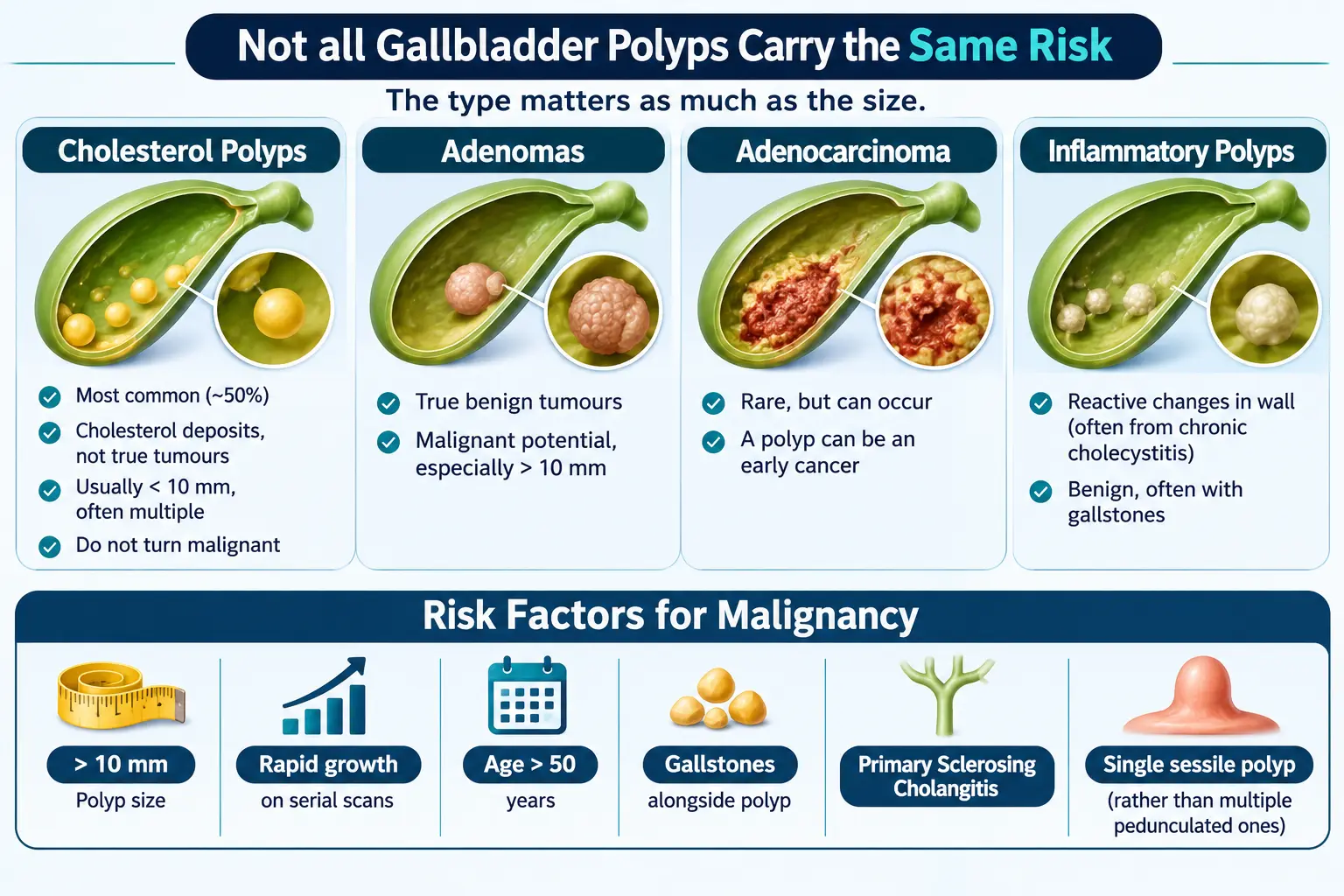
What Types of Gallbladder Polyps Are There and Which Are Risky?
If you’d like to know more about how gallbladder conditions are assessed and treated, our gall bladder stone removal covers it.
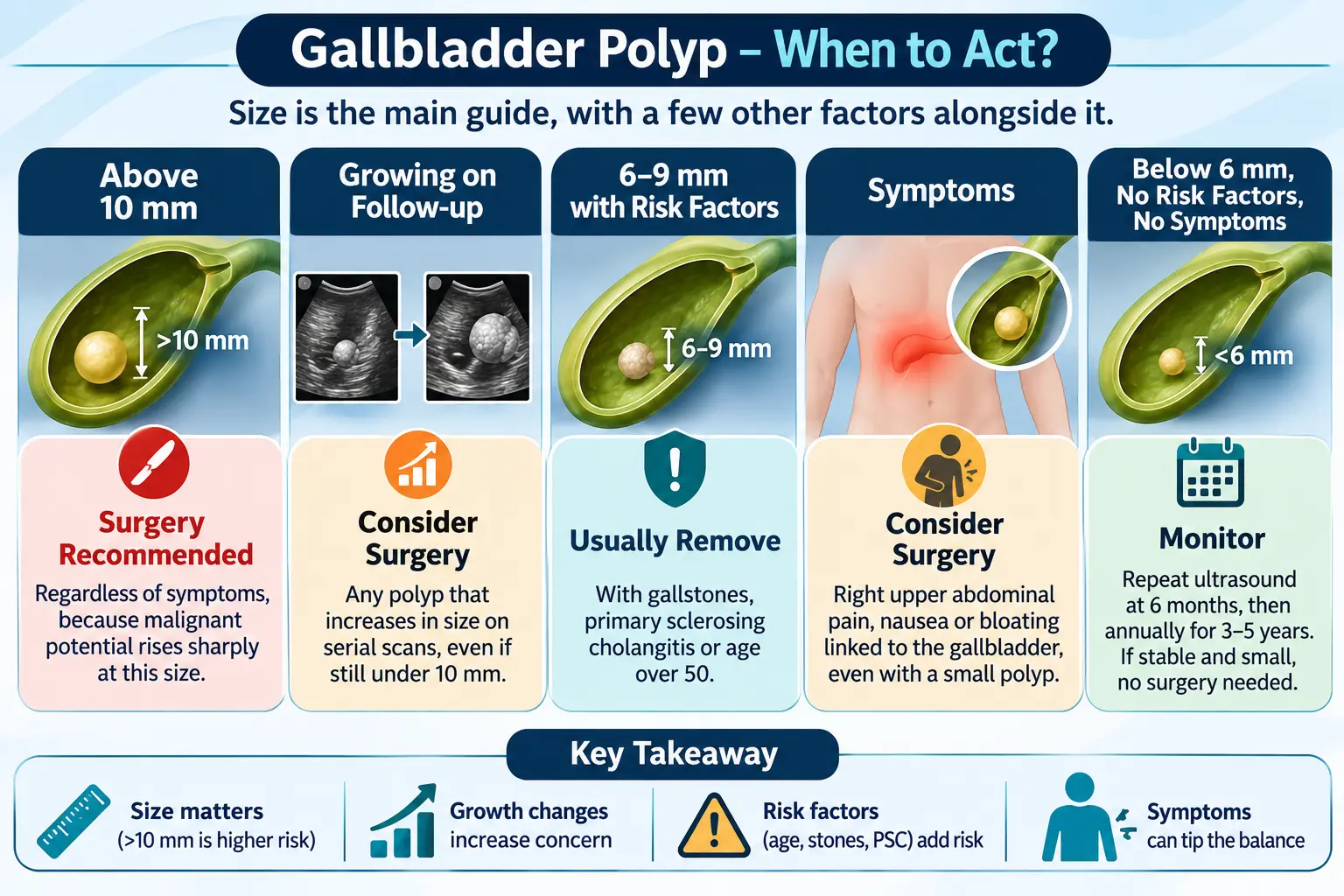
When Does a Gallbladder Polyp Need Surgery?
Our blog on recurring pain after gallbladder surgery covers what to expect if symptoms continue after the gallbladder is removed.
What Determines the Right Treatment Approach?
The decision between monitoring and surgery comes down to a few specific factors reviewed together.
- Ultrasound features: A single sessile polyp on a broad base carries more risk than multiple small pedunculated ones. These features are assessed at the time of scanning.
- Follow-up interval: Polyps under six millimetres with no risk factors are rescanned at six months, then yearly. Polyps between six and nine millimetres are rescanned at three to six months initially.
- EUS for uncertain cases: Endoscopic ultrasound gives a closer look at polyp architecture when standard ultrasound leaves the picture unclear, particularly for polyps in the six to nine millimetre range.
- Laparoscopic cholecystectomy: The operation for a polyp that needs removing is keyhole gallbladder removal, the same as for gallstones. The whole gallbladder is sent for histology, and the result confirms whether the polyp was benign.
Gallbladder polyp found on scan and not sure what to do next?
FAQs
Are gallbladder polyps dangerous?
Most are benign and cause no harm. The ones above ten millimetres or growing on follow-up scans carry a higher risk of malignancy and need surgery.
What size gallbladder polyp needs surgery?
Ten millimetres or above. Smaller polyps with risk factors such as gallstones or age over fifty may also need surgery.
How often should a gallbladder polyp be monitored?
Every six months initially for most polyps, then annually if stable. Small polyps with no risk factors can often be discharged after three to five years of stability.
Is the operation for a gallbladder polyp the same as for gallstones?
Yes. Keyhole removal of the whole gallbladder, with the specimen sent for histology afterwards.