

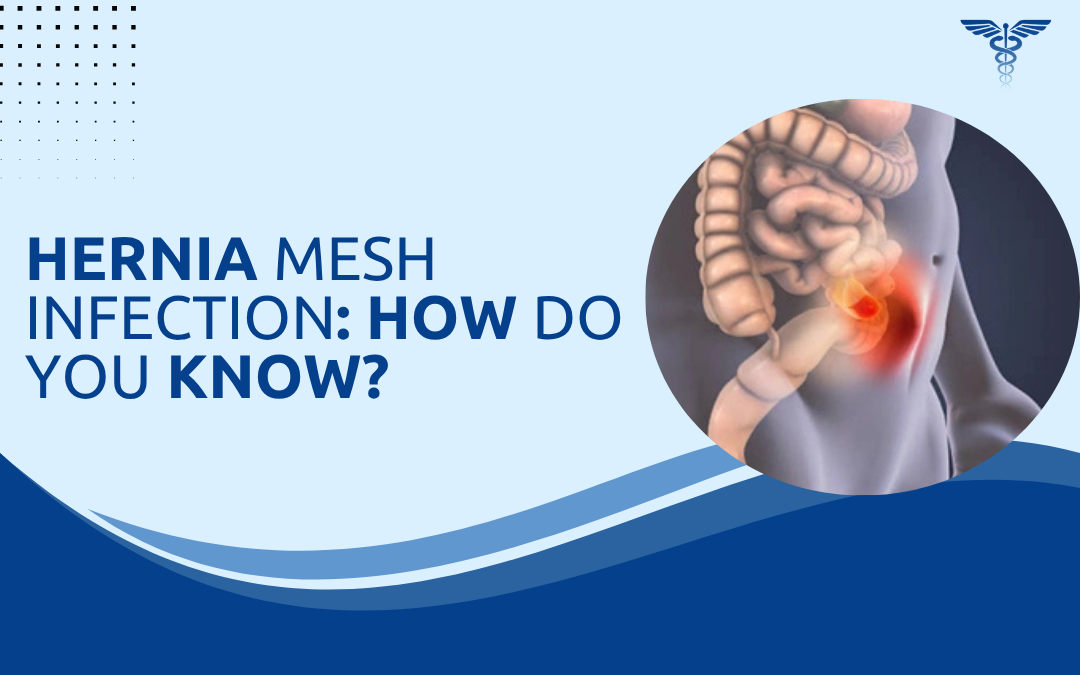
Hernia mesh infection is uncommon but serious rates sit between 1% and 8% depending on repair type and patient risk factors. Symptoms range from early wound changes to chronic draining sinuses months or years later. Not every wound complication is mesh infection seroma, haematoma, and superficial infection can all mimic it.
According to Dr. Rajeev Premnath, a trusted General and Laparoscopic Surgeon in Banglore, “Mesh infection doesn’t always present early or obviously. A patient with an uneventful repair twelve months ago who now has a discharging sinus needs proper investigation CT with contrast maps the extent, and treatment depends on whether the mesh itself is the source. Partial excision sometimes works. Full removal is sometimes necessary. The key is not minimising it.”
What Does Pain and Recovery Look Like in the First Two Weeks?
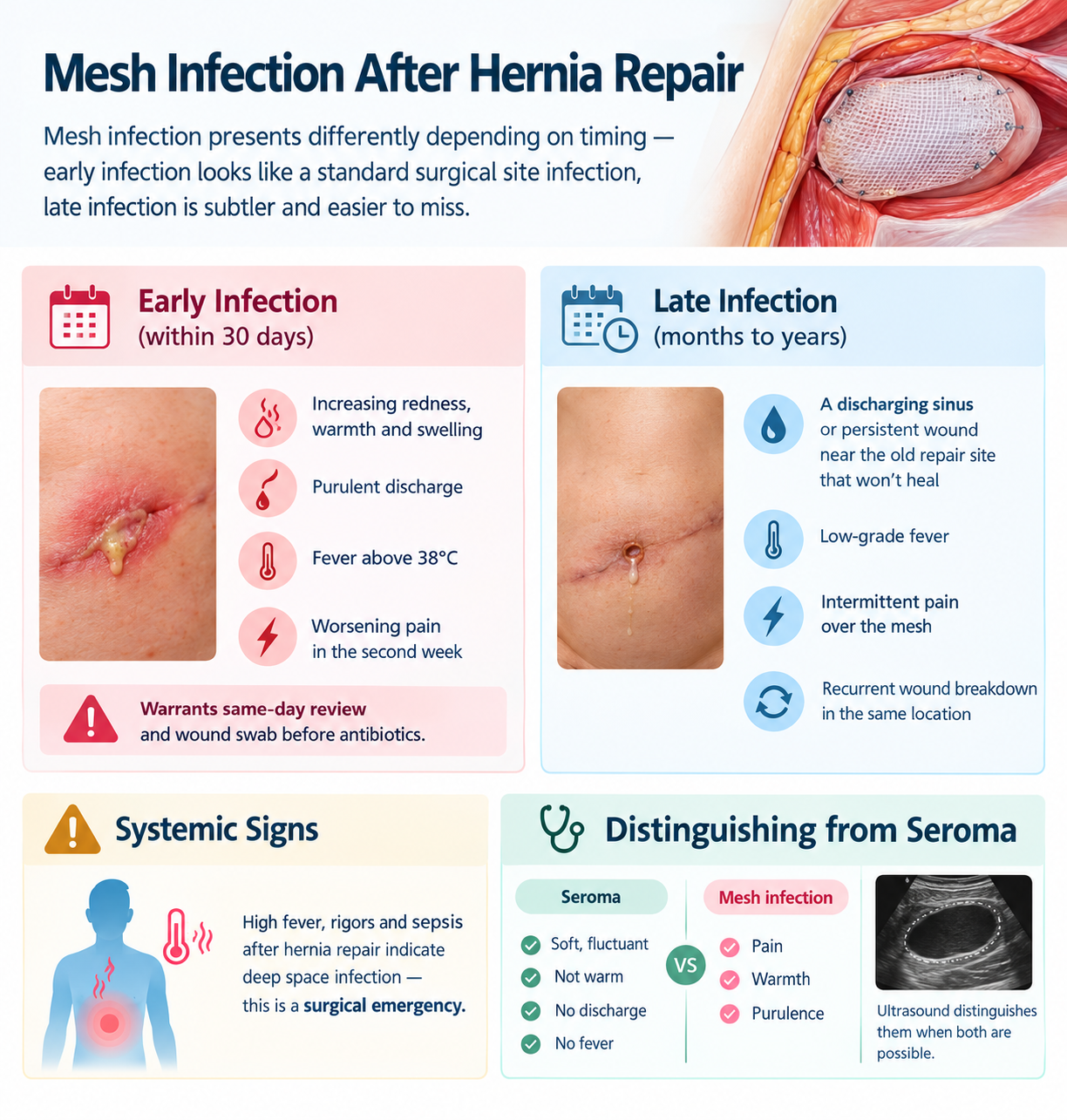
Persistent symptoms near a prior repair always need formal assessment. For the full range of repair options, visit our hernia surgery page.
How Is Mesh Infection Diagnosed and Treated?
Accurate diagnosis before treatment determines whether mesh salvage is possible or full removal is required.
- Diagnosis: CT abdomen with contrast is the investigation of choice it shows mesh position, fluid collections, gas in the mesh plane, and fistula tracts. Wound swab culture identifies the organism and guides antibiotic selection.
- Conservative management: Superficial infections without mesh involvement respond to antibiotics and wound drainage. Contained peri-mesh collections caught early can sometimes be managed with CT-guided drainage mesh salvage is possible in a minority of cases.
- Partial mesh excision: When infection is localised, partial excision of the infected segment preserves some of the original repair. Success depends on whether remaining mesh is well-incorporated and infection is truly contained.
- Full mesh removal: Established deep infection with sinus formation or mesh erosion typically requires complete removal a major operation carrying significant complication risk. Reconstruction is staged after infection clears.
Mesh infection rarely resolves without surgical intervention when the mesh itself is involved. Our blog on can a hernia come back after mesh repair covers the full range of mesh-related complications.
Why Choose Dr. Rajeev Premnath?
Dr. Rajeev Premnath is a General and Laparoscopic Surgeon with MBBS, MS (Gen Surg.), FRCS (Glasg.), FEBS, FICS, FACS, FIAGES, FMAS, and a Diploma in Laparoscopy from France, with over 20 years of experience in hernia repair and management of post-operative mesh complications at Ramakrishna Super Speciality Hospital, Jayanagar, Bangalore.
Patients presenting with symptoms near a prior hernia repair receive a structured assessment before any treatment is started CT imaging, wound culture, and clinical grading of infection severity all inform the decision between conservative management, partial excision, or full mesh removal.
Pain, redness, or discharge near a previous hernia repair site?
FAQs
What are the signs of mesh infection after hernia surgery?
Increasing redness, warmth, purulent discharge, fever, and persistent pain near the repair site late infection presents as a non-healing sinus months after surgery.
How common is mesh infection after hernia repair?
Rates sit between 1% and 8% depending on hernia type, repair approach, and patient risk factors laparoscopic repair carries lower rates than open.
Can mesh infection be treated without removing the mesh?
Sometimes early contained infections with susceptible organisms can be managed with drainage and antibiotics, but established deep infection usually requires mesh removal.
How is mesh infection diagnosed?
CT abdomen with contrast is the investigation of choice it maps mesh position, fluid collections, and any sinus tract to the skin surface.