

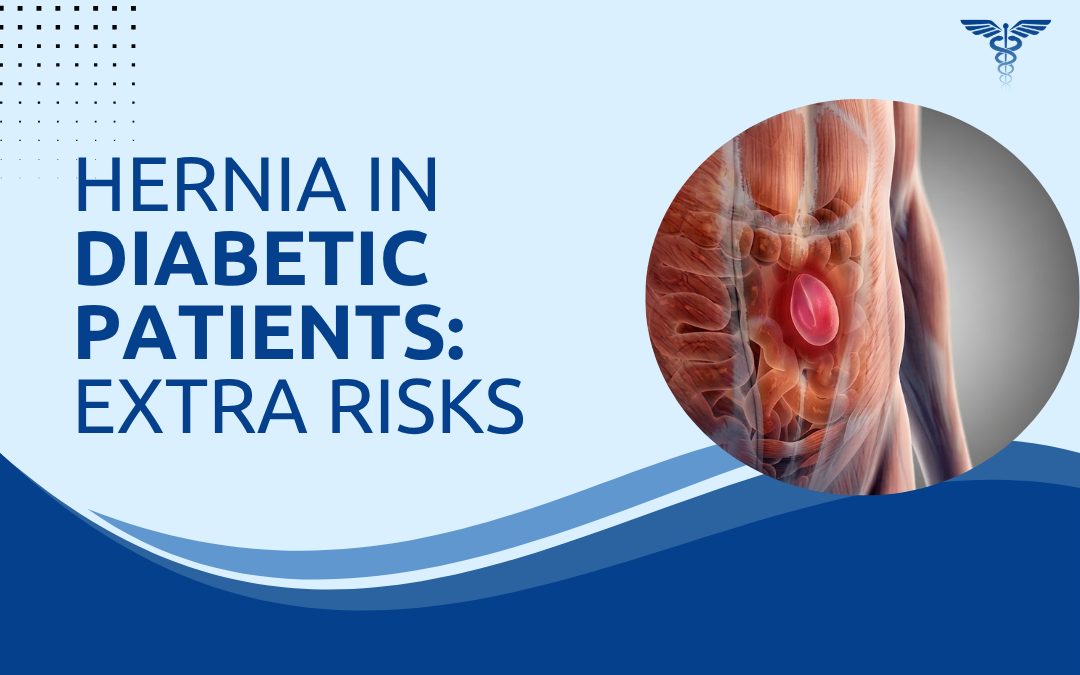
Diabetic patients with a hernia face significant extra risks, mostly from poor wound healing, weaker immunity, and the microvascular damage that high blood sugar quietly causes over years. Hernia repairs are generally successful, but diabetic patients carry a meaningfully higher risk of complications and recurrence compared to non-diabetics.
It gets worse when sugar control’s been slipping for a while. Or when there’s extra weight involved. Sometimes neuropathy hides the hernia for months because the patient just doesn’t feel it the way someone else would. By the time they walk in, things have already shifted.
According to Dr. Rajeev Premnath, hernia surgery in Bangalore, Uncontrolled diabetes doesn’t just complicate the operation, it changes the entire healing curve, and we plan accordingly with tighter sugar control before scheduling repair.
How does diabetes increase hernia complications?
Sugar throws off two things the body needs to heal well, collagen and the tiny blood vessels that feed the wound. So a hernia that’d be straightforward in someone else turns into a case worth watching closely.
- Weak collagen: Glucose interferes with the way collagen fibres lock together, and the abdominal wall ends up thinner than it should be, which is why recurrence creeps up after repair.
- Slow healing: Less oxygen reaches the wound edges, recovery drags on, sometimes by weeks, and a small problem can turn into a longer one.
- Infection risk: Bacteria thrive in high sugar, plain and simple. Surgical site infections happen more, and mesh complications follow closely behind.
- Nerve issues: Neuropathy dulls the early warning signs, so a lot of diabetic patients only notice the hernia once it’s grown bigger or started causing trouble.
Pulling sugar levels into a safe range before the operation, paired with day care inguinal hernia surgery, changes the picture quite a bit when timing’s handled well.
Is hernia surgery safe for diabetic patients?
Yes, hernia surgery is safe for diabetic patients when sugar’s in range beforehand and the surgical plan fits the person, not just the diagnosis. Rushing it backfires almost every time. A bit of patience upfront avoids weeks of trouble afterwards.
- Sugar control: Bringing HbA1c below 7% before the procedure makes a big difference, and it’s not something to negotiate around because infection and recurrence rates depend on it.
- Mesh choice: Lightweight 3D or bilayer mesh sits in better with diabetic tissue, and it doesn’t trigger the kind of foreign-body reaction heavier meshes can in fragile abdominal walls.
- Laparoscopy: Smaller cuts, less trauma, faster mobilisation, and that combination matters a lot when the body’s already healing on a slower clock.
- Anesthesia plan: Stress hormones spike sugar in odd, unpredictable ways during surgery, which is why glucose has to be tracked carefully through the whole thing.
Some patients also find it useful to read up on how to prevent hernia recurrence through small lifestyle changes once they’re past the recovery window.
Why Choose Dr. Rajeev Premnath?
Dr. Rajeev Premnath brings over 20 years of experience in general and laparoscopic surgery, with international training picked up at IRCAD France and the National University of Health, Singapore. He works extensively with 3D and bilayer mesh hernia repair, which suits high-risk diabetic patients particularly well.
Diabetic cases here get individualised pre-op planning, careful glucose tracking through surgery, and structured follow-up so anything off-track gets caught early. Nothing copy-pasted. No shortcuts.
Worried your diabetes might delay hernia surgery?
FAQs
Can diabetic patients undergo laparoscopic hernia surgery?
Yes, laparoscopic repair suits diabetics better because it cuts down wound complications and speeds up healing.
What HbA1c level is safe for hernia surgery?
HbA1c under 7% is generally considered safe and brings down infection and recurrence risk noticeably.
Does diabetes cause hernia recurrence?
Diabetes weakens collagen and tissue strength, so hernia recurrence becomes more likely without steady sugar control.
How long is recovery for diabetic hernia patients?
Recovery usually stretches two to four weeks longer compared to non-diabetic patients.