

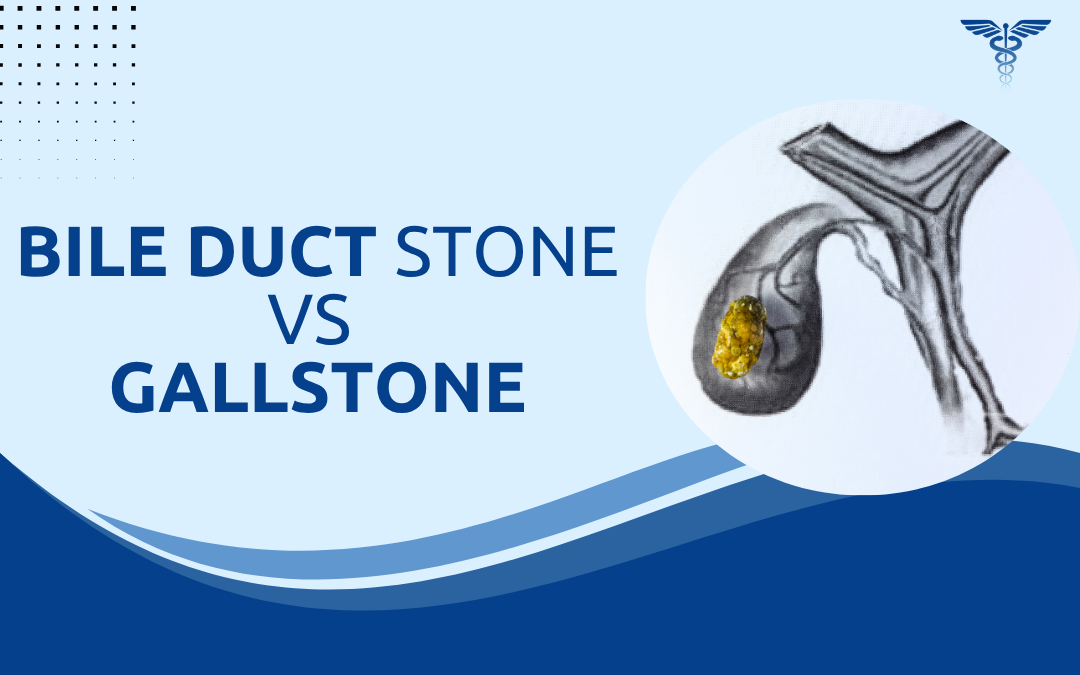
Gallstones sit inside the gallbladder they may cause pain or remain silent for years. Bile duct stones sit inside the common bile duct, blocking bile drainage from the entire liver and causing jaundice, infection, and pancreatitis. They’re almost always gallstones that have migrated, but the location changes everything. The treatment, urgency, and consequences of missing one are significantly more serious.
According to Dr. Rajeev Premnath, a trusted General and Laparoscopic Surgeon in Banglore, “Patients often come in having been told they have gallstones and assume that’s the whole picture. The question I always ask is whether the bile duct is clear a stone in the common bile duct is a different clinical problem from one in the gallbladder. Missing choledocholithiasis when treating gallstones means the patient goes home without the real problem addressed.”
How Do Gallstones and Bile Duct Stones Differ in Symptoms and Risk?
Location determines the clinical picture a stone in the gallbladder and a stone in the bile duct behave very differently.
- Gallstone symptoms: Biliary colic right upper quadrant pain after fatty meals, resolving within hours is the hallmark. Acute cholecystitis develops when a stone obstructs the cystic duct. Gallstones don’t cause jaundice unless one migrates into the bile duct.
- Bile duct stone symptoms: Obstructive jaundice, dark urine, and pale stools develop when a stone blocks the common bile duct. Pain is constant rather than colicky. Fever indicates ascending cholangitis a life-threatening emergency requiring urgent decompression.
- Pancreatitis: A stone lodging at the ampulla of Vater triggers acute pancreatitis one of the most serious complications of gallstone disease, caused by migrating stones, not gallstones sitting in the gallbladder.
- Charcot’s triad: Jaundice, fever, and right upper quadrant pain indicate ascending cholangitis. Adding hypotension and confusion Reynolds’ pentad indicates biliary sepsis requiring immediate intensive care.
Bile duct stones carry complication risks that gallbladder stones alone do not. For a full overview, visit our gall bladder stone removal page.
How Are Bile Duct Stones and Gallstones Treated Differently?
The treatment for each is distinct gallstones require cholecystectomy, bile duct stones require duct clearance, and when both are present, both need to be addressed.
- Gallstone treatment: Laparoscopic cholecystectomy removes the gallbladder and eliminates the source of future stones. It’s a day care procedure for most patients.
- Bile duct stone treatment: ERCP clears stones from the duct endoscopically without surgery. It’s performed before or alongside cholecystectomy when both are present.
- Intraoperative cholangiogram: A dye study performed during cholecystectomy identifies unsuspected bile duct stones before the gallbladder is removed, allowing duct clearance to be planned before the patient leaves theatre.
- When both are present: ERCP clears the bile duct first, then cholecystectomy removes the gallbladder. Addressing only one leaves the patient exposed either to future stone migration or recurrent duct obstruction.
Both conditions are treatable with excellent outcomes when managed correctly. Our blog on gallbladder surgery vs stone dissolution covers why surgical removal outperforms non-surgical options.
Why Choose Dr. Rajeev Premnath?
Dr. Rajeev Premnath is a General and Laparoscopic Surgeon with MBBS, MS (Gen Surg.), FRCS (Glasg.), FEBS, FICS, FACS, FIAGES, FMAS, and a Diploma in Laparoscopy from France, with over 20 years of experience in laparoscopic cholecystectomy and management of complex biliary disease at Ramakrishna Super Speciality Hospital, Jayanagar, Bangalore.
Every patient with gallstone disease receives a bile duct assessment before any operative plan is confirmed liver function tests, ultrasound, and MRCP where indicated ensure that duct stones are identified and addressed alongside gallbladder treatment rather than discovered as a complication after cholecystectomy.
Diagnosed with gallstones and concerned about whether the bile duct is involved?
FAQs
Are bile duct stones and gallstones the same thing?
No gallstones sit in the gallbladder, bile duct stones sit in the common bile duct and cause jaundice, cholangitis, and pancreatitis.
Can gallstones move into the bile duct?
Yes gallstones can migrate from the gallbladder into the common bile duct, becoming bile duct stones with significantly higher complication risk.
How are bile duct stones removed?
ERCP endoscopic retrograde cholangiopancreatography is the standard treatment, extracting stones from the duct without open surgery.
Do I need both ERCP and gallbladder surgery?
When both bile duct and gallbladder stones are present, yes ERCP clears the duct and cholecystectomy removes the gallbladder to prevent recurrence.