

A fissure is a small tear in the lining of the anal canal. A fistula is a tunnel from inside the canal to the nearby skin; it has different causes and needs different treatment. The one overlap is a long-standing fissure that gets infected at its base. An abscess forms, and once it drains, it can leave a tiny tract. That’s rare, and it’s a complication of the fissure, not the fissure becoming a fistula. Most fissures simply heal, on their own or once the tight sphincter muscle underneath relaxes.
According to Dr. Rajeev Premnath, a trusted General and Laparoscopic Surgeon in Bangalore, “I see this often. Someone has had a fissure for months, then some discharge starts near it, and they assume it’s a fistula. Usually it’s a small abscess at the base of the fissure that found a way out. It looks like a fistula but it’s a fissure complication, and it’s assessed and treated differently. You don’t want to operate for a fistula that isn’t one.”
How Do Fissures and Fistulas Differ and When Can One Lead to the Other?
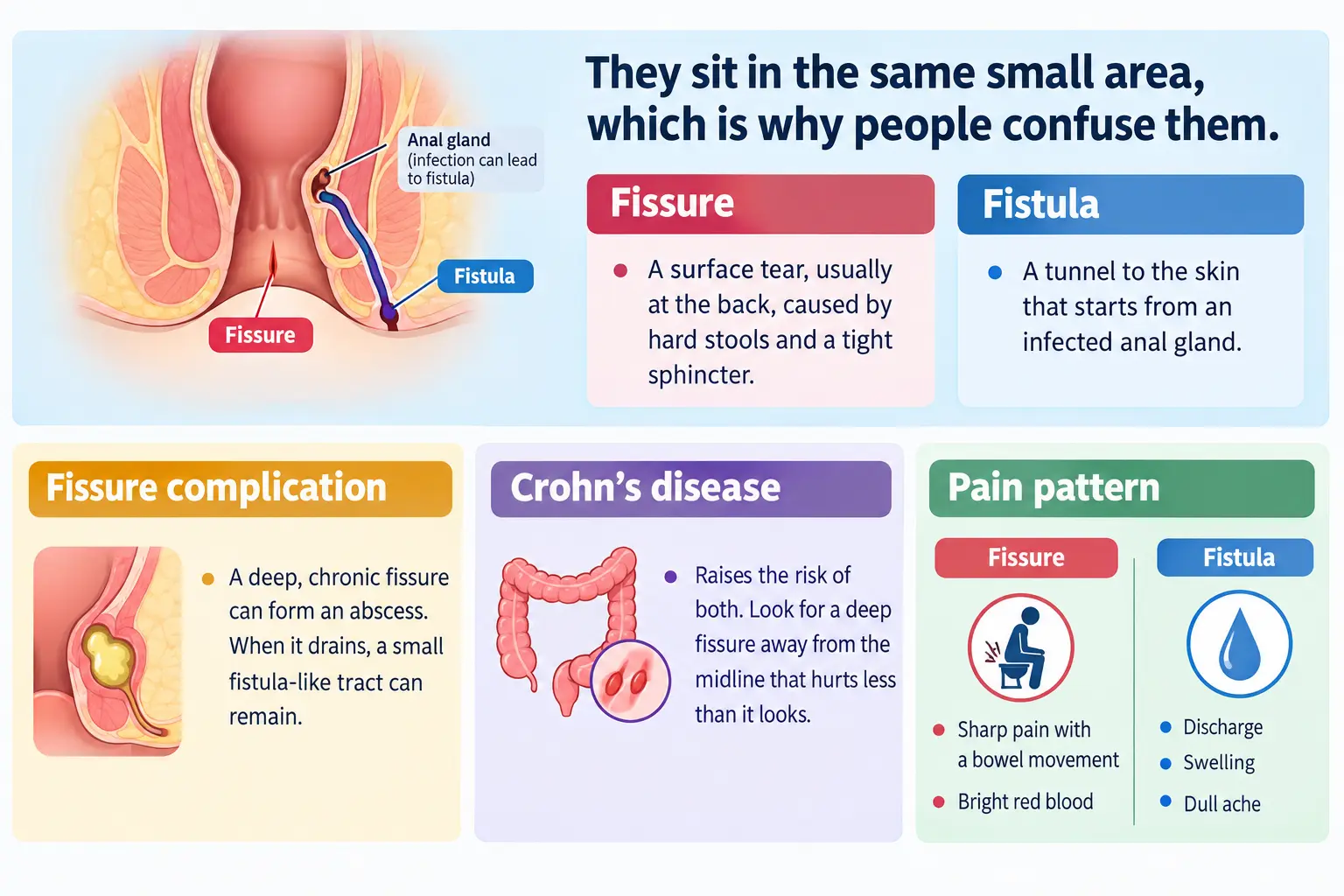
If you have pain and discharge together, both need checking. An examination under anaesthesia settles it. For more on fistula care, see our fistula treatment page.
How Are Fissures and Fistulas Treated and What Happens When Both Are Present?
Each has its own treatment. When they overlap, both are assessed before any plan is made.
Acute fissure: Stool softeners, topical GTN or diltiazem, and sitz baths.
Chronic fissure: Botulinum toxin injection or lateral internal sphincterotomy to lower sphincter tone.
Fistula: Needs surgery. Simple ones get a fistulotomy. Complex or high ones get LIFT, VAAFT or an advancement flap. No medicine closes a fistula.
Both together: The fissure is usually treated first. If a true fistula is also there, each is covered in the operative plan.
Red flags: A fissure that won’t heal, new discharge near it, or an off-midline fissure with bowel symptoms. Get it rechecked for a fistula or Crohn’s.
Catching a fissure that isn’t healing as it should means a developing fistula doesn’t get missed. Our blog on difference between fissure and fistula goes into the anatomy in more detail.
Why Choose Dr. Rajeev Premnath?
Dr. Rajeev Premnath is a General and Laparoscopic Surgeon (MBBS, MS (Gen Surg.), FRCS (Glasg.), FEBS, FICS, FACS, FIAGES, FMAS, and a Diploma in Laparoscopy from France). He has more than 20 years in proctological surgery, covering fissures, fistula repair and complex combined anorectal problems, at Ramakrishna Super Speciality Hospital, Jayanagar, Bangalore.
If you come in with a fissure that won’t heal or new discharge, he reassesses you first, before anything else is planned. Whether it’s a complicated fissure or a true fistula is confirmed before any operation is chosen.
Fissure not healing, and now there’s discharge near it?
FAQs
Can an anal fissure turn into a fistula?
Rarely by itself. A chronic fissure can form an abscess that drains to the skin and leaves a small tract, but that’s a complication, not the normal course.
What is the difference between a fissure and a fistula?
A fissure is a tear in the anal lining. A fistula is a tunnel between the anal canal and the skin. They differ in cause, anatomy and treatment.
How do I know if my fissure has become a fistula?
Look for new discharge near the fissure, swelling that doesn’t go away, or a dull ache taking over from the sharp pain on passing stool. Any of these needs a check for a fistula.
Can fissures and fistulas be treated at the same time?
Yes, if both are confirmed. After an examination under anaesthesia shows the full picture, the operative plan covers each one separately.