

Patients return to a normal diet within six to eight weeks of gallbladder removal. Without the gallbladder, bile drains continuously into the small intestine rather than being stored and released in bursts. The gut adapts to this over weeks. A minority develop persistent loose stools or fatty food intolerance, but the majority eat without restriction by two months after surgery.
According to Dr. Rajeev Premnath, a trusted General and Laparoscopic Surgeon in Bangalore, “Patients assume the fat restriction they followed for years with gallstones is permanent after surgery. It’s not, for most people. The first four to six weeks need care: low-fat, smaller meals, avoiding triggers, but the goal is gradual reintroduction.Most patients eat normally within six to eight weeks. Those who don’t have bile acid malabsorption manageable with the right treatment.
What Should You Eat and Avoid in the First Six Weeks After Surgery?
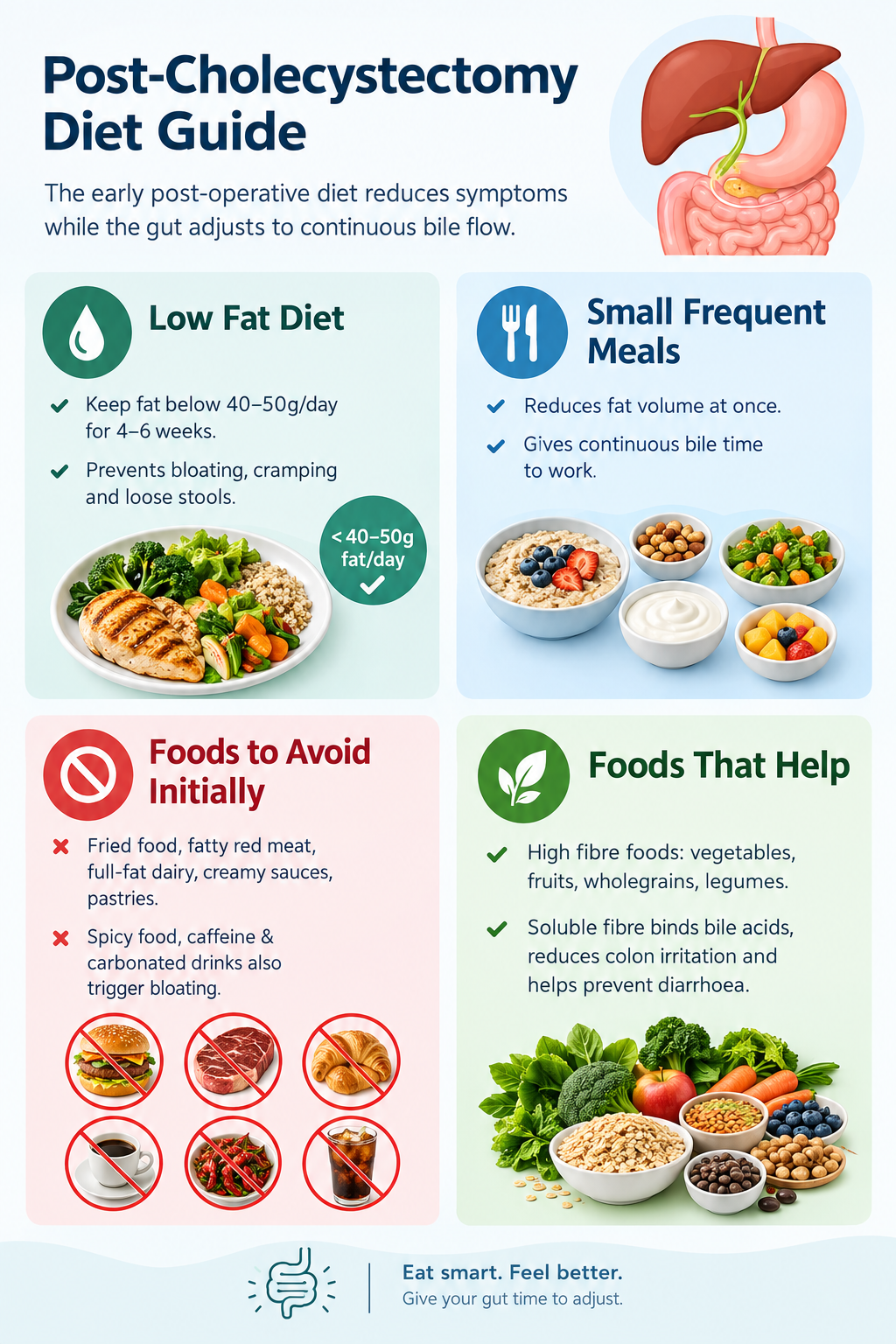
Dietary restriction in the first six weeks is temporary for most patients. For a full overview of gallbladder surgery, visit our gall bladder stone removal page.
What If Symptoms Persist Beyond Six Weeks?
Persistent symptoms beyond six to eight weeks need assessment, not continued dietary restriction alone.
- Bile acid malabsorption: Around 10 to 15% of patients develop persistent diarrhoea from excess bile acids reaching the colon. Bile acid sequestrants resolve symptoms in most cases.
- Retained bile duct stone: Persistent right upper quadrant pain and abnormal liver function tests after surgery raise suspicion for a missed common bile duct stone. MRCP or ERCP confirms and clears it dietary modification won’t resolve this.
- Functional gut symptoms: A subset develop bloating, variable bowel habit, and abdominal discomfort without a structural cause. Gastroenterology assessment and dietitian review produce better outcomes than ongoing empirical restriction.
- Reintroducing foods: Patients who remain on unnecessary restrictions beyond six to eight weeks aren’t giving the gut the opportunity to adapt. Gradual reintroduction one food at a time identifies individual tolerance better than blanket restriction.
Persistent symptoms warrant structured review rather than continued self-management. Our blog on life after gallbladder removal covers the full dietary and lifestyle adjustment pathway.
Why Choose Dr. Rajeev Premnath?
Dr. Rajeev Premnath is a General and Laparoscopic Surgeon with MBBS, MS (Gen Surg.), FRCS (Glasg.), FEBS, FICS, FACS, FIAGES, FMAS, and a Diploma in Laparoscopy from France, with over 20 years of experience in laparoscopic cholecystectomy and post-operative biliary management at Ramakrishna Super Speciality Hospital, Jayanagar, Bangalore.
Every patient undergoing gallbladder surgery receives specific dietary guidance before discharge what to eat, what to avoid, how to reintroduce foods, and at what point persistent symptoms need review so that diet-related post-operative anxiety is replaced with a clear, practical plan.
Recently had gallbladder removal and unsure what you can eat and when?
FAQs
Can you eat normally after gallbladder removal?
Yes most patients return to a normal unrestricted diet within six to eight weeks as the gut adapts to continuous bile flow.
What foods should be avoided after gallbladder removal?
Fried food, fatty red meat, full-fat dairy, and creamy sauces in the first four to six weeks most patients tolerate these normally by two months.
Why do I have diarrhoea after gallbladder removal?
Continuous bile flow into the intestine without gallbladder storage irritates the colon in some patients bile acid sequestrants resolve this when dietary adjustment alone doesn’t.
How long does it take for the gut to adjust after gallbladder surgery?
Most patients adapt within six to eight weeks persistent symptoms beyond this point need assessment for bile acid malabsorption or retained bile duct stone.