

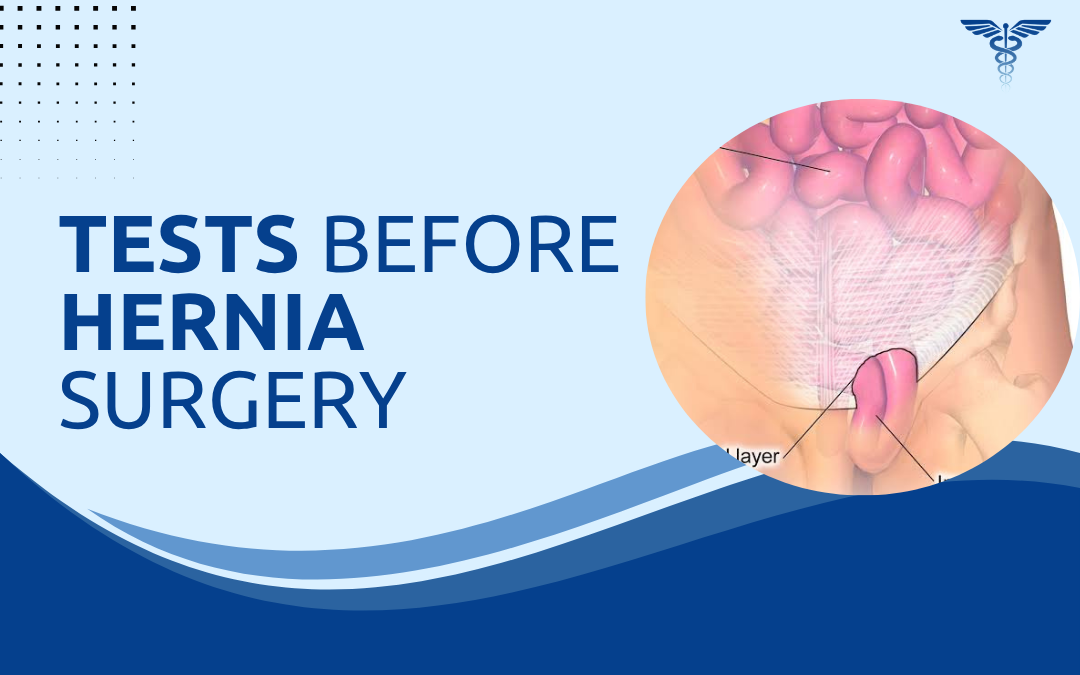
Pre-operative testing before hernia surgery confirms fitness for anaesthesia, flags conditions needing optimisation, and reduces surgical risk. The workup is tailored to age, comorbidities, and repair complexity blood tests, ECG, and chest X-ray are standard, with additional cardiac, respiratory, or metabolic investigations added when indicated. Every test has a purpose: it changes either the operative plan or the anaesthetic approach.
According to Dr. Rajeev Premnath, a trusted General and Laparoscopic Surgeon, “Pre-operative testing isn’t a formality it’s where we find out whether a patient is ready for theatre or whether something needs sorting first. An uncontrolled HbA1c, an undiagnosed arrhythmia, a haemoglobin that’s quietly dropped these change the plan. Getting this right before the date is confirmed is what makes day care surgery safe.”
What Routine Tests Are Done Before Hernia Surgery?
Standard pre-operative investigations apply to most hernia patients regardless of age or comorbidity these form the baseline workup.
- Full blood count: Checks haemoglobin, white cell count, and platelets. Anaemia is corrected before surgery, raised white count may need treatment first, and low platelets affect bleeding and anaesthetic planning.
- Renal and liver function: Identifies impaired kidney or liver function affecting drug metabolism, fluid management, and anaesthetic selection. Especially important in older patients, diabetics, and those on long-term medications.
- Blood glucose and HbA1c: Fasting glucose confirms same-day control. HbA1c reflects 3-month average control. Above 8% prompts deferral until glucose is better managed.
- ECG: Identifies arrhythmias, conduction issues, and prior ischaemic heart disease. Mandatory for patients over 40 and anyone with cardiac symptoms or risk factors.
Routine tests establish the baseline and identify the most common reasons for operative deferral. For the full range of hernia repair options, visit our hernia surgery page.
What Additional Tests Are Done for High Risk Patients?
Patients with comorbidities or complex hernia presentations require investigation beyond the routine workup.
- Echocardiogram: Ordered for ECG abnormalities, known valvular disease, heart failure, poorly controlled hypertension, or cardiac symptoms. Assesses ventricular function and valve status for anaesthetic risk planning.
- Pulmonary function tests: Required for significant COPD, asthma, or unexplained breathlessness. FEV1 below 50% predicted flags high respiratory risk and may require pre-operative optimisation.
- CT abdomen: Standard before large or complex ventral and incisional hernia repairs. Maps defect size, identifies multiple defects, assesses bowel involvement, and guides reconstruction planning.
- Coagulation studies: Ordered for patients on anticoagulants, with liver disease, or a bleeding history. Determines when blood thinners stop and whether bridging anticoagulation is needed.
Additional investigations add no delay when ordered promptly at first assessment. Our blog on high risk hernia surgery covers how comorbidities affect surgical planning in detail.
Why Choose Dr. Rajeev Premnath?
Dr. Rajeev Premnath is a General and Laparoscopic Surgeon with MBBS, MS (Gen Surg.), FRCS (Glasg.), FEBS, FICS, FACS, FIAGES, FMAS, and a Diploma in Laparoscopy from France, with over 20 years of experience in laparoscopic hernia repair including pre-operative assessment and optimisation of complex and high risk patients at Ramakrishna Super Speciality Hospital, Jayanagar, Bangalore.
Every hernia patient receives a structured pre-operative assessment before any operative date is confirmed investigations are ordered based on individual clinical need, results are reviewed before scheduling, and any findings requiring optimisation are addressed before surgery proceeds.
Scheduled for hernia surgery and want to understand what preparation involves?
FAQs
What blood tests are done before hernia surgery?
Full blood count, renal and liver function, blood glucose, HbA1c, and coagulation studies where indicated.
Is an ECG always needed before hernia surgery?
Yes for patients over 40 and for anyone with cardiac symptoms or risk factors regardless of age.
Do I need a CT scan before hernia surgery?
Not routinely CT is ordered for large or complex ventral and incisional hernias where defect mapping affects the operative plan.
Can hernia surgery be delayed because of pre-operative test results?
Yes uncontrolled diabetes, significant anaemia, cardiac abnormalities, or respiratory impairment can defer surgery until optimisation is complete.