

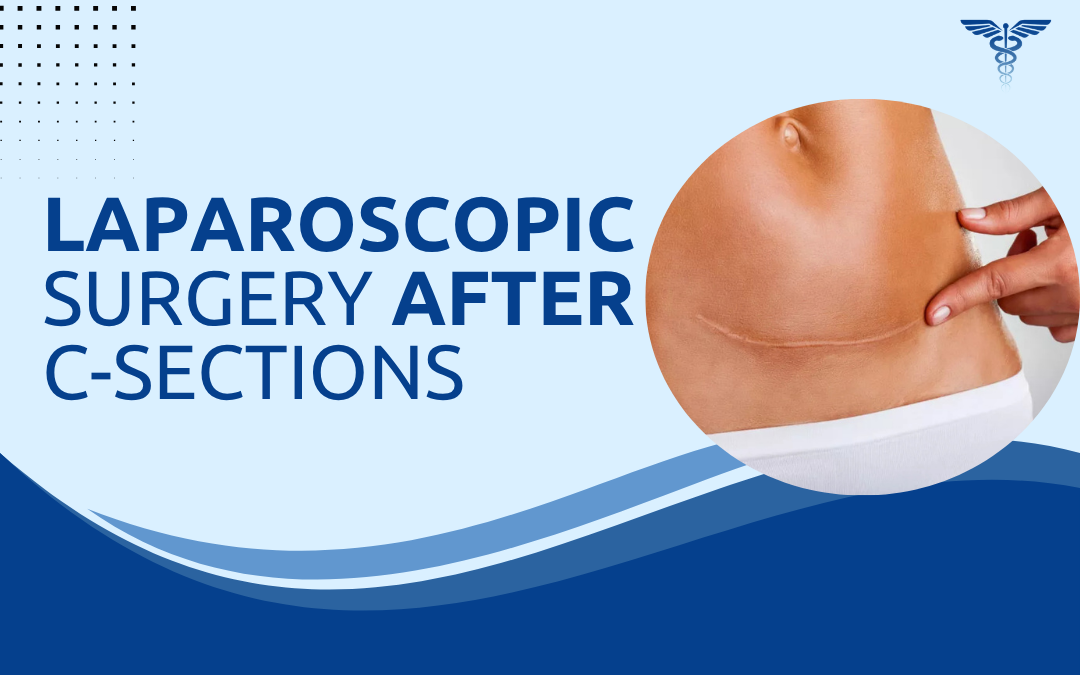
Laparoscopic surgery is safe after multiple C-sections, but requires more careful planning. Each C-section leaves adhesions scar tissue that binds pelvic and abdominal structures in ways that don’t show on imaging. These increase the risk of bowel or bladder injury during port entry and dissection.An experienced surgeon accounts for this with modified entry technique, adjusted port placement, and careful adhesiolysis before proceeding. The surgery isn’t contraindicated. It’s more demanding.
According to Dr. Rajeev Premnath, a trusted General and Laparoscopic Surgeon, “Multiple C-sections don’t make laparoscopic surgery impossible they mean entry and dissection require more careful planning. Adhesions from a second or third caesarean can be significant, particularly around the bladder and lower abdominal wall. The key is knowing where to enter, how to release adhesions safely, and when to convert to open if the anatomy isn’t safe to proceed. That judgement comes from experience.”
How Do Multiple C-Sections Affect Laparoscopic Surgery?
Each caesarean adds a layer of complexity to subsequent abdominal surgery adhesions are the primary concern, but they’re not the only one.
- Adhesion formation: Every C-section creates peritoneal adhesions bowel, omentum, and bladder can all adhere to the anterior abdominal wall or uterus, and a third or fourth C-section compounds this significantly, sometimes creating dense vascularised adhesions that require careful sharp dissection rather than blunt release.
- Port entry risk: Standard umbilical entry carries a higher risk of bowel injury when adhesions tether intestine to the anterior wall surgeons experienced in post-caesarean laparoscopy use Hasson open entry technique or palmer’s point entry in the left upper quadrant, away from the area of expected adhesion.
- Bladder position: Repeated C-sections can pull the bladder dome upward and anteriorly as scar tissue contracts this shifts the bladder into the operative field and increases the risk of inadvertent cystotomy during dissection, particularly for procedures in the lower abdomen or pelvis.
- Conversion to open: The conversion rate from laparoscopic to open surgery is higher in patients with multiple prior abdominal operations this isn’t a failure, it’s the right decision when adhesions make laparoscopic dissection unsafe, and patients should be counselled about this possibility before surgery.
Adhesion burden increases with each prior operation but isn’t reliably predictable from imaging alone the operative picture is only fully known once the camera is inside. Our laparoscopic surgery page covers the range of procedures performed minimally invasively.
What Preparation and Precautions Apply for These Patients?
Pre-operative planning for a patient with multiple C-sections is more detailed than for a first-time abdominal surgery several specific steps reduce operative risk.
- Surgical history review: The number of C-sections, whether any involved complications or wound infections, and any prior laparoscopic findings all inform the surgical plan a patient with three uncomplicated C-sections has a different risk profile from one who had a fourth with a wound breakdown and reopening.
- Imaging: Ultrasound or CT is used to identify the position of key structures before surgery bladder size and position, bowel loops near the anterior wall, and any identifiable adhesion masses help the surgeon plan port placement and entry strategy before the first incision.
- Entry technique: Palmer’s point entry in the left upper quadrant is the preferred alternative entry site when umbilical adhesions are suspected this area is almost always adhesion-free regardless of prior pelvic surgery, giving safe initial access for camera placement and visualisation before any lower abdominal dissection.
- Counselling: Patients with multiple C-sections are counselled pre-operatively about the realistic possibility of conversion to open surgery this isn’t a complication, it’s a planned contingency, and framing it correctly avoids post-operative distress if conversion becomes necessary.
The decision to proceed laparoscopically versus open is made at the time of surgery based on what the camera shows not fixed in advance. Our blog on single incision laparoscopic surgery covers how minimally invasive techniques continue to evolve for complex abdominal cases.
Why Choose Dr. Rajeev Premnath?
Dr. Rajeev Premnath is a General and Laparoscopic Surgeon with MBBS, MS (Gen Surg.), FRCS (Glasg.), FEBS, FICS, FACS, FIAGES, FMAS, and a Diploma in Laparoscopy from France, with over 20 years of experience in laparoscopic surgery including complex cases involving prior abdominal surgery, adhesiolysis, and modified entry techniques at Ramakrishna Super Speciality Hospital, Jayanagar, Bangalore.
Patients with multiple C-sections receive a detailed pre-operative assessment before any laparoscopic procedure is planned entry strategy, port placement, and conversion criteria are all discussed before the operative date is confirmed.
Had VAAFT surgery or considering it for a complex anal fistula?
FAQs
Can laparoscopic surgery be done after multiple C-sections?
Yes, with modified entry technique and careful adhesiolysis, laparoscopic surgery is safe after multiple C-sections.
What is the main risk of laparoscopic surgery after C-sections?
Adhesions increase the risk of bowel or bladder injury during port entry and dissection experienced technique reduces this significantly.
Does the number of C-sections affect laparoscopic surgery risk?
Yes, each prior caesarean adds adhesion burden, and three or more C-sections require more careful pre-operative planning and entry strategy.
What happens if laparoscopic surgery can't proceed safely after C-sections?
The surgeon converts to open surgery this is a planned contingency, not a complication, and is the right call when adhesions make laparoscopic dissection unsafe.
References:
- Abdominal adhesions in gynaecological surgery after caesarean section: a longitudinal population-based register study. BJOG, 2017.
- Adhesions following cesarean delivery: a review of their occurrence, consequences and preventative management using adhesion barriers. American Journal of Obstetrics and Gynecology, 2013.