

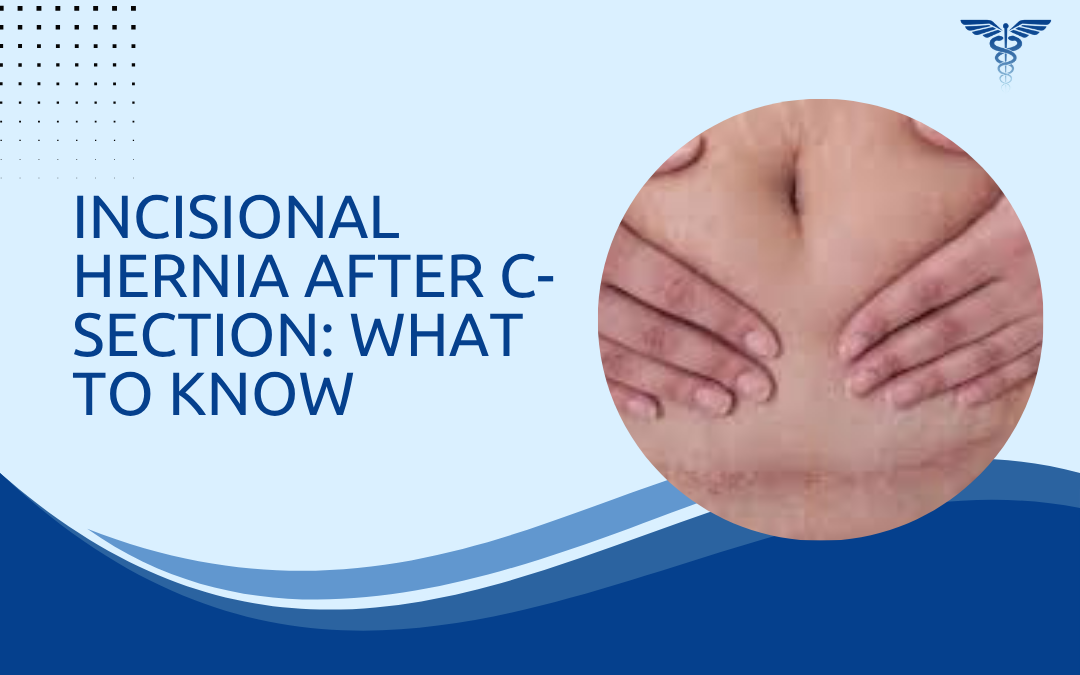
A bulge appearing near a C-section scar months or even years after delivery is incisional hernia until proven otherwise. The abdominal wall gets cut during a caesarean and that cut site is a permanent weak point. Most heal without issue. But in some women that weakness gives way and tissue pushes through. It’s not rare. It’s not anyone’s fault. And it doesn’t fix itself once it’s there.
“Incisional hernia after C-section is underdiagnosed because women assume the bulge is just post-pregnancy changes when it actually needs proper surgical assessment,” says Dr. Rajeev Premnath, General and Laparoscopic Surgeon.
Getting it looked at early keeps the repair straightforward. Leaving it while assuming it’s nothing almost always means a more involved procedure later.
What Causes Incisional Hernia After C-Section and What Does It Feel Like?
Most women who develop this had a completely normal C-section with no complications. The hernia isn’t caused by poor surgical technique or anything the patient did wrong. Hernia surgery for incisional hernias works differently from inguinal repair but the principle is the same. Close the defect. Reinforce the weakness. Stop it coming back.
- The incision site weakens over time. Every abdominal incision creates scar tissue and scar tissue is less strong than the original muscle layers. Repeated pregnancies, excess weight, infection during healing or poor wound closure all increase the chance of that weakness giving way eventually.
- A visible bulge appears near the scar. The bulge is often soft, pushes back in when lying flat and reappears on standing or straining. Some women notice it immediately after delivery. Others don’t see it until months or years later when it finally becomes large enough to feel.
- Pain or heaviness around the scar. A dragging ache or feeling of heaviness low on the abdomen near the C-section scar, especially after standing for long periods or physical activity, is a consistent symptom that gets dismissed as post-pregnancy body changes for too long.
- Bowel symptoms in some cases. When bowel gets involved in the hernia sac women experience cramping, bloating and nausea after meals that doesn’t have an obvious digestive cause and doesn’t respond to dietary changes or standard remedies.
These symptoms don’t always arrive together. Sometimes it’s just the bulge. Sometimes just the ache. But any persistent change near the C-section scar that wasn’t there before is worth getting properly assessed rather than watching and hoping it settles.
Patients wanting to understand what high risk or complex incisional hernia repair involves when the situation has been left longer should look at high risk inguinal hernia surgery which covers how experienced surgical teams handle the more involved presentations.
When Does Incisional Hernia After C-Section Need Surgery?
Not every incisional hernia needs immediate repair. But the list of reasons to wait is shorter than most people think and the reasons to fix it are more practical than most expect.
- Any hernia causing pain or discomfort. An incisional hernia that causes regular aching, heaviness or interferes with normal daily activity has already given a clear answer about whether it needs fixing. It does.
- Hernias that keep growing. A defect in the abdominal wall that’s visibly larger than it was six months ago isn’t stabilising. It’s progressing and the repair gets harder and more mesh-dependent the larger the defect becomes.
- Before a subsequent pregnancy. Planning another pregnancy with an unrepaired incisional hernia is genuinely risky. Pregnancy dramatically increases abdominal pressure and a small manageable defect can become a large complicated one over nine months.
- Incarceration or strangulation signs. Sudden severe pain, a bulge that won’t go back, nausea and vomiting or skin changes over the site are emergency signs that need hospital attention immediately without any waiting.
Surgery for incisional hernia today is laparoscopic in most cases. Tiny cuts. Mesh reinforcement of the defect. Most patients home the same day. Recovery following the same six week timeline as any other hernia repair.
Anyone still unsure whether their incisional hernia is at the stage where surgery is genuinely necessary should read this older piece on is it dangerous to delay hernia surgery which covers the decision honestly without oversimplifying the risks.
Why Choose Dr. Rajeev Premnath?
Dr. Rajeev Premnath has spent over 20 years repairing incisional hernias including post C-section cases at every stage of complexity. Small early defects. Large long-standing ones. Complex presentations with prior abdominal surgery complicating the approach. Every single day without exception. Trained at IRCAD in France, genuinely one of the best places in the world for minimally invasive surgery. Advanced single incision laparoscopic training in Singapore stacked on top. Patients going home same day. Recovering faster than they expected every time.
Call Now: +91 90082 04466 – same day appointments available for urgent cases.
A bulge near a C-section scar that keeps coming back isn’t just a cosmetic issue and it isn’t post-pregnancy normal. One proper examination tells you exactly what it is and what fixes it permanently.
FAQs
How common is incisional hernia after a C-section?
Incisional hernia develops in roughly three to five percent of C-section patients though many go undiagnosed because the bulge gets attributed to normal post-pregnancy body changes.
How long after a C-section can an incisional hernia appear?
It can appear weeks after delivery or years later, with many women noticing the bulge only when a subsequent pregnancy or weight gain increases abdominal pressure significantly.
Can incisional hernia after C-section be repaired laparoscopically?
Yes, most incisional hernias after C-section are repaired laparoscopically with mesh reinforcement through tiny cuts and same day discharge in uncomplicated cases.
Is it safe to get pregnant again after incisional hernia repair?
Yes, but most surgeons recommend waiting at least six to twelve months after repair before attempting another pregnancy to allow the mesh to fully integrate.
A proper consultation gives specific answers around your hernia size, type and health situation. Come in and speak directly with Dr. Rajeev Premnath.
References