

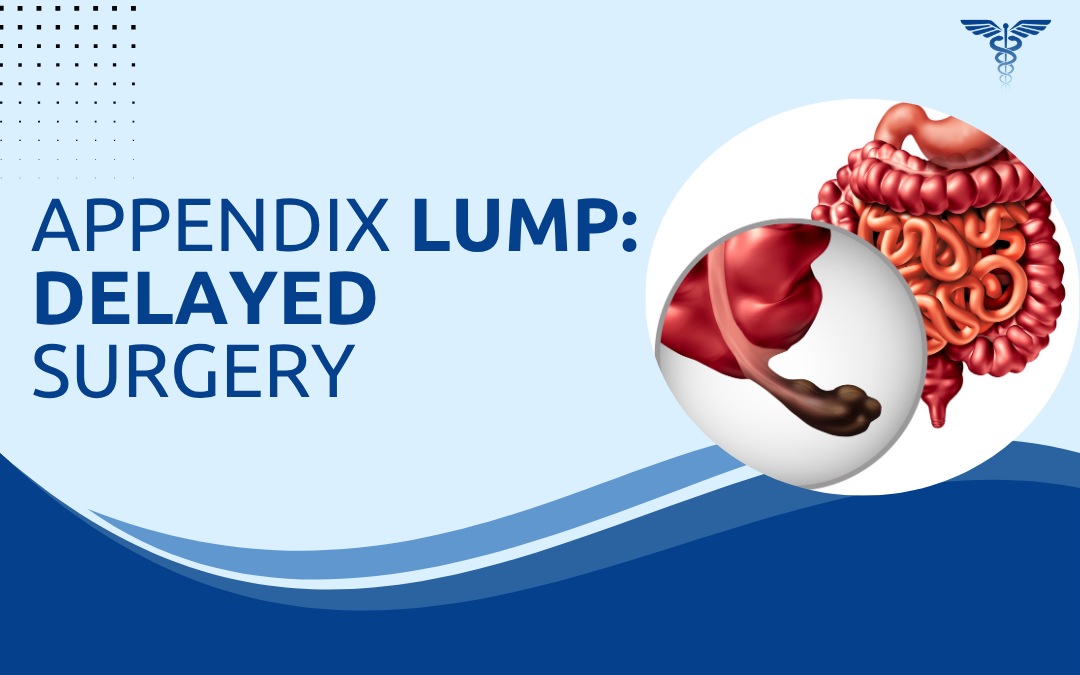
An appendix lump, or appendicular mass, forms when inflamed appendix tissue adheres to surrounding bowel and omentum, containing the infection instead of rupturing freely. The lump is palpable in the right lower abdomen, tender, and typically accompanied by fever and a raised white cell count. Antibiotics can settle the acute inflammation but don’t resolve the underlying disease. Surgery is still required, and delaying it beyond the recommended interval is where complications start.
According to Dr. Rajeev Premnath, a leading General Surgeon in Bangalore, “An appendicular mass that responds to antibiotics gives patients a false sense of resolution. The appendix hasn’t recovered. It’s sitting there inflamed, walled off, and at real risk of breaking down again.”
What Actually Happens When an Appendix Lump Is Left Too Long?
Conservative treatment stabilises the acute episode. The underlying pathology remains and requires definitive surgical management.
- Abscess formation: The walled-off infection can liquefy into a peri-appendiceal abscess. Antibiotics won’t clear it. Drainage under ultrasound guidance is needed first, turning a single procedure into two.
- Rupture is what the conservative approach is trying to prevent. A mass that breaks down spills contaminated material into the peritoneal cavity, causing peritonitis. The surgery that follows is significantly harder than a planned interval appendectomy.
- Bowel obstruction: The inflammatory mass can compress adjacent small bowel. Partial obstruction means cramping and vomiting. Complete obstruction is an emergency that has to be dealt with before any appendix surgery happens.
- Recurrent appendicitis: Around 20% of patients managed with antibiotics alone have another acute episode within a year, often worse than the first because the anatomy is already distorted.
Antibiotic resolution isn’t a cure. Planned appendix treatment within six to eight weeks of the acute episode prevents avoidable escalation.
How Is an Appendix Lump Managed Surgically?
Operative outcomes in interval appendectomy depend on when surgery is performed and in what clinical sequence, not on technique alone.
- Interval appendectomy: Once the lump settles on antibiotics, surgery is planned six to eight weeks later. Tissue planes are cleaner in the interval window and laparoscopic surgery is almost always achievable.
- Abscess drainage first: A liquefied collection needs image-guided drainage before appendectomy. Operating through an active abscess cavity significantly raises the risk of bowel injury and wound infection.
- Emergency surgery for rupture or obstruction is a different operation entirely. Open conversion is more likely, operating time is longer, recovery takes weeks. It’s exactly what interval surgery is designed to avoid.
- Laparoscopic vs open: The decision depends on the degree of adhesion and how cleanly the anatomy can be defined under camera vision. Laparoscopic appendectomy is achievable for appendicular mass in experienced hands.
Surgery at the right time produces straightforward outcomes. Our previous blog on appendix surgery covers the full recovery timeline week by week.
Why Choose Dr. Rajeev Premnath?
Dr. Rajeev Premnath holds MBBS, MS (Gen Surg.), FRCS (Glasg.), FEBS, FICS, FACS, FIAGES, FMAS, and a Diploma in Laparoscopy from France. He’s been managing appendicitis presentations including appendicular mass at Ramakrishna Super Speciality Hospital for over 20 years, with laparoscopic appendectomy as the standard approach for both elective interval and emergency cases.
Appendix lump cases here get proper staging before any operative decision. The timing of surgery is determined by the clinical picture, not a fixed protocol.
Right lower abdomen pain that antibiotics didn’t fully resolve?
FAQs
What is an appendix lump?
A palpable mass in the right lower abdomen formed when inflamed appendix tissue adheres to surrounding bowel and omentum.
Can an appendix lump resolve without surgery?
Antibiotics can settle the acute inflammation, but interval surgery is still needed six to eight weeks later.
What happens if appendix lump surgery is delayed?
Abscess formation, rupture, bowel obstruction, or recurrent appendicitis are the main risks of deferring surgery.
Is laparoscopic surgery possible for an appendix lump?
Yes, in experienced hands laparoscopic appendectomy is performed for appendicular mass with good outcomes.
Disclaimer:
This blog is for educational and informational purposes only and should not be considered professional advice.