

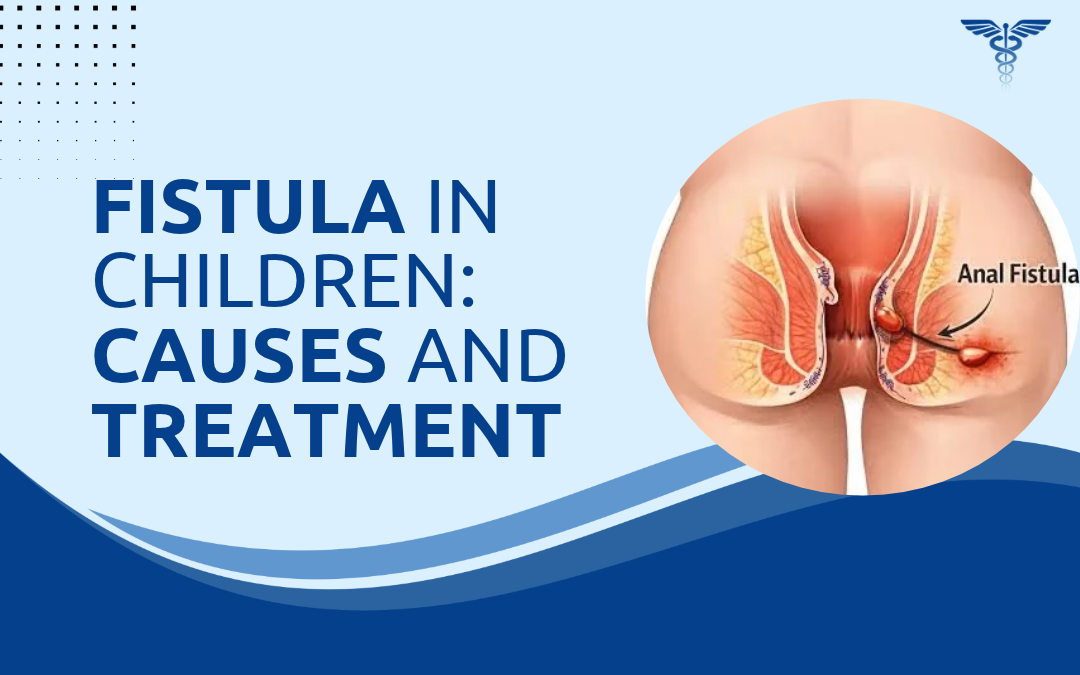
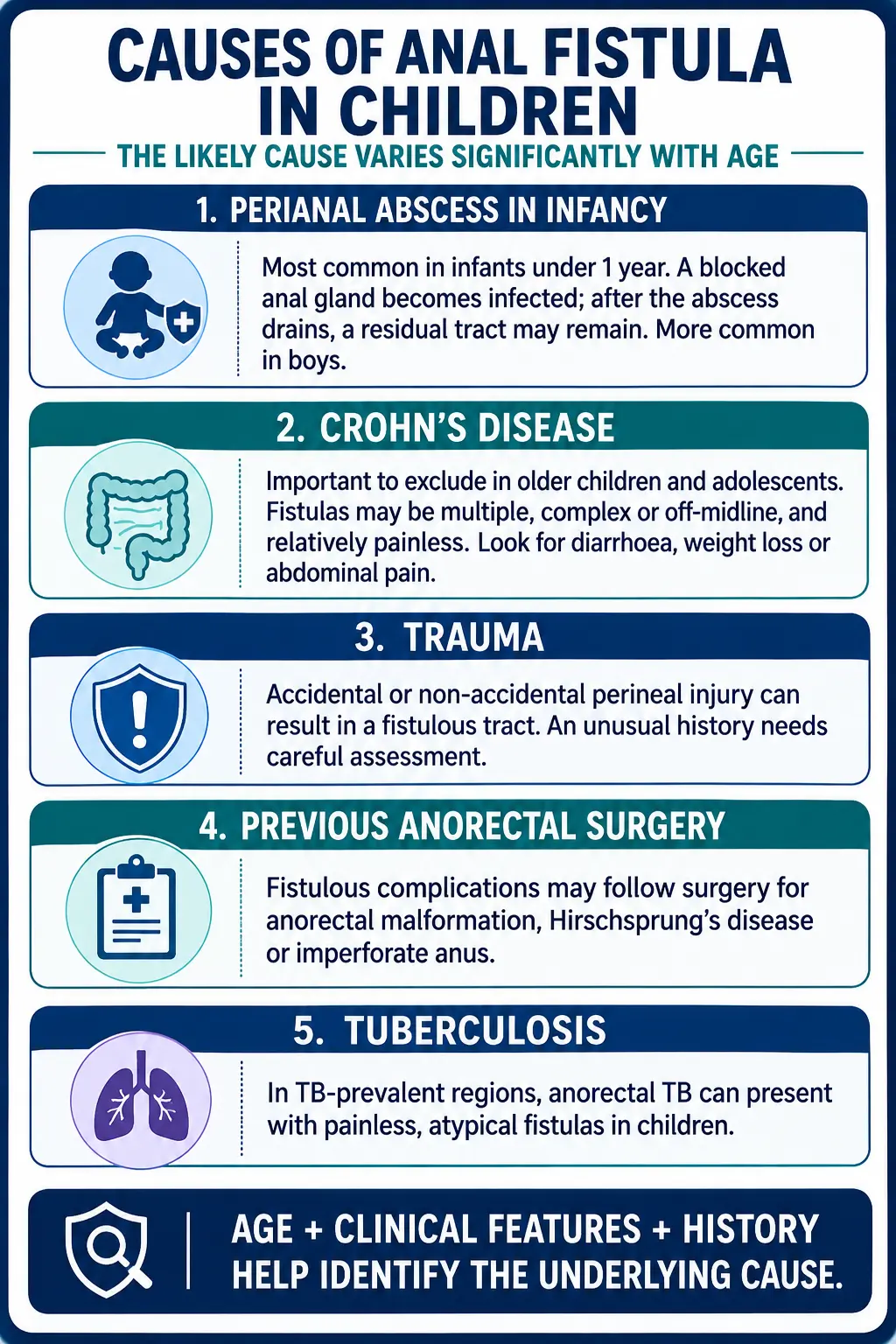
Anal fistula in children differs from adults in almost every way. In infants under one year, it is almost exclusively a simple low intersphincteric tract following a perianal abscess that drained spontaneously or was incised. In older children and adolescents, the picture is more varied; Crohn’s disease becomes an important consideration when fistulas are multiple, complex, or associated with bowel symptoms. Many low fistulas in infants heal without surgery, making the natural history more favourable than in adults.
According to Dr. Rajeev Premnath, a General and Laparoscopic Surgeon in Bangalore, “Fistula in an infant is usually straightforward a perianal abscess drains, leaves a small tract, and in many cases closes on its own. I watch those conservatively before recommending surgery. In an older child with a recurring fistula or multiple openings, I want to know whether Crohn’s is in the picture before planning any operation. Operating on a Crohn’s fistula as though it’s idiopathic produces poor results.”
What Causes Anal Fistula in Children?
For a full overview of assessment and surgical options, visit our dedicated fistula treatment section.
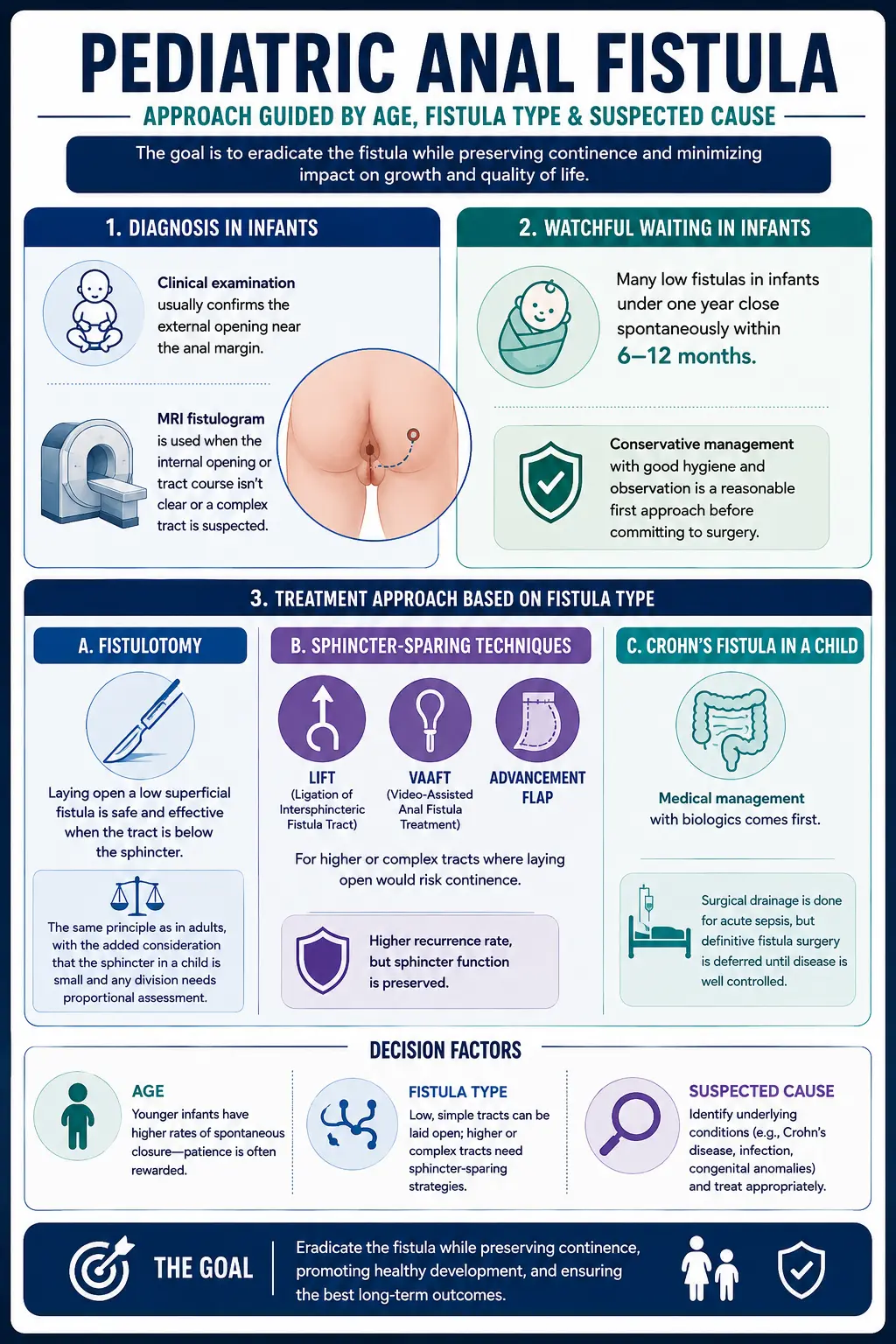
How Is Anal Fistula in Children Diagnosed and Treated?
For what fistula surgery recovery looks like, our blog on VAAFT fistula surgery recovery covers the post-operative pathway.
What Determines the Right Treatment Approach?
Age, fistula complexity and underlying cause all shape the plan.
- Infants under one year with a simple low fistula: Watchful waiting first. Surgery only if the fistula persists beyond twelve months, keeps causing recurrent abscesses, or the family prefers earlier intervention after full discussion.
- Children over one year with a simple low fistula: Fistulotomy is the standard approach tract laid open under general anaesthesia as a day case in most centres.
- Any child with a complex or multiple fistula: Crohn’s disease must be excluded before definitive surgery. Colonoscopy, MRI, and paediatric gastroenterology input are part of the workup.
- Recurrent fistula after surgery: Assess whether the original tract was fully laid open, whether a secondary tract was missed, and whether Crohn’s was overlooked. MRI under anaesthesia maps anatomy before any further procedure.
- Paediatric Crohn’s fistula: Biologics, particularly anti-TNF agents, have significantly improved closure rates. For complex tracts where cutting isn’t appropriate, high anal fistula treatment without cutting covers the sphincter-sparing options used when disease is in remission.
Anal pain on defecation and not sure where the fissure is?
FAQs
Can anal fistula in infants heal without surgery?
Yes. Many low fistulas in infants under one year close on their own within six to twelve months. Surgery is considered if they persist or keep causing recurrent abscesses.
Why are male infants more affected by anal fistula?
Androgen-driven hyperplasia of the anal glands in male infants in the first months of life is thought to increase the risk of blocked and infected glands leading to abscess and fistula.
What is the most important cause of fistula in older children?
Crohn’s disease. Any child over five with a perianal fistula, particularly if complex or multiple, needs Crohn’s disease excluded before treatment is planned.
Is fistulotomy safe in children?
Yes for low superficial tracts below the sphincter. Higher tracts need sphincter-sparing techniques to protect continence in a child whose sphincter is small.