

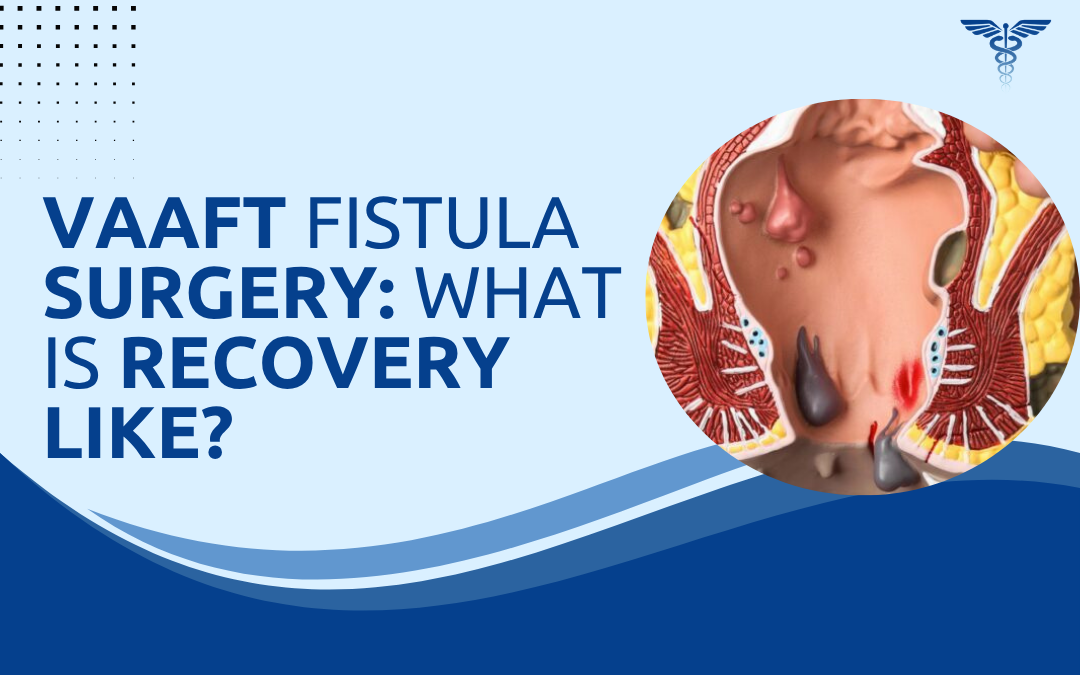
VAAFT recovery is considerably faster than open fistulotomy. There is no large wound, no packing, and no prolonged healing. Most patients are discharged the same day. Pain in the first few days is mild to moderate and well-controlled with standard analgesia.Since sphincter division is not involved, there is no continence risk to recover from recovery focuses on wound healing and gradual return to activity. Most patients resume desk work within five to seven days and full activity within two to four weeks.
According to Dr. Rajeev Premnath, a trusted General and Laparoscopic Surgeon, “VAAFT recovery tends to surprise patients they anticipate weeks of wound care and restricted movement. What they experience is a small external opening, mild discomfort for a few days, and a return to work within a week. The key thing to monitor is any return of discharge or swelling near the old tract, which may indicate recurrence.”
What Happens in the First Two Weeks After VAAFT Surgery?
The early recovery period focuses on wound hygiene, pain management, and monitoring the external opening for signs of healing or recurrence.
- Days 1 to 3: Mild to moderate perianal discomfort is expected paracetamol and ibuprofen manage it adequately in most cases, and opioid analgesia is rarely needed given the absence of a large open wound or sphincter division.
- Days 3 to 7: The external opening closes progressively sitz baths twice daily keep the area clean, reduce local discomfort, and support tissue healing without disrupting the internal closure achieved during the procedure.
- Bowel movements: The first bowel movement after VAAFT causes anxiety for most patients but is not as painful as after open fistulotomy stool softeners are prescribed to avoid straining, which could stress the internal closure before it has consolidated.
- Activity: Light walking is encouraged from day one prolonged sitting, cycling, and heavy lifting are avoided for the first two weeks to reduce pressure on the perianal area and minimise the risk of disrupting the cauterised tract before it has sealed.
Wound hygiene is the most important patient responsibility in the first two weeks. If you’re exploring your options, learn more about fistula treatment to understand the full process.
What Does Recovery Look Like From Week Two Onwards?
After the first two weeks, recovery shifts from wound care to gradual return to full activity and monitoring for recurrence.
- Weeks 2 to 4: Most patients return to desk work and light daily activity by the end of the first week by week two to four, driving, moderate walking, and social activity are comfortable, and sitz baths can be reduced as the external opening heals.
- Physical activity: Exercise, gym work, and heavy lifting are reintroduced after four weeks when the internal closure has consolidated returning too early risks mechanical disruption of the sealed tract before fibrous healing is complete.
- Follow-up assessment: A review at four to six weeks allows clinical assessment of the external opening, confirmation that discharge has ceased, and early identification of any recurrence a tract that hasn’t sealed by this point needs further evaluation.
- Recurrence monitoring: VAAFT recurrence rates sit between 15% and 30% in published series patients are advised to report any return of perianal discharge, swelling, or pain promptly, as early identification of recurrence allows timely re-intervention before the tract re-establishes fully.
Full recovery from VAAFT is expected by four to six weeks for most patients. Our blog on fistula surgery recovery covers the diet and activity guide applicable across all fistula repair techniques.
Why Choose Dr. Rajeev Premnath?
Dr. Rajeev Premnath is a General and Laparoscopic Surgeon with MBBS, MS (Gen Surg.), FRCS (Glasg.), FEBS, FICS, FACS, FIAGES, FMAS, and a Diploma in Laparoscopy from France, with over 20 years of experience in laparoscopic and proctological surgery including sphincter-sparing fistula procedures at Ramakrishna Super Speciality Hospital, Jayanagar, Bangalore.
Each fistula case is assessed individually before technique selection tract complexity, sphincter involvement, and prior surgical history determine whether VAAFT, LIFT, or an alternative approach is the right choice, and recovery planning is tailored to the patient’s work demands and activity level.
Had VAAFT surgery or considering it for a complex anal fistula?
FAQs
How long does VAAFT fistula surgery recovery take?
Most patients return to desk work within five to seven days and full activity within four weeks.
Is VAAFT recovery painful?
Mild to moderate discomfort for the first few days manageable with standard analgesia, significantly less painful than open fistulotomy.
When can I exercise after VAAFT surgery?
Light walking from day one gym work and heavy lifting reintroduced after four weeks once internal closure has consolidated.
What are the signs of recurrence after VAAFT?
Return of perianal discharge, swelling, or pain near the old tract site report promptly for early assessment.