

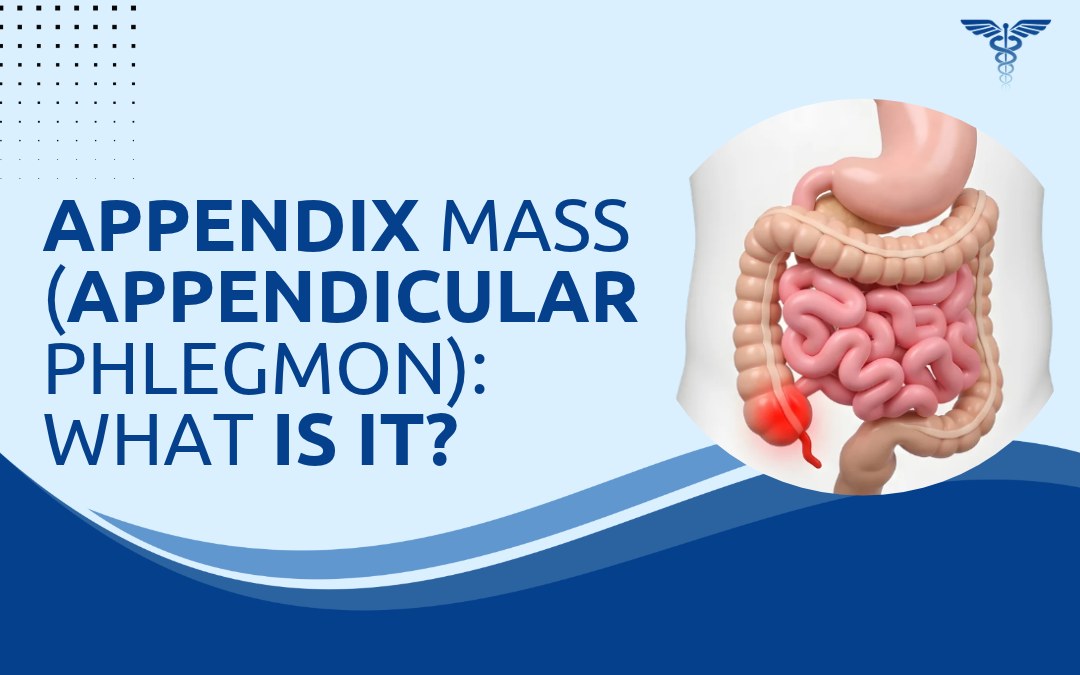
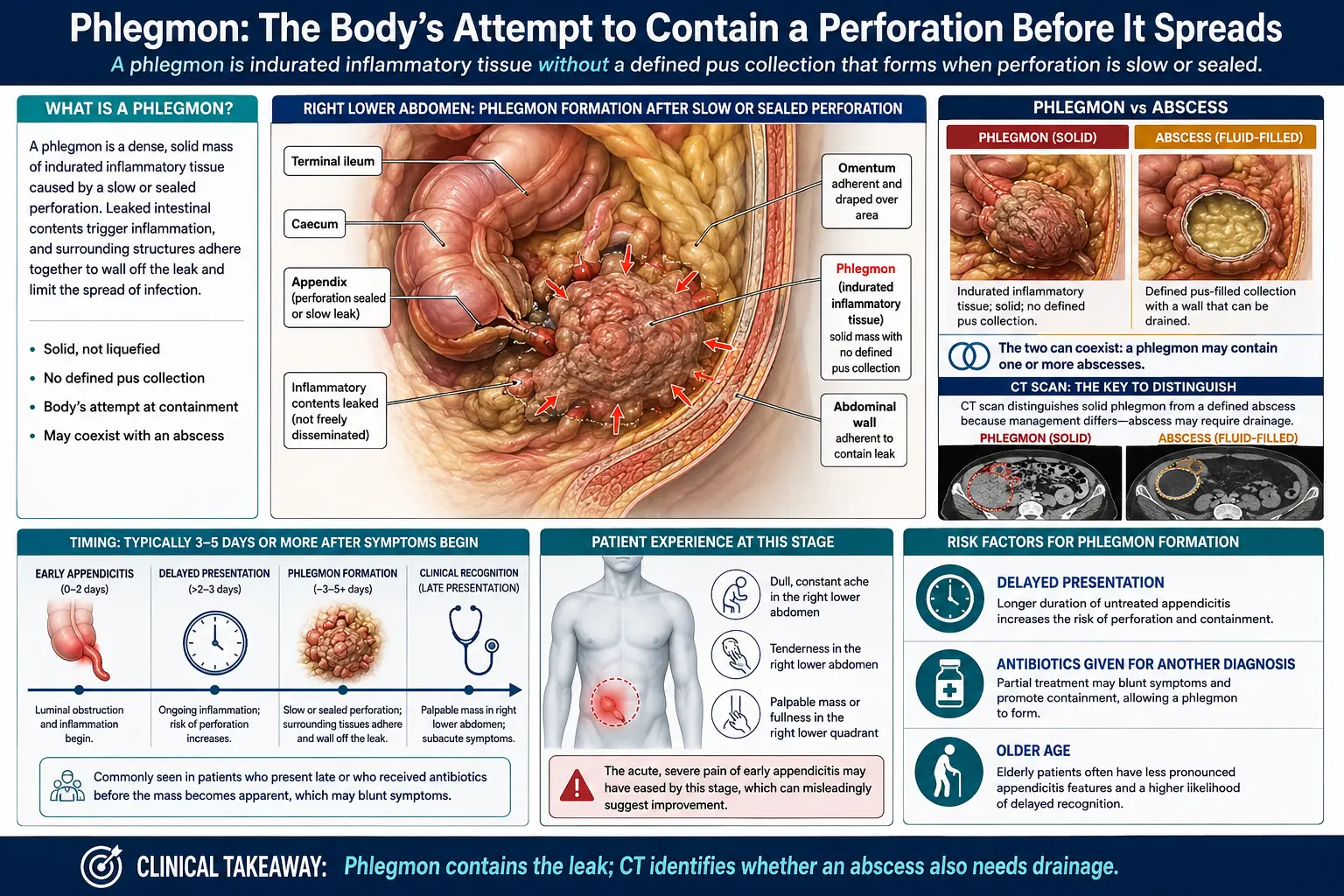
An appendicular phlegmon is a mass that forms in the right lower abdomen when a perforated appendix is contained by surrounding bowel, omentum and peritoneum before generalised peritonitis develops. The body walls off the infection rather than letting it spread — presenting as a tender, poorly defined swelling in the right iliac fossa, with fever and raised inflammatory markers, appearing days after the initial pain. It’s not a surgical emergency like a free perforation. Standard management is antibiotics and interval surgery rather than immediate appendectomy.
According to Dr. Rajeev Premnath, a General and Laparoscopic Surgeon in Banglore, “An appendix mass tells me the body has already contained the infection. Operating acutely means cutting through inflamed, friable tissue with no clear planes significant risk of bowel injury. So we treat conservatively, let it settle, and bring the patient back for interval appendectomy eight to twelve weeks later when the anatomy is normal. The exception is an abscess inside the mass that needs draining, or deterioration despite antibiotics.”
What Is an Appendicular Phlegmon and How Does It Form?
For a full overview of appendix conditions and surgical options, visit our dedicated appendix treatment section.
How Is an Appendicular Phlegmon Diagnosed and Managed?
For what recovery looks like after interval appendectomy, our blog on appendix surgery recovery covers the post-operative pathway in detail.
What Determines the Right Treatment Approach?
The CT findings, the patient’s clinical response and age guide every decision.
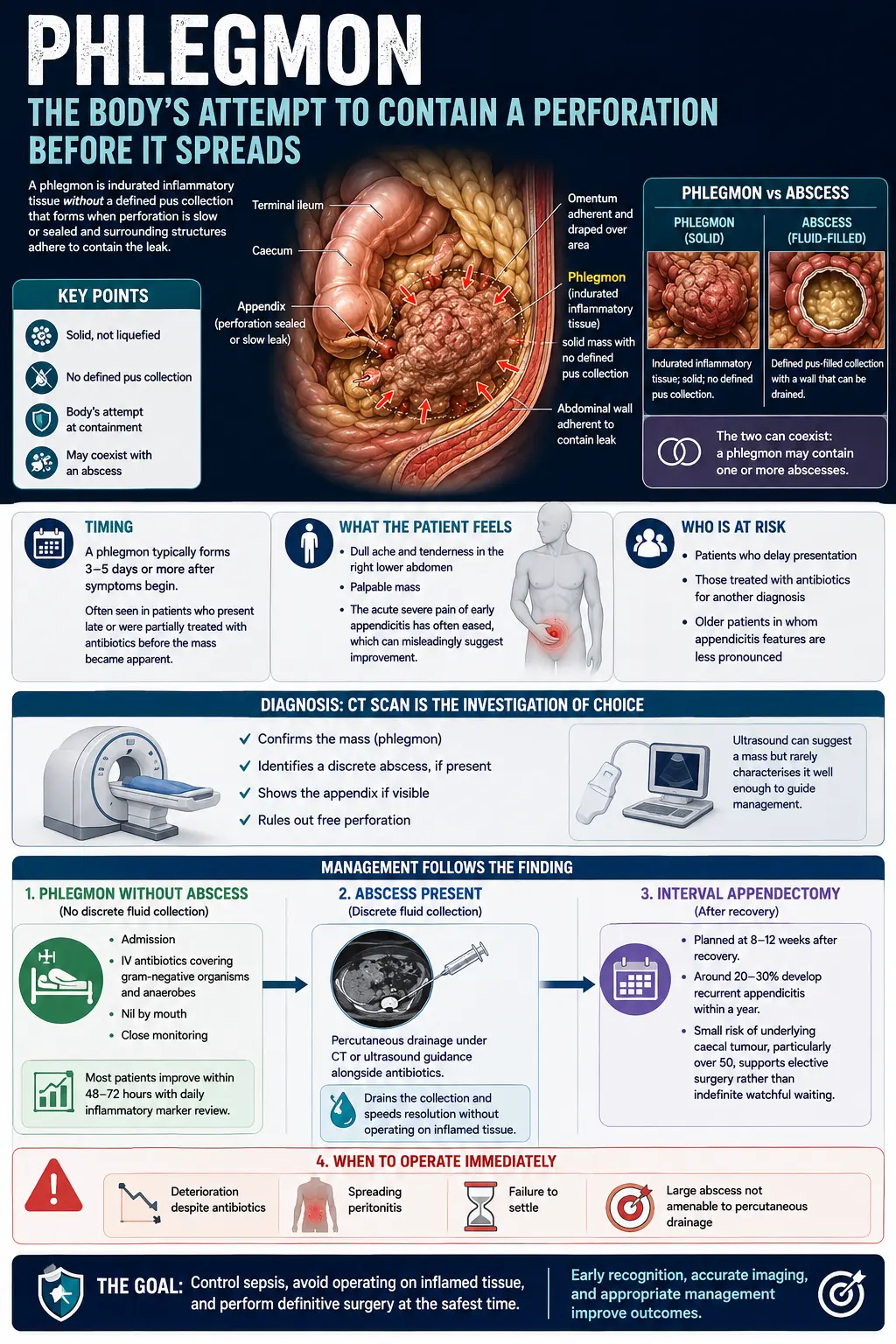
- Phlegmon only, no abscess, improving on antibiotics: Continue conservative management, repeat imaging if progress is slower than expected, and plan interval appendectomy at eight to twelve weeks.
- Phlegmon with abscess: Percutaneous drainage alongside antibiotics. Surgery is avoided acutely unless drainage fails or peritonitis develops.
- Failure to improve at forty-eight to seventy-two hours: Repeat CT to look for a missed abscess, spread of infection, or an alternative diagnosis. If no drainable collection is found and the patient is deteriorating, surgery is planned.
- Age over fifty presenting with an appendix mass: A caecal carcinoma can present identically to an appendicular phlegmon. Colonoscopy is performed after recovery to exclude an underlying tumour before interval appendectomy is confirmed.
- Paediatric patients: Children are generally managed with the same conservative approach. Interval appendectomy and recurrence risk are discussed with families and for those with questions about long-term implications, appendix removal and immunity addresses what the evidence actually shows.
Anal pain on defecation and not sure where the fissure is?
FAQs
What is an appendicular phlegmon?
A mass of inflamed tissue in the right lower abdomen that forms when a perforated appendix is contained by surrounding bowel and omentum before infection can spread.
Is an appendicular phlegmon the same as an abscess?
No. A phlegmon is solid inflammatory tissue. An abscess is a collection of pus. They can coexist, and a CT scan tells them apart.
Does an appendicular phlegmon always need surgery?
Not immediately. Most are managed with antibiotics first, with interval appendectomy planned eight to twelve weeks later after full recovery.
Why is interval appendectomy recommended after a phlegmon?
Because around twenty to thirty percent of patients develop recurrent appendicitis within a year, and there is a small risk of a missed caecal tumour, particularly in older patients.