

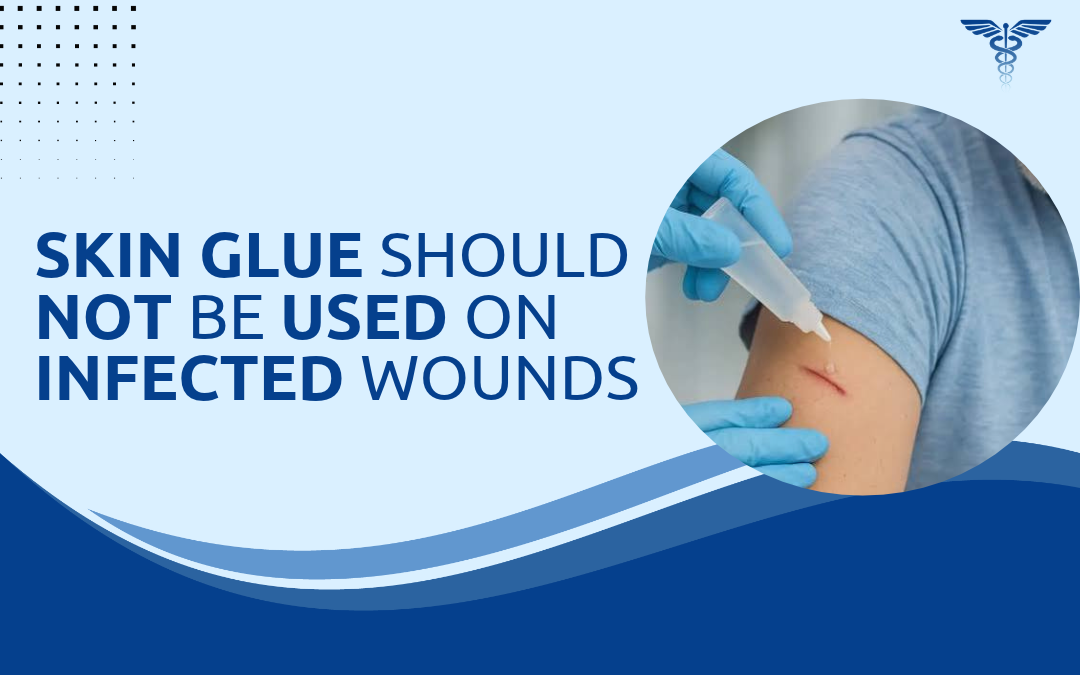
Skin glue shouldn’t be used on an infected wound. It forms a waterproof seal over the skin, so bacteria and pus stay trapped instead of draining. Clean, fresh, low-tension cuts are what it’s made for. Wounds that are already red, swollen, warm or leaking aren’t. Same goes for bites, deep punctures and badly contaminated injuries. An infected wound needs cleaning and drainage first, and closure comes later. Because sealing it early doesn’t stop the infection. It hides it.
According to Dr. Rajeev Premnath, General and Laparoscopic Surgeon in Banglore skin glue, “Glue closes a clean wound beautifully, but on an infected one it just traps the problem under the surface, so the wound has to be cleared first.”
Why Is Skin Glue Not Suitable for Infected Wounds?
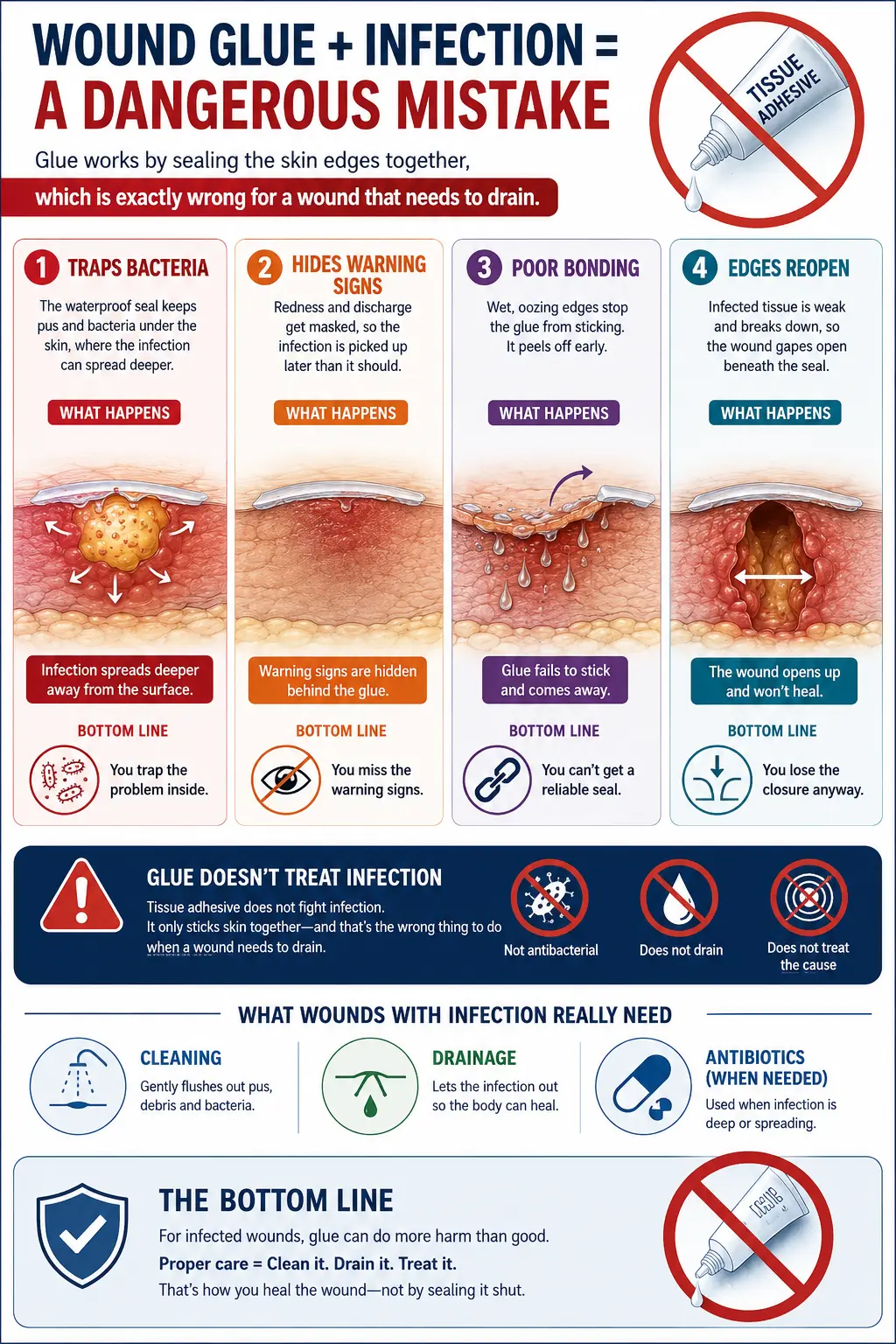
For a clearer picture of which wounds are suited to glue and which aren’t, our dedicated skin glue section covers the clinical criteria, including wound depth, contamination level, and location, that determine whether glue is the right closure method.
Which Wounds Can Be Glued and What Happens to Infected Ones?
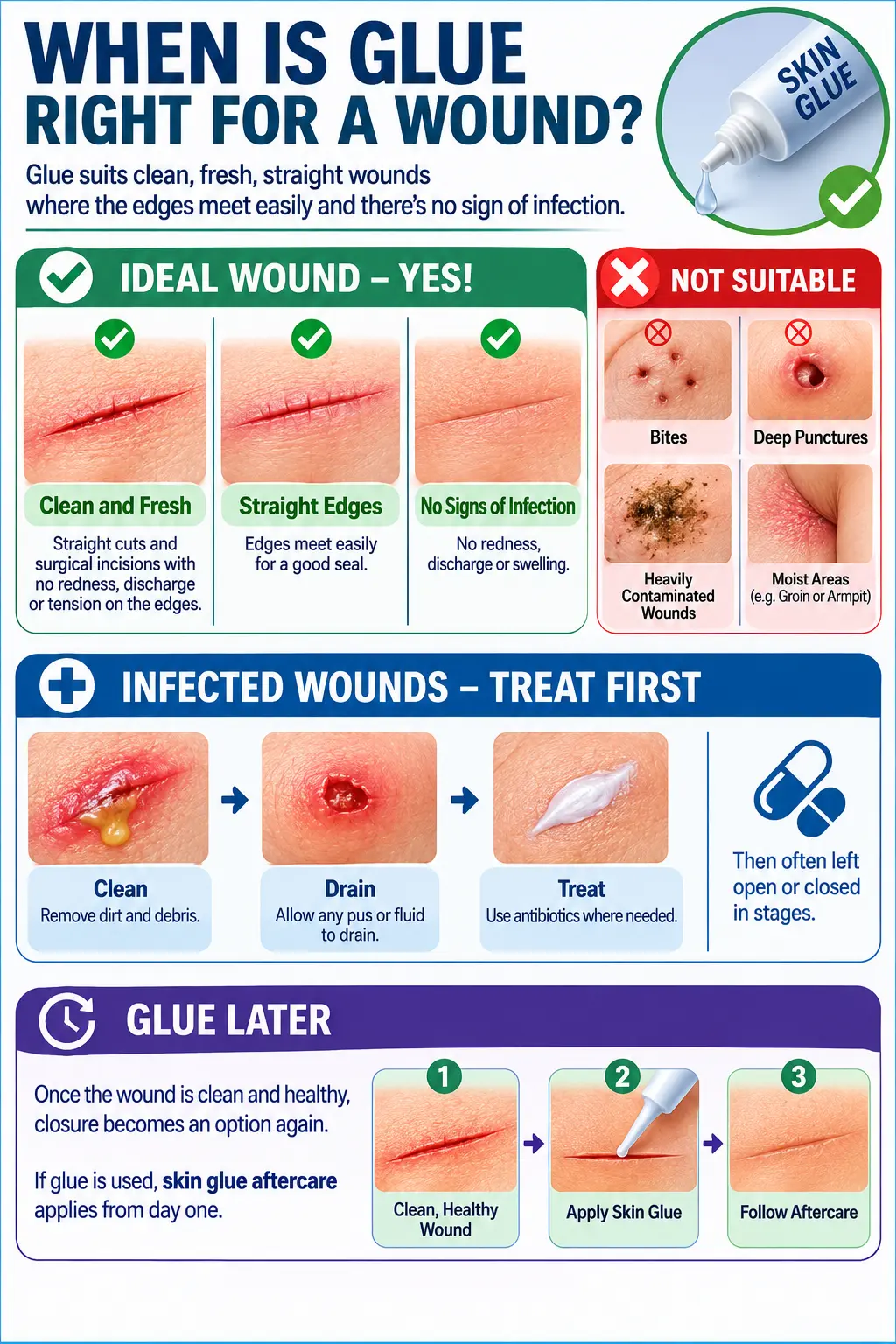
A glued wound that turns red, swollen or painful needs prompt review, because the seal may have to come off so it can drain. Want the basics first? Read what skin glue is and how it works.
What Determines the Right Treatment Approach?
Every wound gets examined before it’s closed the clinical findings decide the method, not the preference.
- Infection status: The first question is whether the wound is clean or infected. Clean wounds with well-approximated edges are candidates for glue. Infected wounds are cleaned and drained first; closure comes later, once the wound is healthy.
- Wound type and depth: Straight, superficial cuts suit glue. Bites, deep punctures, and heavily contaminated wounds don’t, regardless of how fresh they are. Depth and contamination level override all other considerations.
- Location and moisture: Wounds in moist areas groin, armpit, skin folds don’t bond reliably with glue. Stitches or closure strips are more appropriate where the skin moves or stays wet.
- Staged closure: Infected wounds are often left open intentionally after cleaning, then closed in stages as the tissue heals. Closing too early traps the infection; waiting until the wound bed is clean produces a better result with lower risk of breakdown.
The right closure method follows the wound assessment a clean wound closed correctly heals once. An infected wound sealed too early reopens and needs managing again. For a full breakdown of when glue is appropriate versus stitches, skin glue vs stitches covers the clinical criteria for each.
Prolapsing piles that are getting worse and want to know the options?
FAQs
Can skin glue be applied over an infected wound?
No, it seals bacteria in and can worsen the infection.
What if a glued wound becomes red and swollen?
Get it reviewed promptly, as the seal may need removing for drainage.
Is skin glue safe on animal bites?
No, bites carry heavy bacterial contamination and are usually left open.
Can an infected wound be closed after treatment?
Yes, once it’s clean and healthy, closure with stitches or glue may be possible.