

A parastomal hernia is a bulge that forms around a stoma, the opening in the abdominal wall created for a colostomy, ileostomy or urostomy. It happens when bowel pushes through the weakened muscle around the stoma site. It is the most common complication of stoma formation, affecting up to half of all stoma patients within five years. Most are managed conservatively with a support belt and stoma appliance adjustment. Surgery is reserved for hernias that cause pain, obstruction, difficulty managing the stoma, or significant impact on daily life.
According to Dr. Rajeev Premnath, a General and Laparoscopic Surgeon, “Parastomal hernias are very common and most patients manage well without surgery. What I watch for is a hernia that’s growing quickly, making it hard to fit the stoma bag, or causing obstruction. Those need an operation. The repair options have improved, but recurrence remains high whichever technique is used, so the decision to operate is not taken lightly. I’d rather have the patient manage it conservatively for as long as it’s working.”
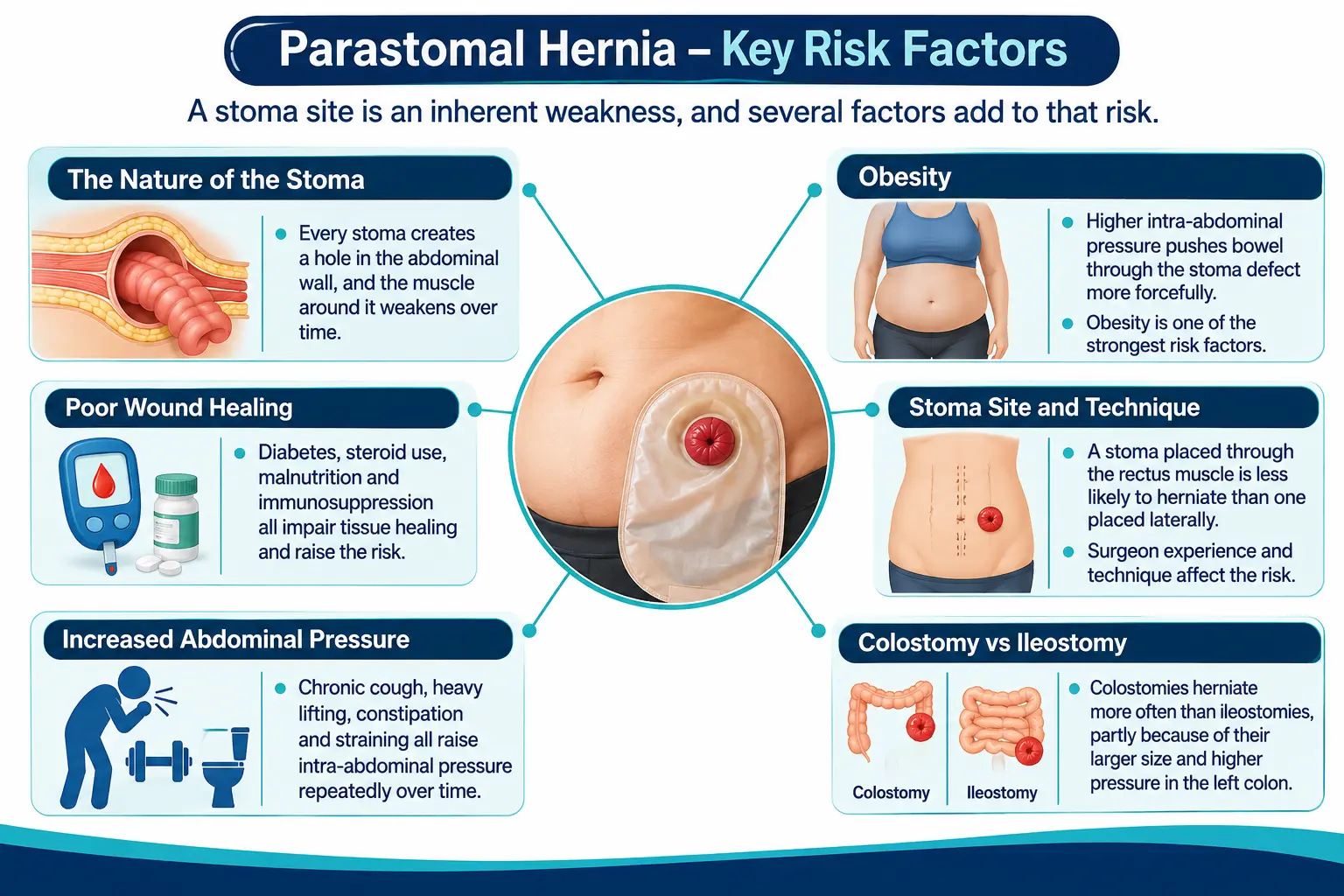
What Causes a Parastomal Hernia?
For a full overview of hernia types, symptoms, and repair options including when surgery is necessary and what recovery looks like visit our dedicated hernia surgery section.
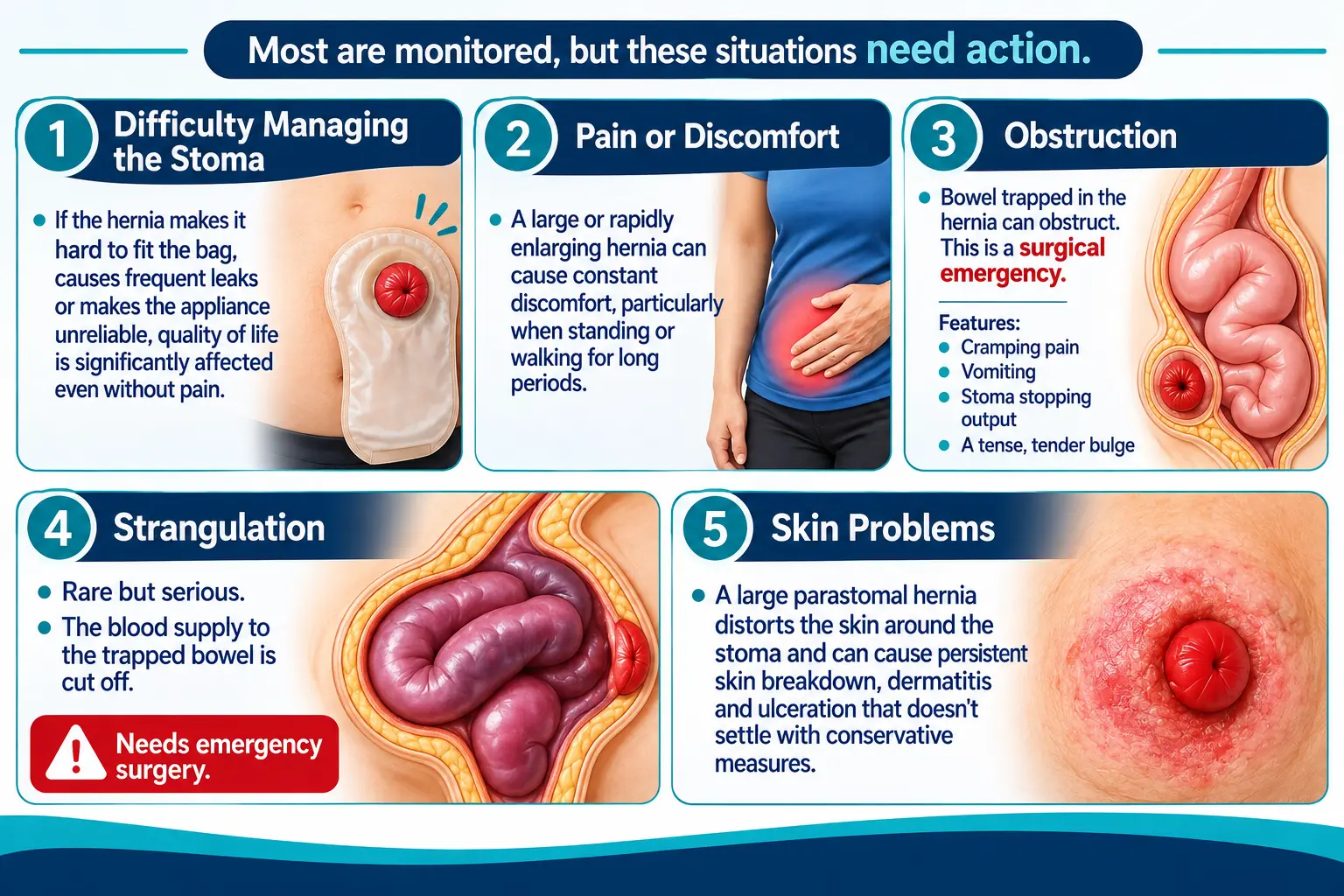
When Does a Parastomal Hernia Need Treatment?
Our blog on seroma after hernia surgery covers what to watch for after abdominal wall repairs, including those around stoma sites.
What Determines the Right Treatment Approach?
Conservative management comes first, and surgery is planned carefully when it becomes necessary.
- Stoma support belt: A well-fitted hernia support belt reduces protrusion and pressure on the hernia. It needs fitting by a stoma nurse, not bought off a shelf.
- Stoma nurse review: A specialist stoma nurse can often resolve appliance fitting problems without surgery by changing the product type, flange or barrier.
- Weight loss: Reducing intra-abdominal pressure is one of the most effective non-surgical interventions and is recommended before any elective repair.
- Surgical repair options: Three approaches are used. Local repair directly closes the defect but has high recurrence. Stoma relocation moves the stoma to a new site, leaving the old defect to close. Mesh repair reinforces the defect with a mesh placed laparoscopically or open, and has the lowest recurrence rates.
- Recurrence after repair: Remains high across all techniques, around twenty to forty percent at five years. Patients need to know this before consenting. A second repair is possible but technically more difficult.
Bulge around a stoma that’s causing problems?
FAQs
How common is parastomal hernia?
Very common. Up to half of stoma patients develop one within five years of stoma formation.
Can a parastomal hernia be managed without surgery?
Yes, in most cases. A well-fitted support belt, stoma appliance review and weight loss manage most parastomal hernias conservatively.
What are the signs that a parastomal hernia needs emergency treatment?
Cramping pain, vomiting, the stoma stopping output or a tense tender bulge around the stoma. These need same-day assessment.
Does mesh repair cure a parastomal hernia?
Mesh gives the lowest recurrence rates, but parastomal hernia recurs in around twenty to forty percent of cases at five years whichever repair is used.