

Gallbladder sludge is a mix of cholesterol crystals, calcium salts, and mucus that settles in the gallbladder when bile thickens and stagnates. On ultrasound, it appears as a low-level echo that shifts when the patient moves. Most people with sludge have no symptoms and need no treatment. It can resolve on its own, particularly once the trigger, such as fasting, pregnancy or a prolonged illness, is removed. The concern is that sludge can progress to gallstones, cause biliary colic, or in some cases lead to pancreatitis or cholecystitis.
According to Dr. Rajeev Premnath, General and Laparoscopic Surgeon, “Gallbladder sludge is one of those findings that worries patients more than it should in most cases. If it’s found incidentally in someone with no symptoms, I explain what it is and arrange a follow-up scan in three to six months. If it clears, we’re done. If it persists or causes symptoms, that changes the conversation. The ones I watch more closely are patients with sludge who also have pancreatitis, because the sludge is often the culprit even when no stone is visible.”
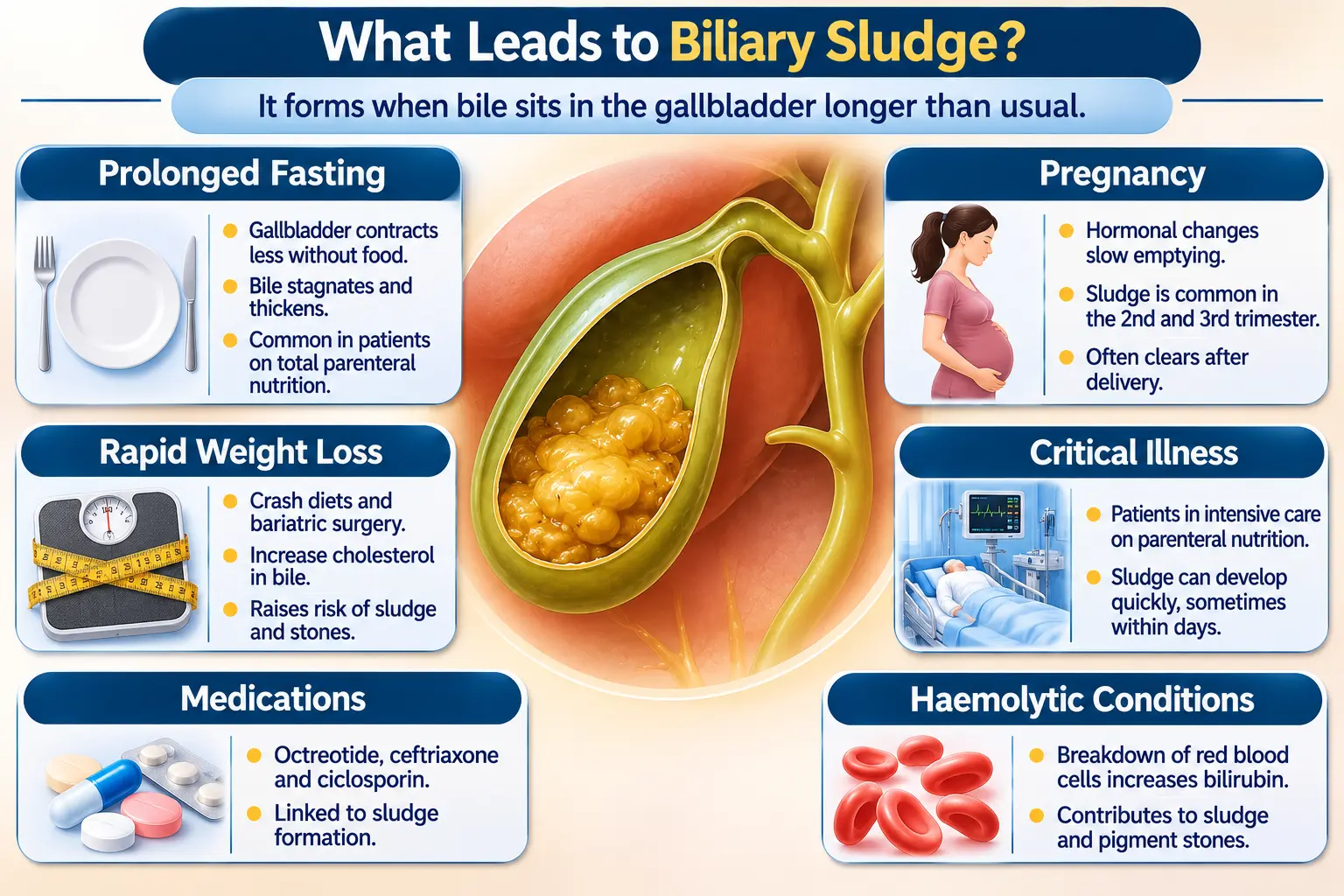
What Causes Gallbladder Sludge and Who Gets It?
If you’d like to know how gallbladder conditions are assessed and treated more broadly, our gall bladder stone removal section covers it.
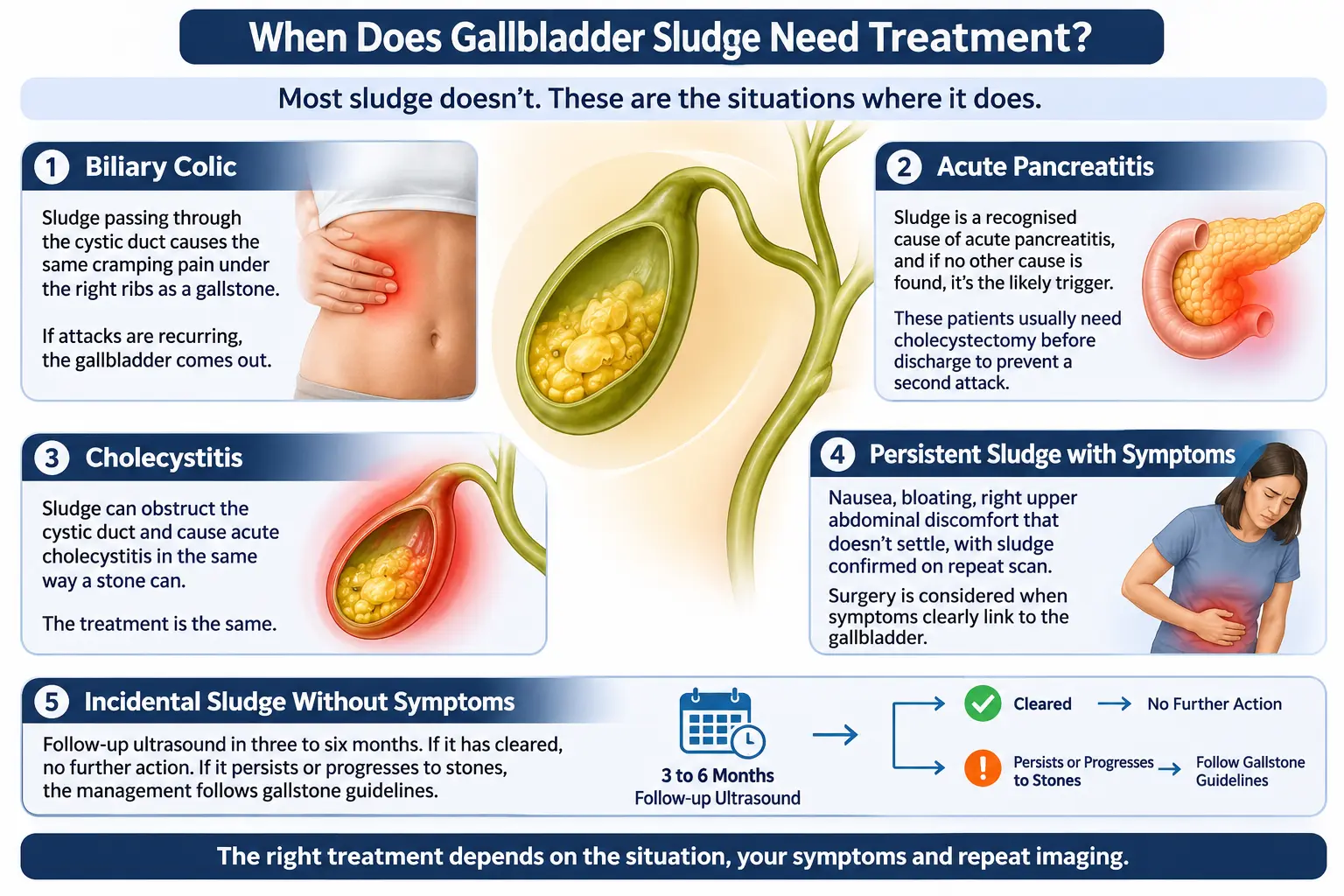
When Does Gallbladder Sludge Need Treatment?
For a detailed look at what to expect after a cholecystectomy, including pain management, activity restrictions, and timeline milestones, our blog on gallbladder surgery recovery walks you through every stage of the process.
What Determines the Right Treatment Approach?
The symptoms, the cause and what the follow-up scan shows decide it.
- Asymptomatic sludge: No treatment needed. Remove the trigger if possible, repeat the ultrasound at three to six months and discharge if it clears.
- Symptomatic sludge: Dietary changes, avoiding fatty meals and treating any reversible cause come first. Surgery follows if symptoms persist or if a complication such as pancreatitis has occurred.
- Ursodeoxycholic acid: Sometimes used in pregnancy-related or drug-related sludge to improve bile flow and promote clearance. Not a substitute for surgery when complications have occurred.
- Laparoscopic cholecystectomy: The definitive treatment when sludge has caused pancreatitis, cholecystitis or recurring biliary colic. The whole gallbladder is removed, eliminating the source.
- High-risk patients: Those who can’t safely have surgery can be managed with dietary advice, ursodeoxycholic acid and close monitoring, though the risk of a future complication remains.
Gallbladder polyp found on scan and not sure what to do next?
FAQs
Does gallbladder sludge always need surgery?
No. Most sludge clears on its own or with removal of the trigger. Surgery is needed when it causes pancreatitis, cholecystitis or recurring biliary colic.
Can gallbladder sludge turn into gallstones?
Yes. Sludge is considered a precursor to gallstones, particularly if it persists and the trigger isn’t removed.
Is gallbladder sludge serious?
Usually not. It becomes serious when it causes a complication such as pancreatitis or cholecystitis.
How is gallbladder sludge treated?
Asymptomatic sludge is monitored. Symptomatic sludge is managed with dietary changes and sometimes ursodeoxycholic acid. Surgery is done when complications occur.