

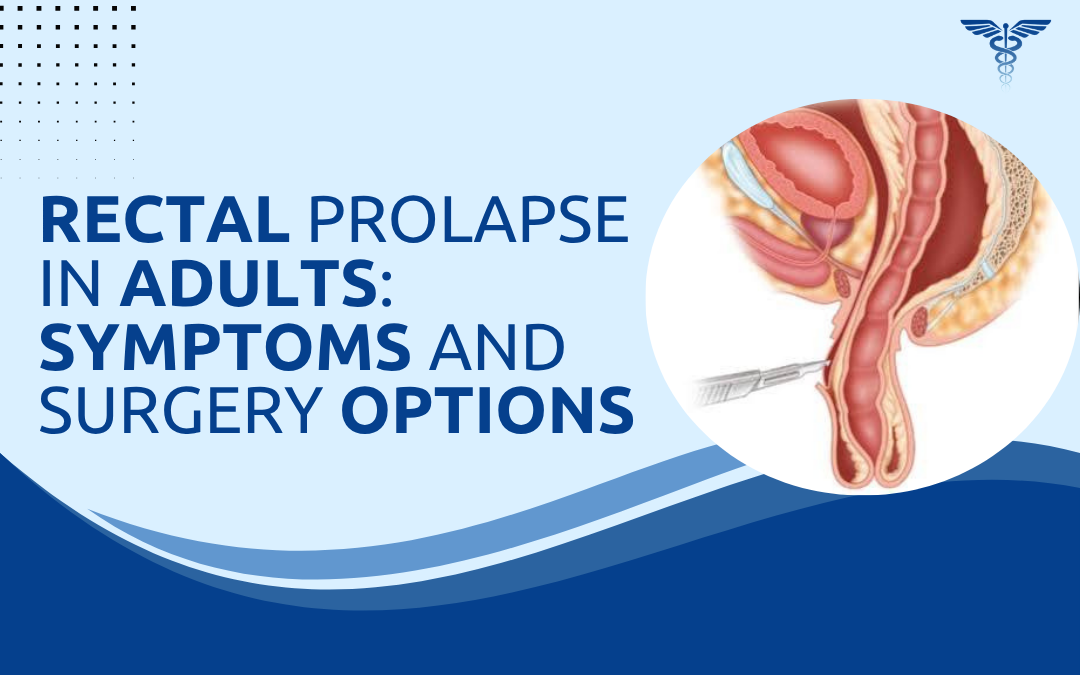
Adult rectal prolapse happens when the rectum loses its support and slides down through the anus, involving the full bowel wall. It is often mistaken for piles and is most common in women over 50. Fibre and pelvic floor exercises ease symptoms but cannot reverse it. Only surgery does, and the type depends on age, general health and bowel habits.
According to Dr. Rajeev Premnath, a trusted General and Laparoscopic Surgeon, “Many patients carry a prolapse for years because they’re embarrassed, or they assume it’s just bad piles. Then leakage starts, and that’s when they come in. Waiting doesn’t make the repair harder, but it does make the incontinence harder to reverse. So the sooner it’s seen, the better the bowel control afterwards.”
What Are the Symptoms of Rectal Prolapse in Adults?
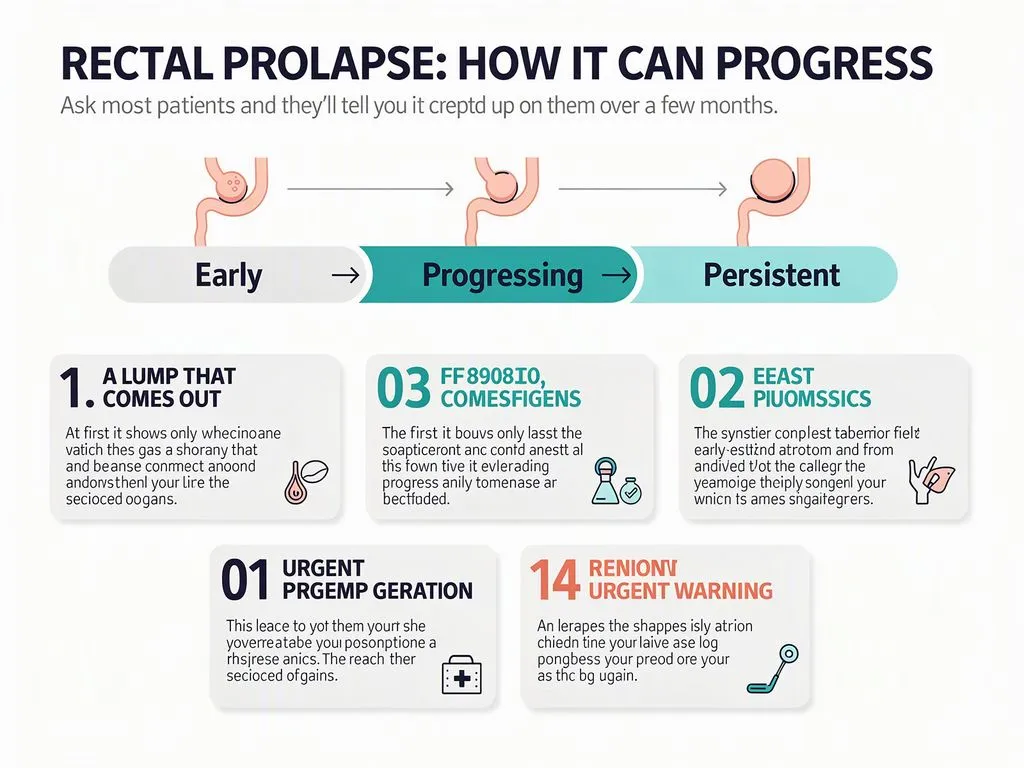
Many patients assume it is piles, but on examination it is often a different condition, which is why a proper assessment by our proctologist matters.
What Surgery Options Are There for Rectal Prolapse?
There are two ways in, through the abdomen or from below, and how fit the patient is usually decides which.
- Laparoscopic rectopexy: We lift the rectum through keyhole cuts and anchor it to the bone at the back of the pelvis, sometimes with a small mesh. It holds up best over time, so it’s the usual pick for fit patients.
- Resection rectopexy: Same lift, but a stretch of loose sigmoid colon is taken out as well. We lean towards it when constipation is severe, since lifting alone can make that worse.
- Altemeier (perineal): The prolapsed bowel is cut away and rejoined from below, with no abdominal wound, which is kinder to frail or older patients.
- Delorme (perineal): Only the lining is stripped off and the muscle layer is folded up and sewn. It suits shorter prolapses in people who can’t safely have an abdominal operation.
The operations done from below are easier on the body but come back more often, so it’s a trade-off rather than a ranking. If you’re still not sure whether it’s prolapse at all, our blog on rectal prolapse or piles is a good place to start.
What Is Recovery Like and Will the Prolapse Come Back?
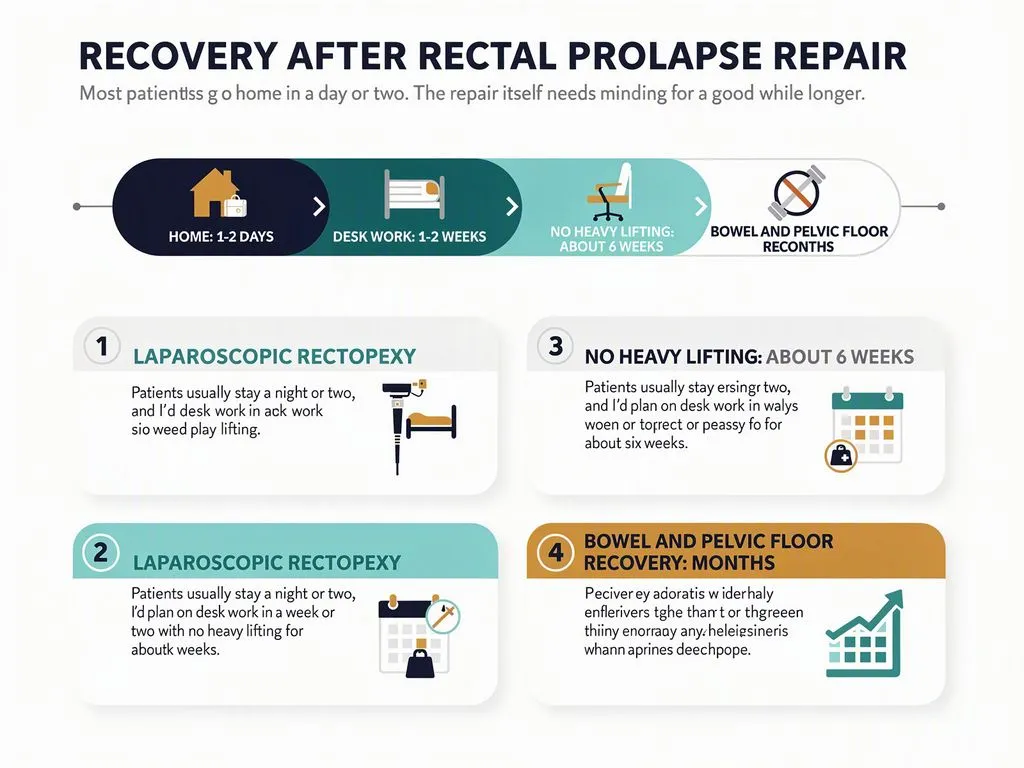
If you want to compare the abdominal and perineal routes in more detail, our blog on open vs laparoscopic rectal prolapse surgery walks through both approaches.
Key Takeaways
- Three options exist: laser closure, endoscopic EPSiT and flap reconstruction
- Flaps recur least but take longest to recover from
- Endoscopic and laser suit a single tract in a first episode
- Multiple tracts and recurrences usually need a flap
- Abscesses are drained first, with definitive surgery weeks later
- Hair control and hygiene afterwards lower recurrence with any technique
Learn how laser, flap, and endoscopic treatments for pilonidal sinus differ in recovery time, recurrence risk, and treatment approach.
FAQs
Can rectal prolapse go away on its own?
No. Left alone it tends to creep worse, and only an operation puts it right.
Is surgery always needed for rectal prolapse?
Nearly always. Someone too frail for a big operation can still be offered a smaller one from below.
How is rectal prolapse different from piles?
Prolapse is one smooth ring of rectum coming out, while piles are separate soft lumps around the opening.
Will incontinence improve after rectal prolapse surgery?
Often, though not always fully. Pelvic floor exercises help, and it takes months rather than weeks.