

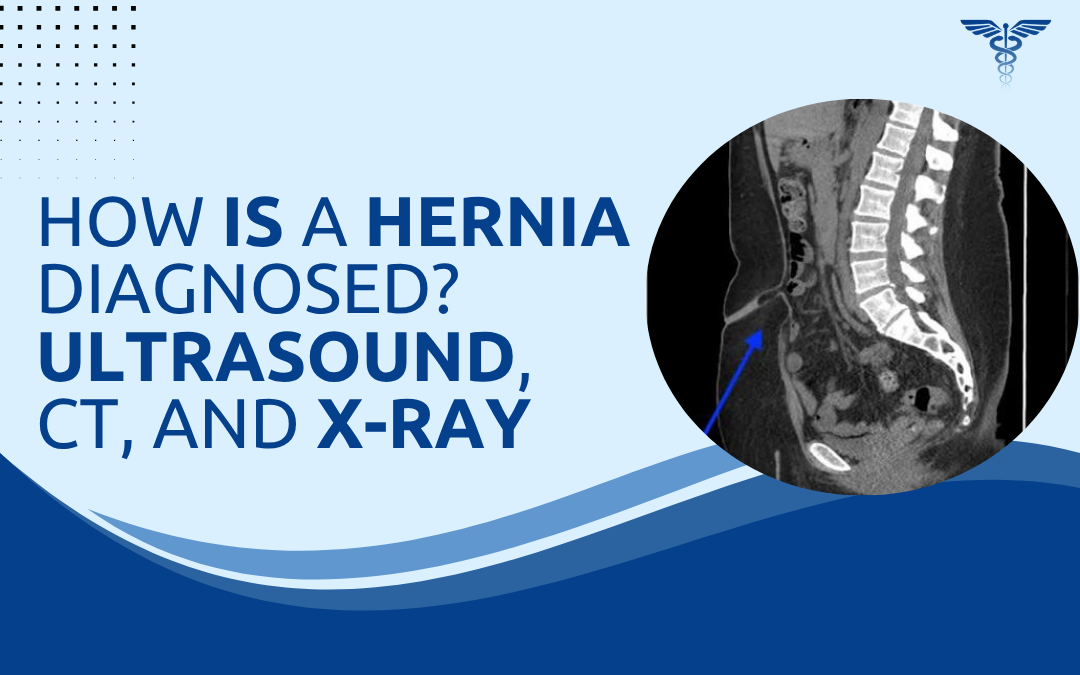
Hernias get diagnosed by hand. Patient standing, straining; the bulge appears, reduces with pressure, and produces a cough impulse. Done. No scan needed. Imaging comes in when that picture isn’t clear. Can’t feel it. Can’t be sure what it is. Complications on the differential. Big repair coming, and the anatomy needs mapping first. Those are the situations. Ultrasound for soft tissue. CT for complex or complicated cases. X-ray doesn’t diagnose hernias. Never has.
According to Dr. Rajeev Premnath, General and Laparoscopic Surgeon in Banglore, “A hernia that’s visible and reducible on examination doesn’t need a scan before repair. Imaging is warranted when there’s uncertainty, groin pain with no palpable bulge, a complex ventral hernia with multiple possible defects, or strangulation on the differential. What I can assess with my hands, I don’t outsource to a machine.”
How Is a Hernia Diagnosed Clinically and When Is Imaging Needed?
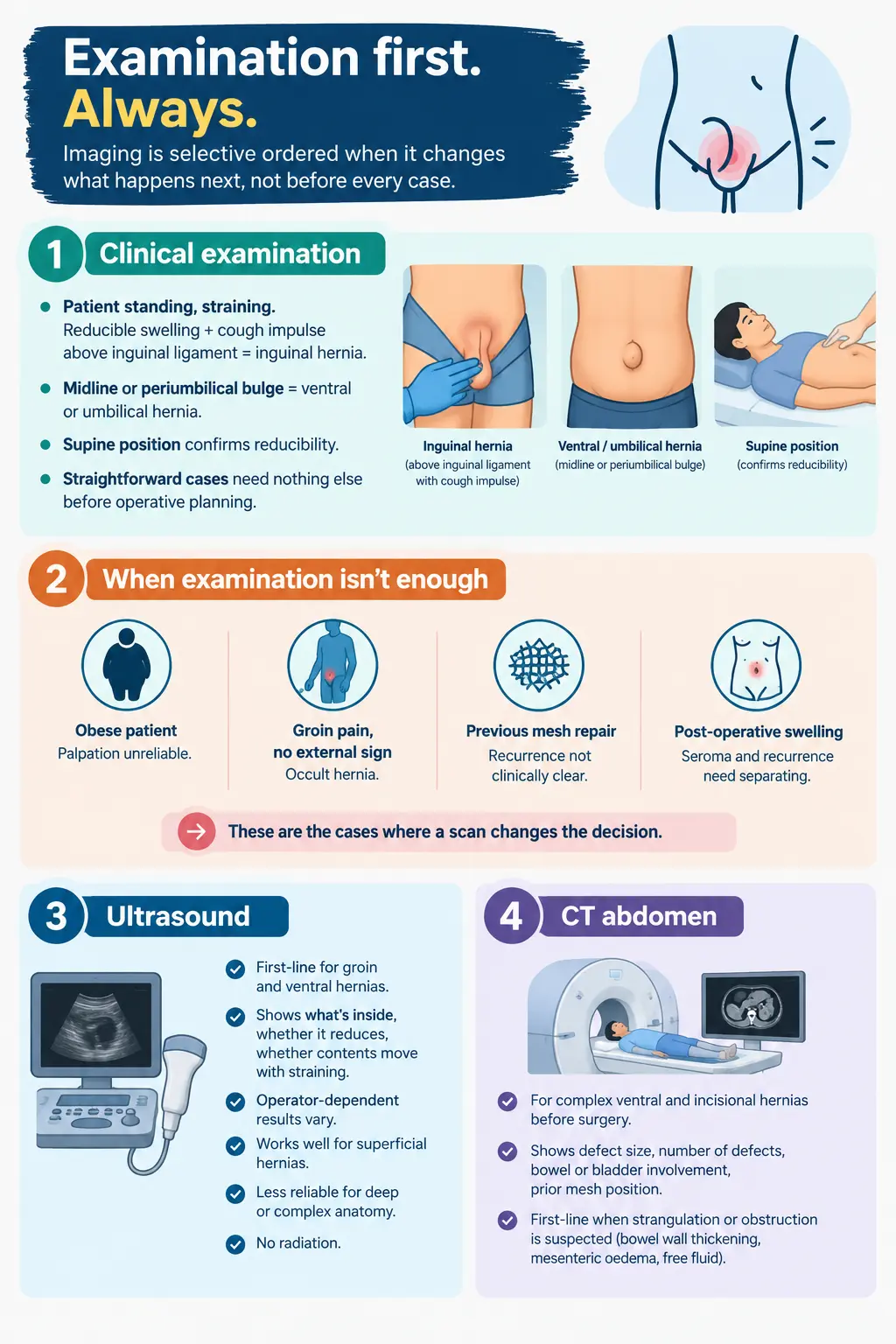
Imaging answers a specific question. It’s not a routine step before every repair. For a full overview of hernia repair options, explore the hernia surgery section.
What Does Each Investigation Show and When Is X-Ray Used?
Different tools, different questions. Choosing the right one depends on what the clinical scenario actually needs.
- Ultrasound: Best for occult inguinal hernias; dynamic scanning with Valsalva reveals what static examination misses. Also distinguishes hernia from lymph node, lipoma, or femoral vessel aneurysm in the same groin region.
- CT: Used before large or recurrent incisional hernia repairs to assess defect number and bowel involvement. Also the first investigation in small bowel obstruction identifies the cause, obstruction level, and bowel viability before theatre.
- MRI: Reserved for occult groin hernias when ultrasound is inconclusive. Useful in athletes where sports hernia, adductor injury, and inguinal hernia can coexist. Better soft tissue resolution, no radiation, but more expensive and less available.
- X-ray: Doesn’t diagnose hernias. Shows dilated bowel in obstruction or free gas in perforation. Used in emergencies to assess complications, not to find the hernia.
Right investigation for the right question. Nothing more. Our blog on what tests are done before hernia surgery covers the full pre-operative pathway once a hernia is confirmed.
Hernia Diagnosis in Special Situations: Paediatric, Recurrent, and Emergency Presentations?
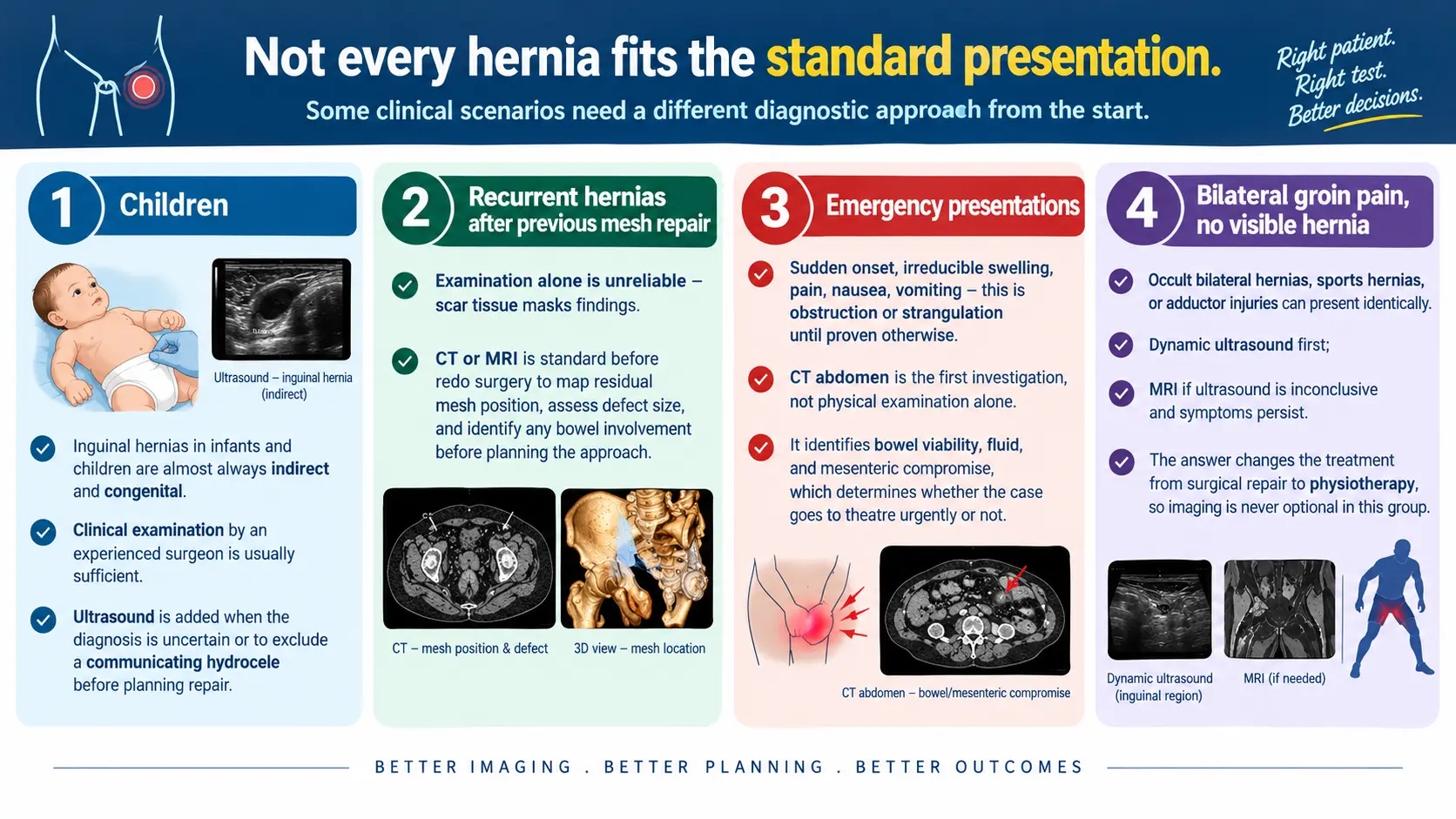
The right investigation confirms not just the hernia, but its type, condition, and anatomy so the repair is planned correctly the first time. If a previous repair has failed, imaging is non-negotiable before the next step. See recurrent hernia surgical options.
Key Takeaways
- Most hernias are diagnosed by hand: a visible, reducible bulge with a cough impulse rarely needs imaging before repair.
- Ultrasound is first-line for groin and soft tissue hernias; CT is reserved for complex, recurrent, or complicated presentations.
- X-ray does not diagnose hernias; it shows complications like obstruction or perforation, nothing more.
- In emergencies, CT abdomen comes before examination findings alone when strangulation or obstruction is on the differential.
- Recurrent hernias after mesh repair need CT or MRI before redo surgery; scar tissue makes clinical examination unreliable.
Groin or abdominal swelling and unsure whether it’s a hernia?
FAQs
Do you need a scan to diagnose a hernia?
Not usually. Most hernias are diagnosed on examination. Scans are added when the hernia isn’t palpable, when complications are possible, or when surgical planning needs more detail.
What is the best scan for diagnosing a hernia?
Ultrasound for groin and soft tissue hernias. CT for complex ventral, incisional, or complicated presentations where defect mapping changes the operative plan.
When is CT used for hernia diagnosis?
Large or complex hernias, multiple suspected defects, strangulation or obstruction on the differential, or prior mesh position needing mapping before redo repair.
Can an X-ray show a hernia?
No. X-ray shows complications like obstruction or perforation. It doesn’t diagnose the hernia causing them.