

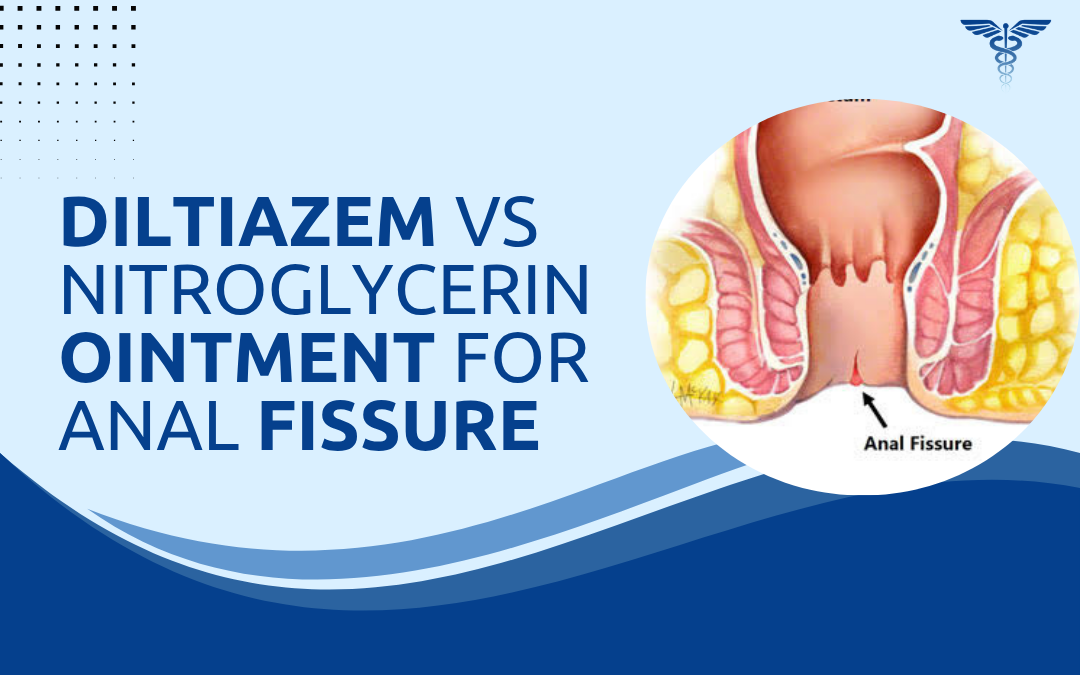
Both 2% diltiazem and 0.2% nitroglycerin (GTN) ointment are first-line treatments for a chronic anal fissure. Both relax the internal anal sphincter, easing spasm so blood can reach the tear and heal it. Healing rates are similar, but GTN often causes headaches and diltiazem rarely does, so many surgeons try diltiazem first.
According to Dr. Rajeev Premnath, Piles Treatment in Jayanagar, Bangalore, “Patients usually stop GTN because of the headaches, not because it fails to work. Diltiazem heals fissures about as well and is generally better tolerated, so I usually start with it unless there’s a reason not to. With either ointment, correct use for six to eight weeks is essential, and incorrect use is where most treatment failures come from.”
How Do Diltiazem and Nitroglycerin Ointment Compare?
Same target, different drugs. Here’s the side-by-side.
| Feature | Diltiazem 2% | Nitroglycerin (GTN) 0.2% to 0.4% |
| How it works | Calcium channel blocker, relaxes the sphincter muscle | Nitric oxide donor, relaxes the sphincter muscle |
| Healing rate | Roughly 60% to 80% | Roughly 50% to 70% |
| Headache | Uncommon | Common, can be severe |
| Other side effects | Mild perianal itching or irritation | Dizziness, low blood pressure |
| Typical course | Twice daily for 6 to 8 weeks | Two to three times daily for 6 to 8 weeks |
| Stopped early because of side effects | Rare | Often |
Neither one beats a sphincterotomy for cure rates, but both avoid cutting the muscle. If you want the wider picture, our piles treatment page covers the other anorectal options.
Which Fissure Patients Suit Which Ointment?
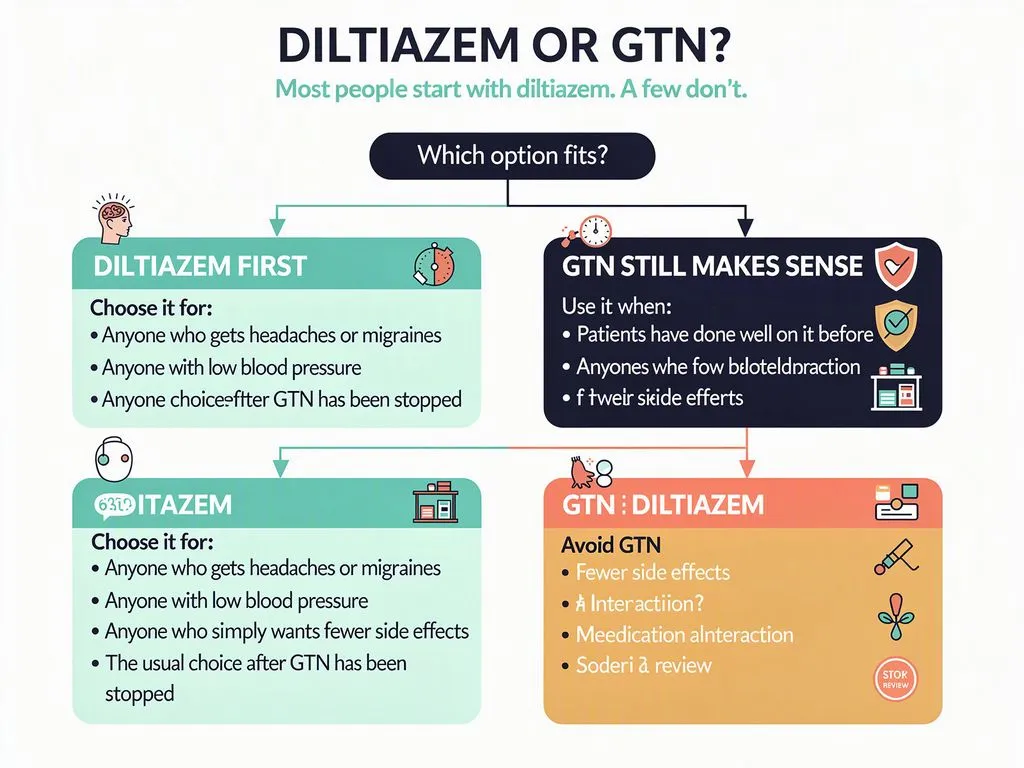
Recurrence odds belong in the conversation before surgery, not after it, and our blog on pilonidal sinus vs perianal abscess helps you work out which condition you’re dealing with first.
How Should the Ointment Be Used and What If It Fails?
Technique matters more than people think.
- Amount: A pea-sized dab, no more. More doesn’t heal faster, it just irritates.
- Where: On the outer anal margin or just inside it, not deep in the canal. Wash your hands afterwards, especially with GTN.
- How long: Six to eight weeks, even when the pain eases by week two. Stopping early is the most common reason a fissure returns.
- Alongside it: Stool softeners, fibre, water, and warm sitz baths. Hard stools tear the fissure open again, ointment or not.
- If it fails: No healing after eight weeks means it’s time to talk about Botox or a lateral internal sphincterotomy, not a longer course of the same cream.
Failing an ointment isn’t a personal failure. It just tells us the sphincter needs a firmer approach, and our blog on anal fissure treatment without surgery explains what is tried before anyone talks about cutting.
Key Takeaways
- Diltiazem and GTN heal fissures at similar rates
- GTN causes frequent headaches, diltiazem rarely does
- Diltiazem is the usual first choice for most patients
- Avoid GTN if you take sildenafil-type medicines
- Use it for the full six to eight weeks, even if pain settles
- No healing by eight weeks means moving on to Botox or surgery
Understand how diltiazem and nitroglycerin ointments differ in effectiveness, side effects, and healing support for anal fissures.
FAQs
Which is better for anal fissure, diltiazem or nitroglycerin?
They heal about equally well. Diltiazem usually wins because it causes far fewer headaches.
How long does it take for fissure ointment to work?
Pain often eases within a couple of weeks, but healing needs six to eight weeks of use.
Can I use nitroglycerin ointment with sildenafil?
No. Together they can drop blood pressure dangerously, so tell your doctor about any such tablets.
What happens if the ointment doesn’t heal my fissure?
After eight weeks, Botox or a lateral internal sphincterotomy is the usual next step.