

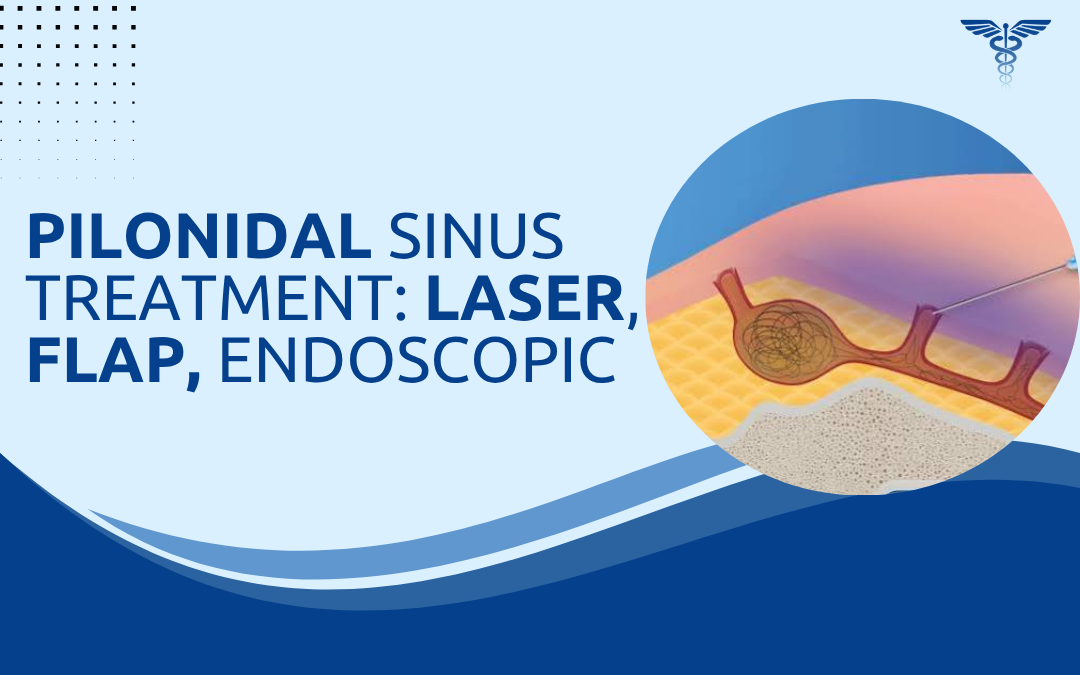
Modern pilonidal sinus treatment depends on how severe the tract is, how likely it is to come back, and whether you prefer a minimally invasive procedure or a reconstructive one. The main options are laser closure, endoscopic treatment (EPSiT), and flap surgery. Flap surgery has the lowest recurrence but needs the longest recovery. Laser and EPSiT get you back to normal sooner but recur somewhat more often. Antibiotics can settle a flare-up, but only a procedure removes the tract.
According to Dr. Rajeev Premnath, a General and Laparoscopic Surgeon in Banglore, “People ask me for the best operation, but I can’t say that before I’ve examined them. For a single clean tract in a first episode, I’m comfortable with an endoscopic approach. If there are several side channels, or the sinus has been operated on before, I prefer a flap. The wrong choice for the tract is a common reason it comes back.”
How Do Laser, Flap and Endoscopic Treatments Work?
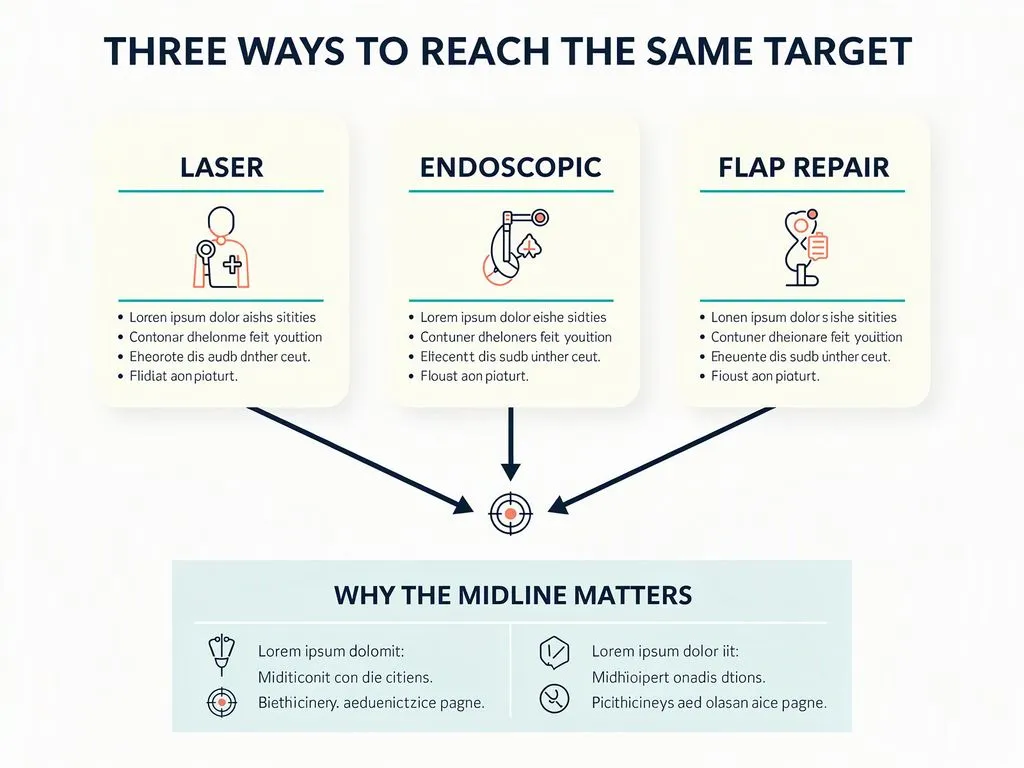
The right option depends on the tract, which is why an examination by an experienced proctologist comes first.
Which Pilonidal Sinus Treatment Suits Which Patient?
Mostly it comes down to the anatomy and what’s been done before. Preference matters, but it comes second.
- First episode, single tract: Endoscopic or laser works well here. Tiny wounds, and most people are back at work within the week.
- Multiple tracts or branching: Go with a flap. A scope or laser can walk straight past a side channel, and that missed channel is what causes the next flare.
- Recurrence after earlier surgery: Usually a flap too, because scarred tissue doesn’t close well after simple excision.
- Active abscess: Drain it first and wait. Definitive surgery usually follows six to eight weeks later, once the swelling has gone down.
Not everyone gets the smallest operation, and that’s fine. Our post on pilonidal sinus explains who tends to get it and why.
What Are the Recurrence Rates and Recovery Times?
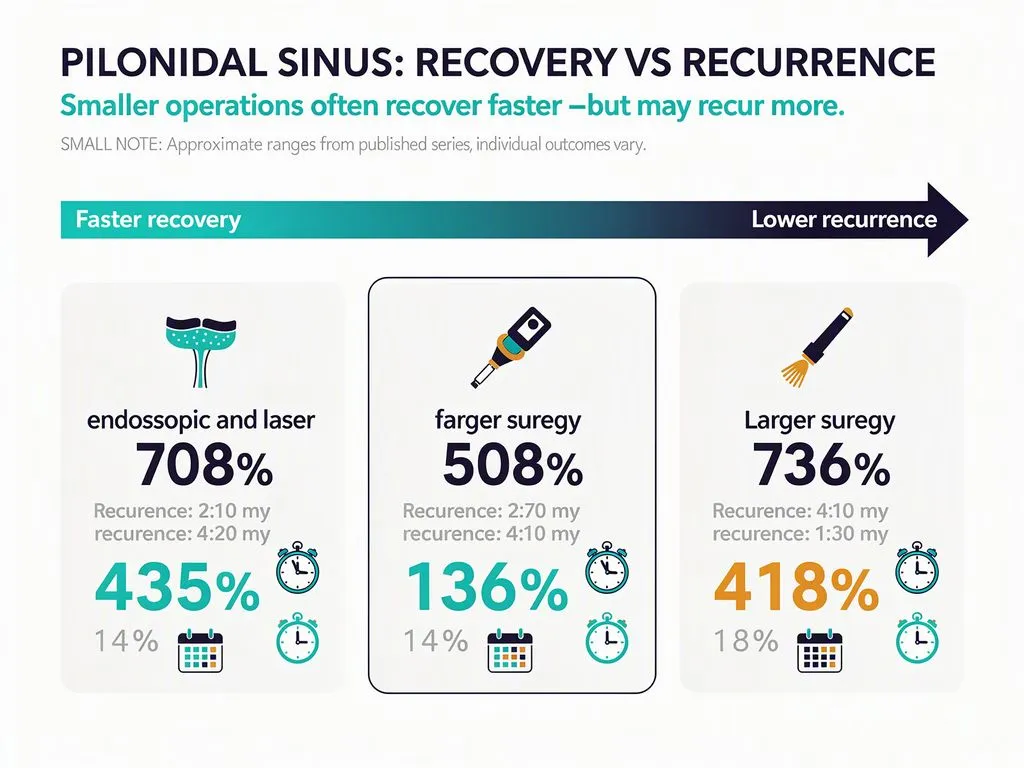
Recurrence odds belong in the conversation before surgery, not after it, and our blog on pilonidal sinus vs perianal abscess helps you work out which condition you’re dealing with first.
Key Takeaways
- Three options exist: laser closure, endoscopic EPSiT and flap reconstruction
- Flaps recur least but take longest to recover from
- Endoscopic and laser suit a single tract in a first episode
- Multiple tracts and recurrences usually need a flap
- Abscesses are drained first, with definitive surgery weeks later
- Hair control and hygiene afterwards lower recurrence with any technique
Learn how laser, flap, and endoscopic treatments for pilonidal sinus differ in recovery time, recurrence risk, and treatment approach.
FAQs
Which pilonidal sinus surgery has the lowest recurrence?
Flap procedures like Karydakis or Limberg, at roughly 2% to 5% in published series.
Is laser treatment suitable for pilonidal sinus?
For simple tracts in selected patients, yes. There’s less long-term evidence behind it than behind flaps.
Can EPSiT treat a recurrent pilonidal sinus?
Sometimes, but heavy scarring or lots of branching usually points to a flap.
How long is recovery after pilonidal sinus surgery?
About a week after endoscopic or laser treatment, and two to four weeks after a flap.