
Laser treatment for pilonidal sinus offers faster wound healing, less post-operative pain, and lower recurrence compared to traditional open excision in most uncomplicated cases. Open surgery remains the standard for large, recurrent, or multi-tract sinuses where complete tract removal demands a wider field of access. The right choice depends on sinus depth, number of tracts, and how many times it’s recurred not on patient preference alone.
According to Dr. Rajeev Premnath, General and Laparoscopic Surgeon in Bangalore, “Laser sinusotomy is a strong first-line option for primary pilonidal disease, but open excision still has its place when the anatomy is complex or the sinus has come back after prior treatment.”
How Does Laser Treatment for Pilonidal Sinus Compare to Open Excision?
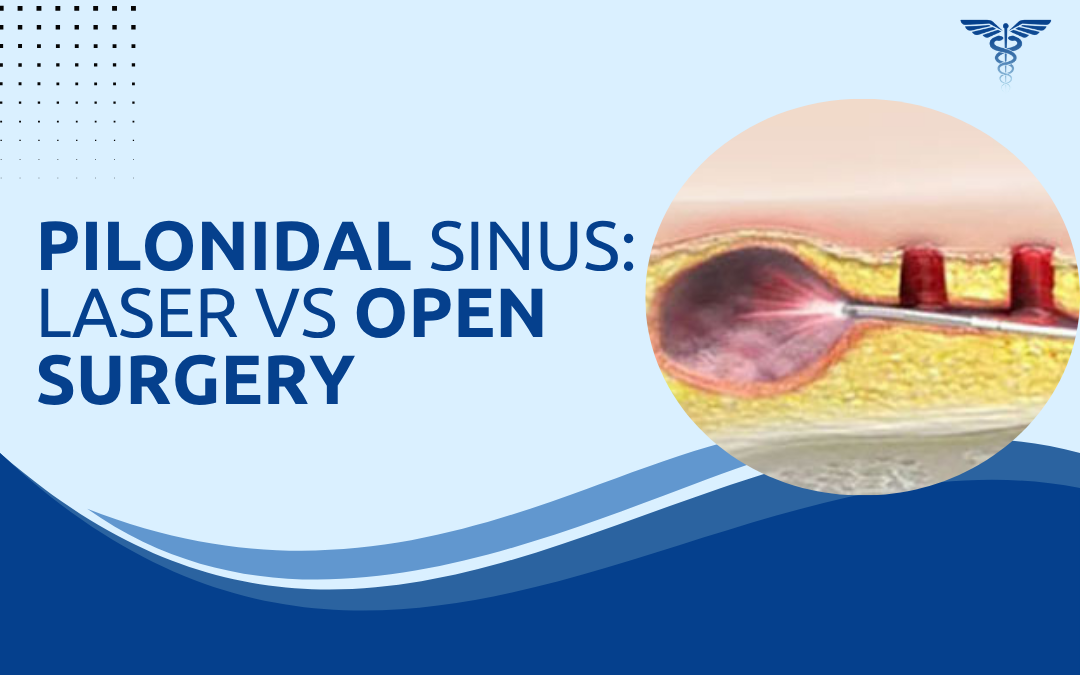
Laser and open surgery approach the same problem from fundamentally different angles one destroys the tract from within, the other removes it entirely.
- Wound Size: Laser sinusotomy uses a slim radial fibre inserted through the sinus opening, so there’s no wide excision wound and secondary healing from a large cavity is avoided, which is the main driver of the long recovery after open surgery.
- Hospital Stay: Most laser procedures are day-care, and patients go home the same afternoon open excision, depending on flap technique or wide local excision, often keeps patients admitted overnight or longer, with drain management adding to that.
- Recurrence Rate: Published data place laser recurrence around 8–15% at two years; open excision without flap closure is higher, though Karydakis and Limberg flap techniques reduce those rates considerably for recurrent disease.
- Wound Care: Open excision wounds need daily packing until the cavity granulates, sometimes for six to eight weeks with laser, the small entry point typically seals within two weeks, and dressing changes are far less involved.
Both methods require complete hair removal from the natal cleft post-procedure because hair ingrowth is still the underlying cause, regardless of how the sinus was addressed. Patients managing related anorectal conditions can find further guidance on fistula treatment at our clinic.
When Is Open Surgery the Better Choice for Pilonidal Sinus?
Laser works well for primary disease, but some presentations genuinely need open surgery and choosing laser in those cases risks incomplete clearance.
- Multiple Tracts: When the sinus has branched into several secondary tracts or satellite pits spread across a large area, the laser fibre can’t reliably treat all of them in a single pass, and residual tracts almost always recur.
- Recurrent Disease: A pilonidal sinus that’s already been treated whether by drainage, phenol injection, or a prior laser procedure has scar tissue distorting the normal tissue planes, and open excision with a flap gives the surgeon direct visual control over what’s being removed.
- Deep Abscesses: Active abscess formation with surrounding cellulitis needs drainage first; attempting laser sinusotomy through infected, inflamed tissue increases the risk of tract injury and incomplete thermal ablation, making staged open surgery the safer sequence.
- Anatomy: High BMI, a deep natal cleft, and dense sacral hair density are all factors that affect how well the laser accesses the distal sinus surgeons often switch to open technique intraoperatively when anatomy prevents proper fibre placement.
Patients with genuinely complex or recurrent pilonidal disease do better long-term with a proper flap reconstruction than with repeated minimally invasive attempts that keep failing. Patients who want to dskbvn understand the condition before choosing a treatment path can start with “What Is Pilonidal Sinus and Who Gets It.”
Why Choose Dr. Rajeev Premnath?
Dr. Rajeev Premnath is a General and Laparoscopic Surgeon with over 20 years of experience in proctological and anorectal procedures, holding qualifications including MBBS, MS (General Surgery), FRCS (Glasgow), FEBS, FICS, FACS, FIAGES, FMAS, and a Diploma in Laparoscopy from France. He performed Karnataka’s first VAAFT procedure for anal fistula and leads the Day Care Surgery department at Ramakrishna Super Speciality Hospital in Jayanagar, Bangalore. Call +91 90082 04466 to book your consultation.
Patients with pilonidal sinus don’t just need surgery they need the right surgery chosen for their specific anatomy and history. Dr. Premnath’s approach combines accurate preoperative assessment with the technical range to perform both laser sinusotomy and open flap reconstruction, which means the treatment fits the disease, not the other way around.
Pilonidal sinus that keeps coming back despite dressings or drainage?
FAQs
Can a pilonidal sinus heal without surgery?
Small, non-infected sinuses may stay dormant, but most require surgery to permanently resolve.
How long does recovery take after laser pilonidal sinus surgery?
Most patients return to light activity within one to two weeks after laser sinusotomy.
Is pilonidal sinus surgery done under general anaesthesia?
It can be performed under local, spinal, or general anaesthesia depending on complexity and patient factors.
Does a pilonidal sinus come back after surgery?
Recurrence is possible with any technique; strict hair removal from the natal cleft significantly reduces the risk.