

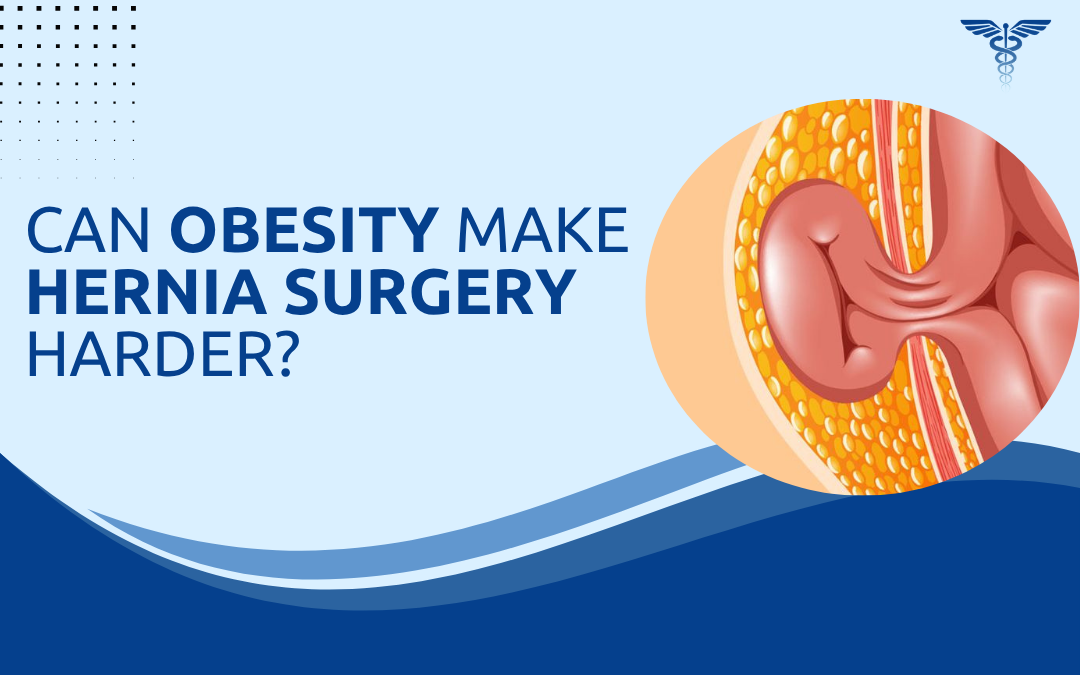
Yes, obesity makes hernia surgery significantly harder. Extra body weight bumps up intra-abdominal pressure, which strains the repair and forces the surgeon to work around tissue that doesn’t cooperate. Operative time stretches out. Blood loss goes up. Wound infections happen more often. And recurrence climbs fast. Mesh placement turns complicated. Anaesthesia turns into a bigger task on the heart and lungs, while fatty tissue, starved of decent blood flow, just won’t heal at the pace anyone wants.
According to Dr. Rajeev Premnath, a specialist experienced in hernia surgery in Bangalore, Operating on a heavier patient isn’t really about technique alone. It’s about reading tissue that behaves nothing like textbook anatomy, and honestly, that’s where experience earns its keep.
Why Does Obesity Increase Hernia Surgery Risks?
The abdominal wall takes a beating when extra weight pushes against it from every direction. So surgery, from first incision to final stitch, plays out differently.
Pressure: Visceral fat keeps shoving at the repair site long after the surgeon’s gone home, and a mesh that sat perfectly on the table can slide before tissue grows in around it.
Visibility: Landmarks disappear under fat. Surgeons spend more minutes than they’d like searching for the defect, and that extra time under anaesthesia? Not a small thing.
Infection risk: Bacteria love fatty tissue. Wound infections show up two to three times more in obese patients versus those at a healthy BMI, and that gap matters.
Mesh fixation: 3D and bilayer mesh need clean tissue planes to grab onto. But fat sneaks into muscle layers, and suddenly anchoring becomes a whole new puzzle.
So surgeons screen BMI before scheduling, because a bit of pre-op weight loss can flip the entire risk picture. Folks heading into Laparoscopic Surgery in Bangalore tend to do better when they shed a few kilos first.
How Does Obesity Affect Recovery After Hernia Repair?
Recovery never looks the same twice, and a high BMI rewrites the post-op story in ways most patients don’t see coming.
Healing: Fat under the skin is starved of oxygen. Wounds take longer to seal, and tissue oxygenation stays sluggish for days past the usual mark.
Seroma formation: Fluid pools under the skin much more often. Drainage might be needed weeks later, which feels unfair when patients thought recovery was wrapping up.
Recurrence: Heavier BMI brackets line up with steeper recurrence rates, so anyone going through a Hernia Operation in Bangalore needs closer follow-up just to catch trouble early.
Mobility: Walking early stops clots from forming. But heavier patients struggle with that, and skipping movement only piles on more problems.
Because healing rarely runs in a straight line. Sticking with the protocols, especially in those first six weeks, makes more difference than people expect. For related insights, read about hernia after weight lifting and how it happens.
Why Choose Dr. Rajeev Premnath?
Dr. Rajeev Premnath has spent over 20 years in general and laparoscopic surgery, with international training picked up across IRCAD France, Italy, Germany, and the National University of Health Singapore. The credentials list runs long: MBBS, MS (Gen Surg.), FRCS (Glasg), FEBS, FICS, FACS, FIAGES, FMAS, plus a Diploma in Laparoscopy from France. He heads the Day Care Surgery department.
High BMI patients get tailored surgical plans here. Pre-op tweaks, smart mesh choices, tight monitoring afterward. Recurrence stays low. Recovery stays clean. The numbers back it up.
Worried your weight could complicate an upcoming hernia repair?
FAQs
Can I have hernia surgery if I'm obese?
Yes, but pre-surgical evaluation and weight optimisation are usually advised first.
Does losing weight before surgery help?
Even modest weight loss before surgery reduces complications and improves healing outcomes.
Is laparoscopic hernia repair safe for obese patients?
Laparoscopic repair is often preferred for obese patients due to smaller incisions.
Will obesity cause my hernia to come back?
Higher BMI is linked to increased recurrence, so long-term weight management matters.