

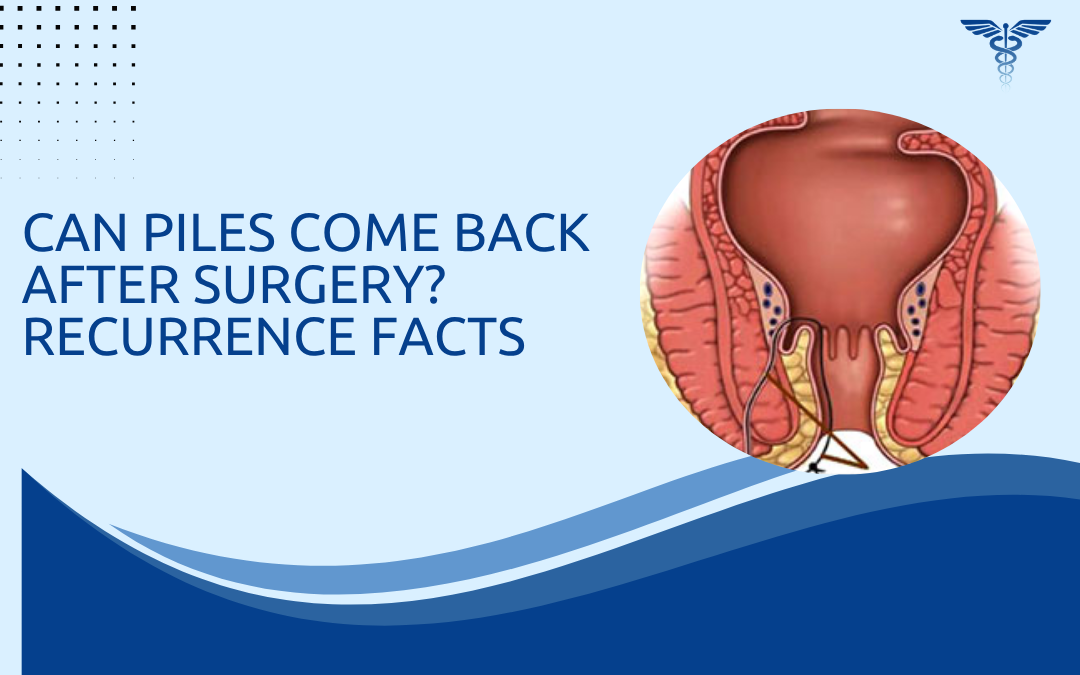
Yes piles can recur after surgery. Recurrence rates vary significantly by procedure. Conventional haemorrhoidectomy has the lowest recurrence at 2% to 5% over five years. Stapled haemorrhoidopexy recurs in 8% to 26% of cases depending on technique and grade treated. Laser treatment recurrence depends heavily on whether the correct grade was matched to the procedure. The underlying causes of piles including chronic constipation and straining drive recurrence regardless of how well the surgery itself was performed.
According to Dr. Rajeev Premnath,renowned General and Laparoscopic Surgeon in Bangalore “Surgery removes existing haemorrhoids but doesn’t change the conditions that created them. Recurrence is almost always a lifestyle and dietary failure not a surgical one.”
That distinction matters. Blaming surgery for recurrence when constipation never got addressed is the wrong diagnosis. And it leads to repeat procedures that fail the same way the first one did.
What Are the Actual Recurrence Rates and Why Does It Happen?
Numbers first. Then the reasons. Most patients asking whether piles come back are really asking two questions. How likely is it and what controls that likelihood.
- Procedure recurrence rates. Conventional haemorrhoidectomy 2% to 5% at five years. Stapled haemorrhoidopexy 8% to 26%. Rubber band ligation 10% to 45% over extended follow-up. Laser treatment 5% to 20% depending on grade matched to procedure. The more tissue removed definitively the lower the recurrence rate generally.
- Chronic constipation not addressed. Straining during every bowel movement is the most consistent driver of haemorrhoid formation and recurrence. Surgery removes the swollen tissue but the pressure causing it keeps being applied. Without a high fibre diet and adequate hydration the conditions that created the original piles keep creating new ones.
- Grade mismatch at first surgery. Stapled haemorrhoidopexy done on grade four haemorrhoids that needed conventional haemorrhoidectomy produces higher recurrence rates than the same procedure done on the appropriate grade three case. Wrong procedure for the grade is a surgical recurrence driver separate from lifestyle factors.
- Incomplete tissue removal. Residual haemorrhoidal tissue left at the original procedure enlarges over time. This is more common with rubber band ligation and laser for higher grade disease than with conventional haemorrhoidectomy which removes the tissue definitively by design.
Surgery is not a permanent fix if the lifestyle doesn’t change alongside it. That’s the honest truth that most patients don’t hear clearly enough before discharge. Recurrence isn’t inevitable. But it’s not prevented by surgery alone.
Patients wanting to understand which surgical procedure has the best recurrence outcomes for their specific grade should look at the full piles treatment page before deciding on a procedure.
What Actually Prevents Piles Recurring After Surgery?
Prevention is practical. Not complicated. The patients who don’t have recurrence in long term follow-up have these four things in common consistently.
- High fibre diet permanently. Soft formed stools that pass without straining are the single most important long term prevention factor. Fruits, vegetables, whole grains and adequate fluid intake daily. Not for a few weeks post-surgery. Permanently. This is the lifestyle change that surgical recurrence prevention actually requires.
- No prolonged toilet sitting. Sitting on the toilet for extended periods reading a phone is one of the most consistent haemorrhoid development behaviours across all patient groups. Five minutes maximum. Respond to the urge immediately rather than delaying. Prolonged sitting creates sustained rectal venous pressure that drives haemorrhoidal tissue formation over months.
- Healthy weight management. Excess body weight creates sustained increased intra-abdominal pressure throughout the day. Patients who lose weight after haemorrhoid surgery have measurably lower recurrence rates than those who don’t. Not a coincidence. Basic anatomy and pressure mechanics.
- Annual proctological review. Early grade one recurrence caught at a scheduled review gets managed with dietary changes and topical treatment. The same recurrence missed for a year comes back as grade three needing another procedure. One annual check prevents a lot of unnecessary repeat surgery.
The bottom line nobody says clearly enough. Surgery fixes the current problem. Lifestyle fixes the cause. Both together is what actually prevents recurrence long term. One without the other is a temporary solution at best.
Anyone wanting to understand whether their current piles have reached the stage where surgery is actually needed or whether conservative management still applies should read this older piece on whether piles always need surgery which answers that directly.
Why Choose Dr. Rajeev Premnath?
Dr. Rajeev Premnath is a General and Laparoscopic Surgeon with over 20 years treating piles at every grade and managing recurrent cases after previous procedures elsewhere. MBBS, MS General Surgery, FRCS Glasgow, trained at IRCAD France. Advanced laser and proctology training completed. Head of Day Care Surgery, Ramakrishna Group of Hospitals.
Patients who leave with a clear dietary plan and an annual review date don’t come back with recurrence. Those who leave with just a discharge summary and no lifestyle guidance come back in two years with grade two piles and the same diet they had going in.
Call +91 90082 04466 to book your consultation.
Book your consultation today for the right treatment and a plan to prevent piles recurrence after surgery.
FAQs
What is the recurrence rate after conventional haemorrhoidectomy?
Conventional haemorrhoidectomy has the lowest recurrence rate at 2% to 5% over five years making it the most definitive surgical option available.
Why do piles come back after stapled haemorrhoidopexy more often?
Stapled haemorrhoidopexy has higher recurrence rates of 8% to 26% because it repositions rather than removes haemorrhoidal tissue leaving more residual tissue over time.
Can diet alone prevent piles from recurring after surgery?
Diet is the most important prevention factor but weight management, avoiding prolonged toilet sitting and annual review all contribute equally to long term recurrence prevention.
Is repeat surgery always needed if piles recur after a previous procedure?
Not always, early grade one or two recurrence often responds to dietary changes, topical treatment and lifestyle modification without needing another surgical procedure.