

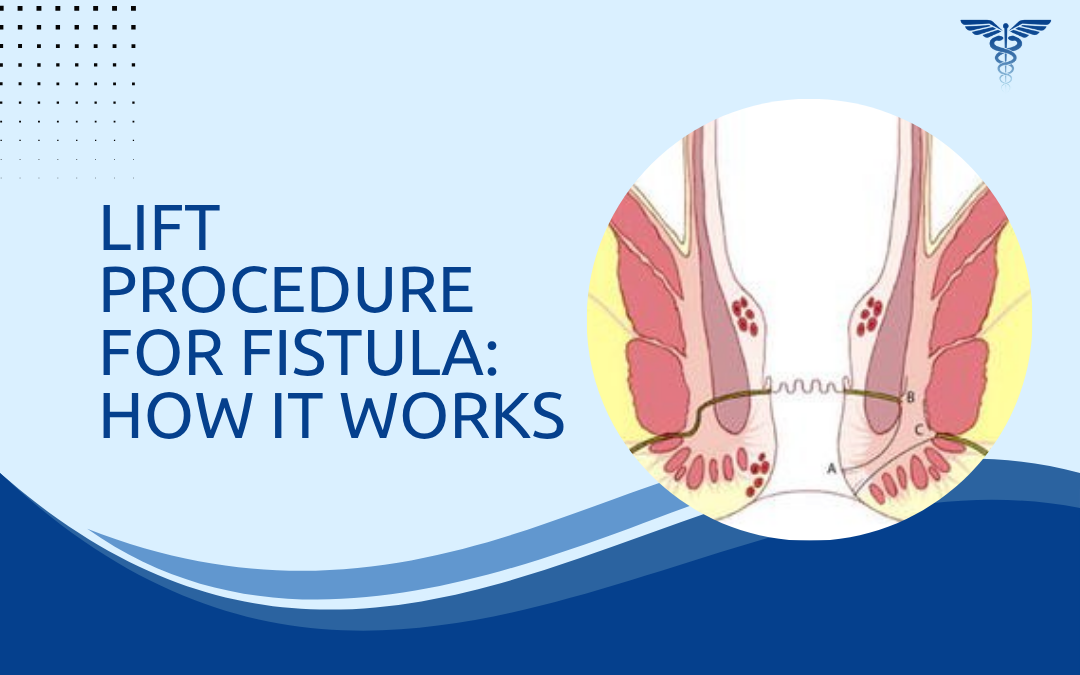
LIFT stands for Ligation of the Intersphincteric Fistula Tract. It treats trans-sphincteric anal fistulas by accessing the tract between the internal and external sphincter muscles, dividing and ligating it there, then curetteing the remaining tract. No sphincter muscle gets cut. Success rates range from 57% to 94% depending on tract complexity. Recurrence risk is lower than fistulotomy for high tracts and continence is preserved making it the preferred sphincter-saving option for complex fistulas.
According to Dr. Rajeev Premnath, fistula treatment, “LIFT is the procedure of choice for trans-sphincteric fistulas where cutting the sphincter would risk incontinence because it closes the tract without touching the muscle at all.”
Getting the fistula properly mapped before choosing a procedure is what determines whether LIFT is suitable or whether a different approach fits the anatomy better.
How Does the LIFT Procedure Actually Work Step by Step?
LIFT is more precise than most patients expect. No large incisions. No sphincter division. The whole thing happens in the intersphincteric plane which most people have never heard of until they’re sitting in a fistula consultation for the first time.
- Access. A small incision is made in the intersphincteric groove, the natural space between the internal and external sphincter muscles. This gives direct access to the fistula tract where it passes through that plane without disturbing either sphincter muscle at all.
- Ligation. The fistula tract is identified, carefully dissected free in the intersphincteric plane and then ligated at both ends with sutures. Closing it off here cuts the blood supply to the tract and stops the infection pathway at its most accessible point.
- Curettage. The remaining outer portion of the tract beyond the ligation point is scraped out through the external opening using a curette. Dead infected tissue gets cleared. The internal opening closes from the ligation. The external opening heals from inside out over weeks.
- No sphincter involvement. That’s the whole point of the LIFT approach. The sphincter muscles are identified, retracted gently and kept completely out of the operative field throughout. Continence rates after LIFT are significantly better than after conventional fistulotomy for high tracts.
Recovery is faster than most patients expect for a procedure that sounds technically involved. Most go home the same day. Wound care at home for several weeks while the external opening heals.
Patients wanting to understand the full range of fistula surgical options beyond LIFT should look at fistula treatment which covers every approach from seton placement through to VAAFT depending on tract anatomy.
Who Is LIFT Suitable For and What Are the Limitations?
LIFT isn’t for every fistula. The anatomy has to be right. And being honest about when it doesn’t suit a case is more useful than overselling it as a universal solution.
- Best candidates. Trans-sphincteric fistulas with a clearly defined single tract passing through the intersphincteric plane are the ideal LIFT candidates. The tract needs to be mature, fibrotic and well defined on MRI mapping before surgery is planned.
- Where it struggles. Horseshoe fistulas, multiple branching tracts or cases with active infection and significant inflammation at the time of surgery all reduce LIFT success rates considerably. Seton placement first to drain infection and mature the tract often improves LIFT outcomes in these situations.
- Recurrence rate reality. Published success rates vary from 57% to 94% and that wide range reflects how much tract complexity and patient factors influence outcomes. Simple well-defined tracts in otherwise healthy patients do significantly better than complex presentations.
- What happens if it fails. A failed LIFT doesn’t burn bridges. The sphincter is intact. Repeat LIFT, advancement flap or VAAFT are all still available options which is exactly why sphincter preservation matters so much in the initial procedure choice.
LIFT changed the surgical management of complex fistulas because it gave surgeons a reliable sphincter-sparing option that doesn’t compromise future treatment if the first attempt doesn’t succeed.
Anyone wanting to understand how LIFT compares to VAAFT and other sphincter-saving fistula procedures should read this piece on complex fistula which covers all the options honestly without pushing any single technique as universally superior.
Why Choose Dr. Rajeev Premnath?
Dr. Rajeev Premnath is a General and Laparoscopic Surgeon with over 20 years treating anal fistulas including complex trans-sphincteric cases requiring sphincter-saving procedures. MBBS, MS General Surgery, FRCS Glasgow, trained at IRCAD France. Advanced laser and proctology training completed. Head of Day Care Surgery, Ramakrishna Group of Hospitals.
Patients who get proper MRI mapping and procedure matching before surgery get the right operation first time. Those who get fistulotomy on a high tract without sphincter assessment come back with incontinence that nobody planned for.
Call +91 90082 04466 to book your consultation.
FAQs
Are piles during pregnancy dangerous for the baby?
No, hemorrhoids during pregnancy do not affect the baby but they cause significant maternal discomfort and need proper management to prevent worsening through the pregnancy.
How long does recovery take after a LIFT procedure?
Most patients go home the same day and the external wound heals over four to eight weeks with daily wound care at home.
What is the success rate of the LIFT procedure?
Published success rates range from 57% to 94% depending on tract complexity, fistula type and patient health factors.
Can a fistula recur after LIFT and what happens next?
Yes, recurrence is possible but the sphincter remains intact so repeat LIFT, advancement flap or VAAFT are still viable options.
A proper consultation gives specific answers around your hernia size, type and health situation. Come in and speak directly with Dr. Rajeev Premnath.