

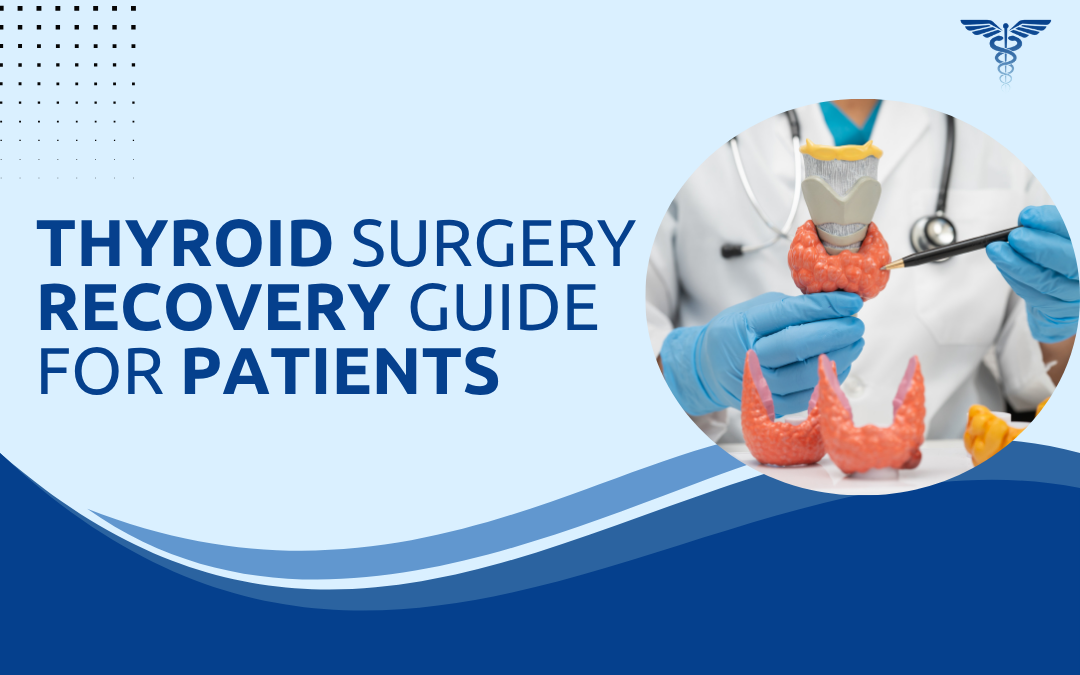
Thyroid surgery recovery takes two to three weeks for light daily activity and four to six weeks for full physical function. What catches patients off guard isn’t the wound it’s the hormone replacement dosing, transient voice changes, calcium monitoring, and fatigue that lingers beyond the first week. None of that is a complication. It’s normal physiology of a gland that controlled a lot before it was partially or fully removed. Knowing what’s coming makes the difference between a smooth recovery and an anxious one.
According to Dr. Rajeev Premnath, a trusted General and Laparoscopic Surgeon, “Most patients who’ve had a thyroidectomy feel well within days of surgery, but the hormonal adjustment takes longer and pushing the recovery too quickly is where complications tend to show up.”
What Happens to the Body in the First Week After Thyroid Surgery?
The first week involves anaesthesia recovery, wound healing, and early hormonal change simultaneously that’s why it demands rest, not resumption of normal activity.
- Voice and swallowing changes: Hoarseness in the first few days results from temporary nerve irritation during dissection and resolves within one to two weeks in most patients. Persistent hoarseness beyond three weeks needs formal evaluation.
- Calcium levels drop: After total thyroidectomy, temporary hypoparathyroidism causes tingling around the mouth, fingertips, and muscle cramps. Calcium and vitamin D supplements start immediately after surgery, with blood levels checked before discharge.
- The wound: A small neck incision heals cleanly. Patients can shower after 24–48 hours once the dressing is removed. Avoid direct sun exposure on the scar for at least three months to prevent hyperpigmentation.
- Fatigue: Most patients hit a wall around day four or five when anaesthesia clears completely. Plan for five to seven days of genuine rest at home.
The first follow-up is typically five to seven days post-surgery, when calcium levels, wound healing, and voice are all assessed together. For minimally invasive options, see our thyroid surgery procedures page.
How Do Patients Manage Thyroid Hormone and Long-Term Recovery?
After total thyroidectomy, thyroxine replacement starts immediately and needs regular dose adjustments for the first few months.
- Thyroxine timing: Levothyroxine must be taken on an empty stomach, 30–60 minutes before breakfast. Calcium supplements, iron tablets, and coffee all block absorption correct timing directly affects how stable TSH results are.
- TSH stabilisation: The pituitary takes four to six weeks to respond to new hormone levels. Dosing decisions are best made at six weeks, not earlier chasing small fluctuations before then creates more instability.
- Returning to activity: Desk work and light walking from week one; driving at 10–14 days once neck stiffness settles; gym, swimming, and heavy lifting after six weeks. Cancer surgery patients should confirm with their surgeon before resuming vigorous activity.
- When to call the surgeon: Sudden breathing difficulty, rapidly worsening neck swelling, severe voice loss after initial improvement, or persistent tingling despite calcium supplements contact the surgeon immediately, don’t wait for the scheduled follow-up.
Hormone levels typically stabilise within three months, and annual blood monitoring is standard for life after any thyroidectomy. Patients who’ve had a recent FNAC can read more about how thyroid lump diagnosis works before surgery is decided.
Why Choose Dr. Rajeev Premnath?
Dr. Rajeev Premnath is a General and Laparoscopic Surgeon with over 20 years of experience, holding MS (Gen Surg.), FRCS (Glasg), FEBS, FICS, FACS, FIAGES, and FMAS, with international training at IRCAD France and the National University of Health, Singapore. He heads the Day Care Surgery Department at Ramakrishna Specialty Hospital, Bangalore, and specialises in minimally invasive thyroid surgery designed around faster recovery and same-day discharge where clinically appropriate.
Patients don’t come worried about the operation they come worried about what happens after. Voice, scarring, tablets for life, feeling normal again. Those are the conversations that matter most, and they get direct answers here.
Recovering from thyroid surgery and unsure if what you’re experiencing is normal?
FAQs
How long does it take to recover from thyroid surgery?
Most patients resume light activity within one to two weeks and full recovery by four to six weeks.
Will my voice change permanently after thyroidectomy?
Temporary hoarseness is common; persistent voice change beyond three weeks needs formal assessment.
Do I need to take tablets for life after thyroid surgery?
Yes, after total thyroidectomy, daily levothyroxine replacement is lifelong with regular TSH monitoring.
What is the tingling feeling after thyroid surgery?
Tingling around the mouth or hands usually signals low calcium from temporary parathyroid disturbance.