

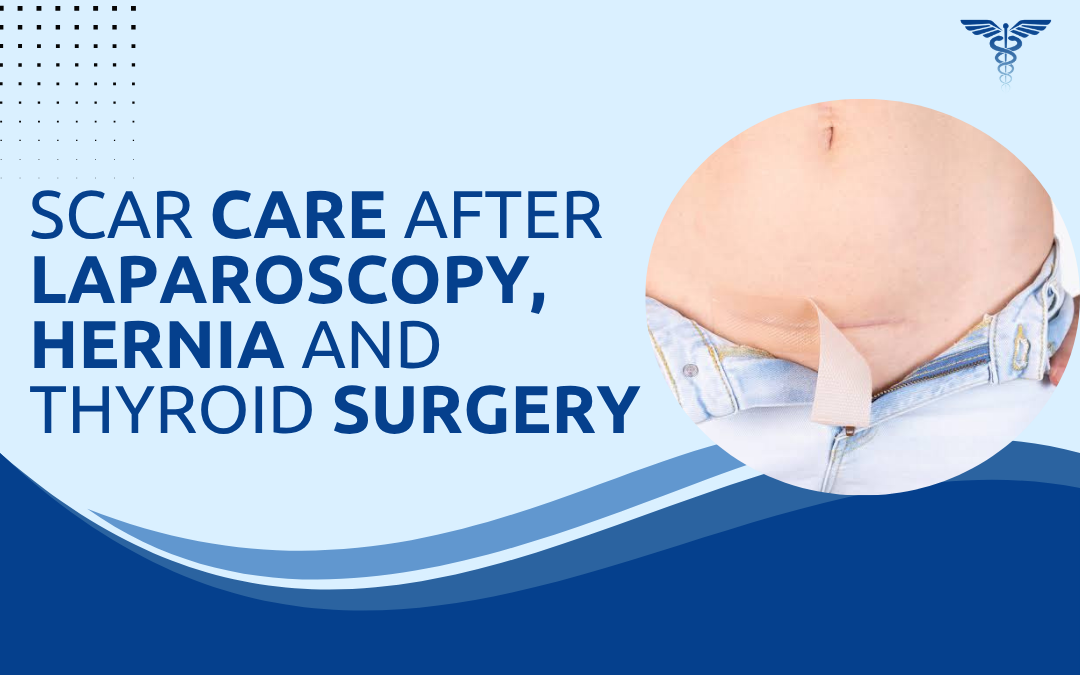
Scars don’t finish forming when the wound closes. There are three phases: inflammation, proliferation, and remodelling, and remodelling runs for up to 18 months. Most patients do two weeks of wound care and walk away. That’s the mistake. A port site on the abdomen heals differently from a hernia incision, and both heal differently from a thyroid neck scar. Location, tension, sun exposure and how the wound was closed all change what the scar needs. Generic advice misses most of that.
According to Dr. Rajeev Premnath, General and Laparoscopic Surgeon in Banglore, “SPF, silicone, keep it dry for two weeks. That’s honestly most of it. But patients skip all three and then wonder why the scar looks the way it does six months later. The closure method matters too; skin glue vs stitches changes what the early care looks like, and most patients aren’t told that.”
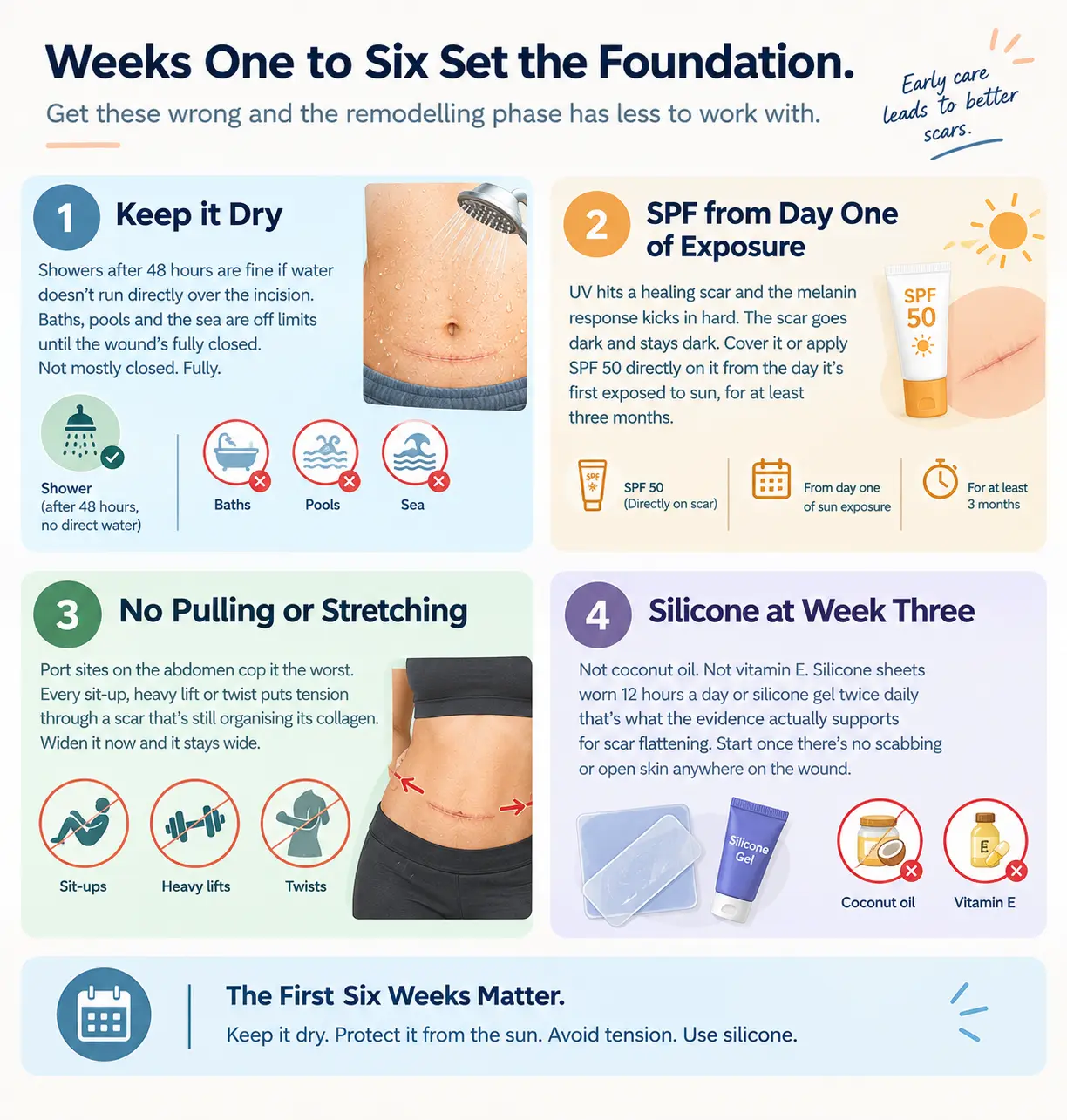
What Does Scar Care Look Like in the First Six Weeks After Surgery?
Skin glue wounds work a bit differently in those first days. The piles treatment in Bangalore guide is worth reading if that’s how your wound was closed.
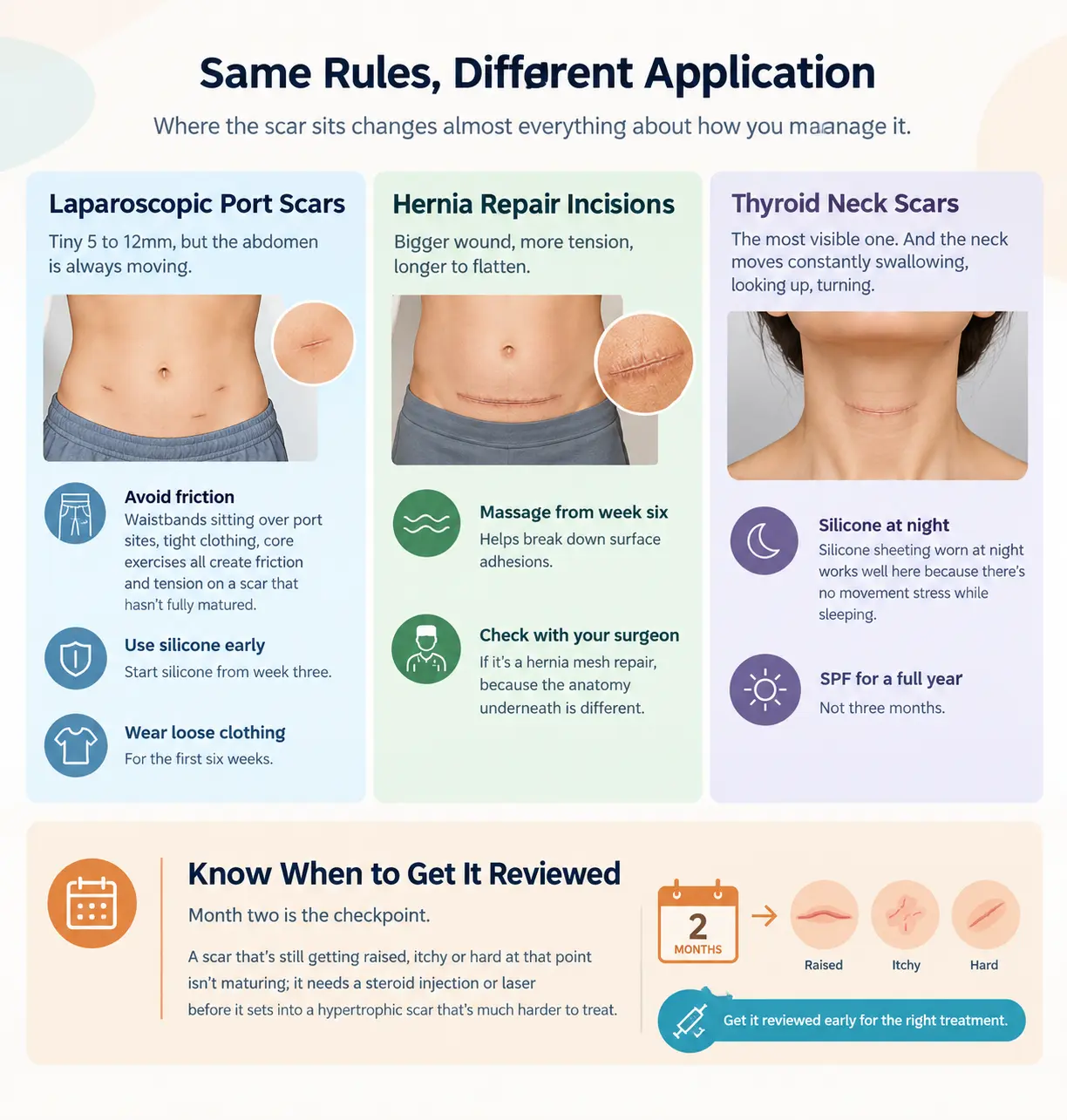
How Do Laparoscopic, Hernia and Thyroid Scars Differ in Their Care Needs?
Patients who’ve had a thyroid operation should read the thyroid surgery recovery guide. Neck scar care sits alongside calcium and hormone management in those first weeks, and it’s easy to lose track of one while managing the other.
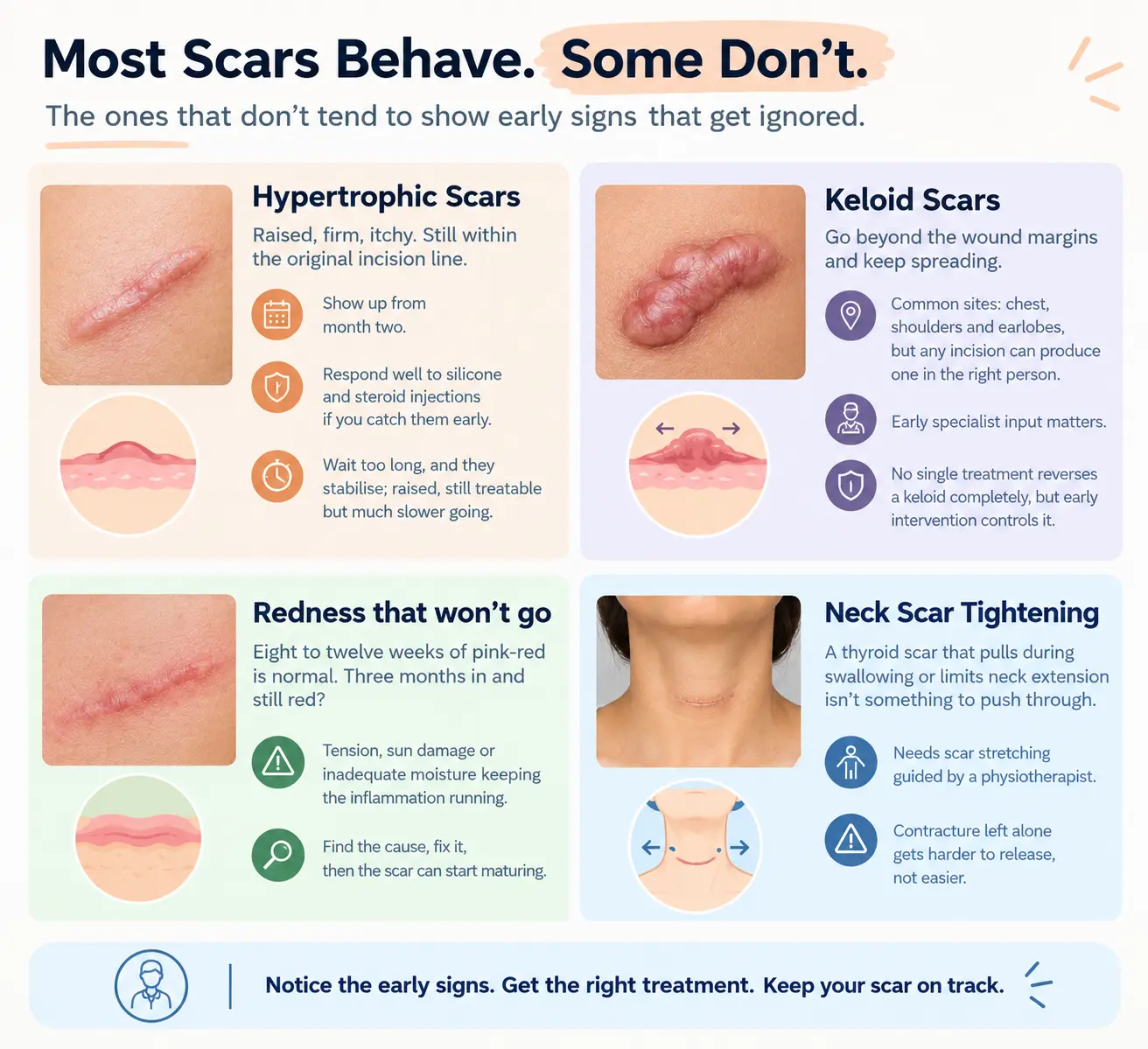
When Does a Surgical Scar Need More Than Standard Aftercare?
Catch problems early, and the options are good. Most complications that become hard to treat started as early signs that were ignored, and a day care inguinal hernia surgery is far simpler before a hernia grows.
Key Takeaways
- Scar remodelling runs for 12 to 18 months. Two weeks of wound care and stopping is where most patients go wrong.
- SPF 50 on any scar exposed to sun from the first day of exposure, for at least three months. Neck scars need a full year.
- Silicone gel or sheets from week three. Not creams, not oils. Silicone is what the clinical evidence actually supports.
- Laparoscopic, hernia, and thyroid scars have different care needs. A neck scar and a port site are not the same problem.
- Month two is the checkpoint. A scar getting worse at that point needs review not more waiting.
- The closure method changes the early aftercare. Skin glue and sutured wounds are managed differently in the first ten days.
Noticing a thickened, raised or darkening scar after your surgery?
FAQs
How long does a surgical scar take to fully heal?
Most surgical scars reach their final appearance between 12 and 18 months after the operation.
When can I start using silicone on my surgical scar?
Once the wound surface is fully closed with no open areas or scabbing, usually from week three onwards.
Why is sun protection important for a surgical scar?
UV exposure on a healing scar triggers permanent hyperpigmentation SPF 50 should be applied for at least three months post-surgery.
What does a hypertrophic scar look like after surgery?
It’s raised, firm, itchy and stays within the original incision margins unlike a keloid, which spreads beyond them.