

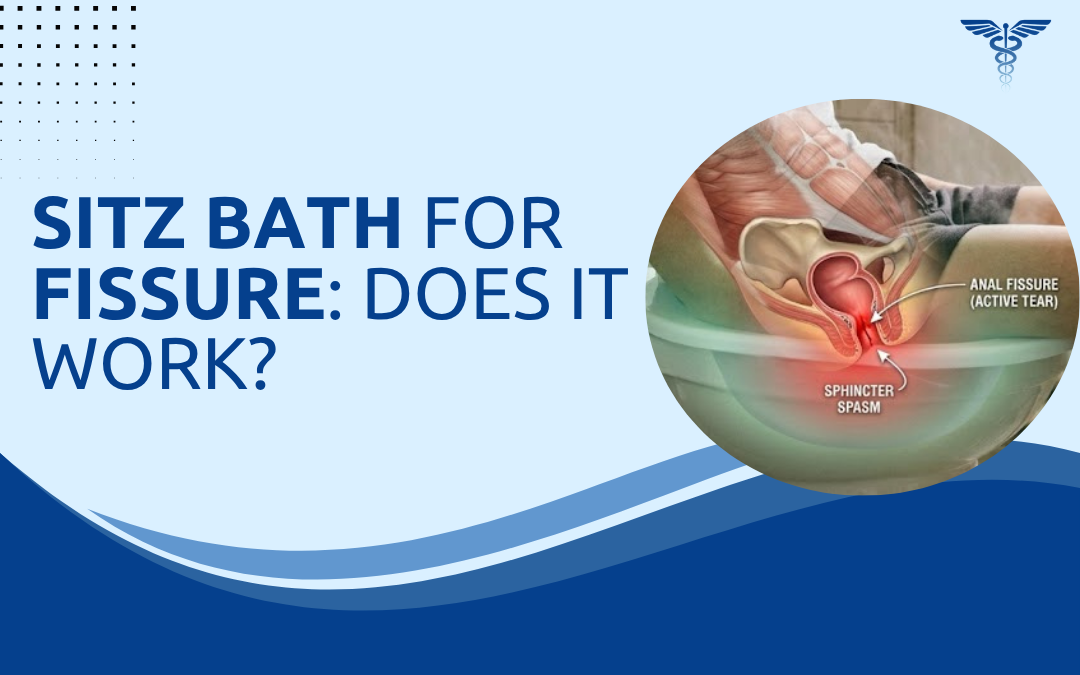
Sitz baths work for anal fissures, but within defined limits. Warm water soaking reduces internal sphincter spasm, improves blood circulation to the wound base, and lowers pain enough to break the fear-of-defaecation cycle that makes fissures worse. For acute fissures, consistent sitz baths alongside dietary correction resolve a meaningful proportion of cases without any medication. Chronic fissures with elevated sphincter tone get symptomatic relief but rarely heal on sitz baths alone.
According to Dr. Rajeev Premnath, a trusted fissure specialist in Bangalore, Sitz baths are one of the most underused tools in fissure management. Patients skip them because they seem too simple. But sphincter relaxation and improved local blood supply are exactly what an acute fissure needs to close.
How Does a Sitz Bath Actually Help a Fissure?
It’s not a placebo. Warm water produces specific physiological effects that directly support fissure healing.
- Sphincter relaxation: Local warmth causes reflex relaxation of the internal anal sphincter, dropping resting anal pressure. Same target as topical GTN and diltiazem, different mechanism, no headache side effect.
- Improved blood supply is the most underappreciated benefit. Poor vascularity at the wound base is why fissures stall. Warm water dilates local vessels and drives perfusion into tissue that needs it to close.
- Post-defaecation pain: Spasm after a bowel movement can last hours. A sitz bath started immediately after shortens it, reduces pain intensity, and breaks the stool-withholding cycle that keeps making things worse.
- Wound hygiene: Soaking cleans the perianal area without wiping trauma. Repeated mechanical abrasion at the fissure edge resets local inflammation every time. Sitz baths remove that insult during the healing window.
Symptoms persisting beyond two to three weeks need clinical reassessment. Consult a specialist for fissure treatment before the acute presentation becomes chronic.
When Is a Sitz Bath Not Enough for a Fissure?
Sitz baths support healing conditions. They don’t correct what’s actively preventing it.
- Chronic fissures: Beyond six to eight weeks, scar tissue has formed and the sphincter is in sustained elevated-tone spasm. Warm water drops tone briefly. It can’t reverse fibrosis or produce the sustained relaxation a chronic fissure needs.
- When resting anal pressure stays high despite conservative measures, topical GTN or diltiazem is the next step. If both fail, Botox injection or lateral internal sphincterotomy is where the pathway goes.
- Recurrent fissures: A fissure returning after apparent healing has an underlying driver, constipation, Crohn’s disease, or subclinical infection, that sitz baths aren’t equipped to address.
- Post-surgical cases: Altered anatomy and fibrosed tissue from a previous repair respond differently. Sitz baths help with post-operative comfort but don’t drive wound closure the way they do in a virgin acute fissure.
No improvement after two to three weeks is a clear signal to escalate. Our previous blog on fissure surgery covers what the surgical pathway involves and what to expect from it.
Why Choose Dr. Rajeev Premnath?
Dr. Rajeev Premnath is a General and Laparoscopic Surgeon with MBBS, MS (Gen Surg.), FRCS (Glasg.), FEBS, FICS, FACS, FIAGES, FMAS, and a Diploma in Laparoscopy from France. Over 20 years at Ramakrishna Super Speciality Hospital, managing fissures from the first conservative step through to LIS, with the treatment matched to what the clinical picture calls for rather than what’s quickest.
Conservative treatment gets a full and structured trial before any procedure is considered. When it doesn’t produce results, the reason is investigated before surgery is scheduled.
Fissure pain after every bowel movement and not sure what actually helps?
FAQs
Does sitz bath help heal an anal fissure?
Yes, it reduces sphincter spasm and improves blood flow, supporting natural healing in acute fissures.
How long should a sitz bath be taken for a fissure?
Ten to fifteen minutes in warm water after each bowel movement is the standard recommended duration.
Can sitz bath alone cure a chronic fissure?
No. Chronic fissures with elevated sphincter tone usually need topical medication or surgical intervention.
What water temperature should be used for a sitz bath?
Warm water between 37 and 40 degrees Celsius. Hot water worsens inflammation and increases discomfort.
Disclaimer:
This blog is for educational and informational purposes only and should not be considered professional advice.