

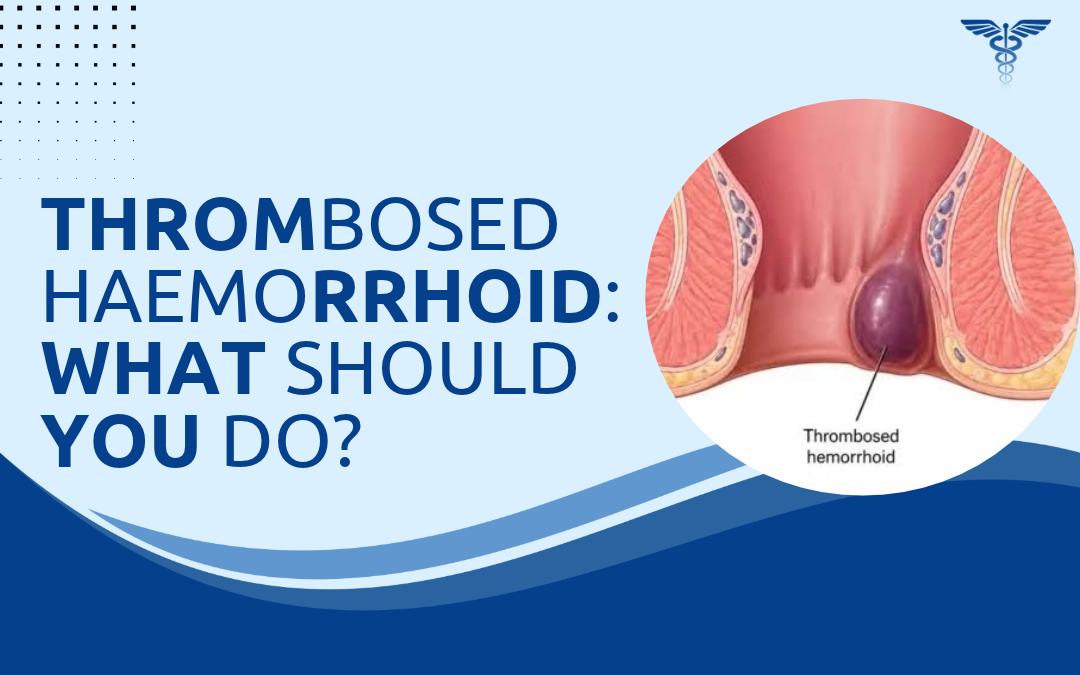
A thrombosed haemorrhoid is a blood clot inside an external haemorrhoid it causes sudden, severe pain and a firm, tender, purple-blue lump at the anal margin. Pain peaks within the first forty-eight to seventy-two hours before gradually easing. It isn’t dangerous, but the pain makes sitting, walking, and passing stool very difficult. The decision between conservative management and excision depends on when it’s seen and how much pain it’s causing.
According to Dr. Rajeev Premnath, a General and Laparoscopic Surgeon in Bangalore, “A thrombosed haemorrhoid is one of the most painful things a patient walks in with. Within the first forty-eight hours, if the pain is severe, I offer excision under local anaesthetic as a quick procedure for immediate relief. By day four or five, the worst has usually passed,and the clot is organising, making excision technically harder. At that stage, conservative treatment makes more sense, and it will resolve, just more slowly.”
What Causes a Thrombosed Haemorrhoid and What Does It Feel Like?
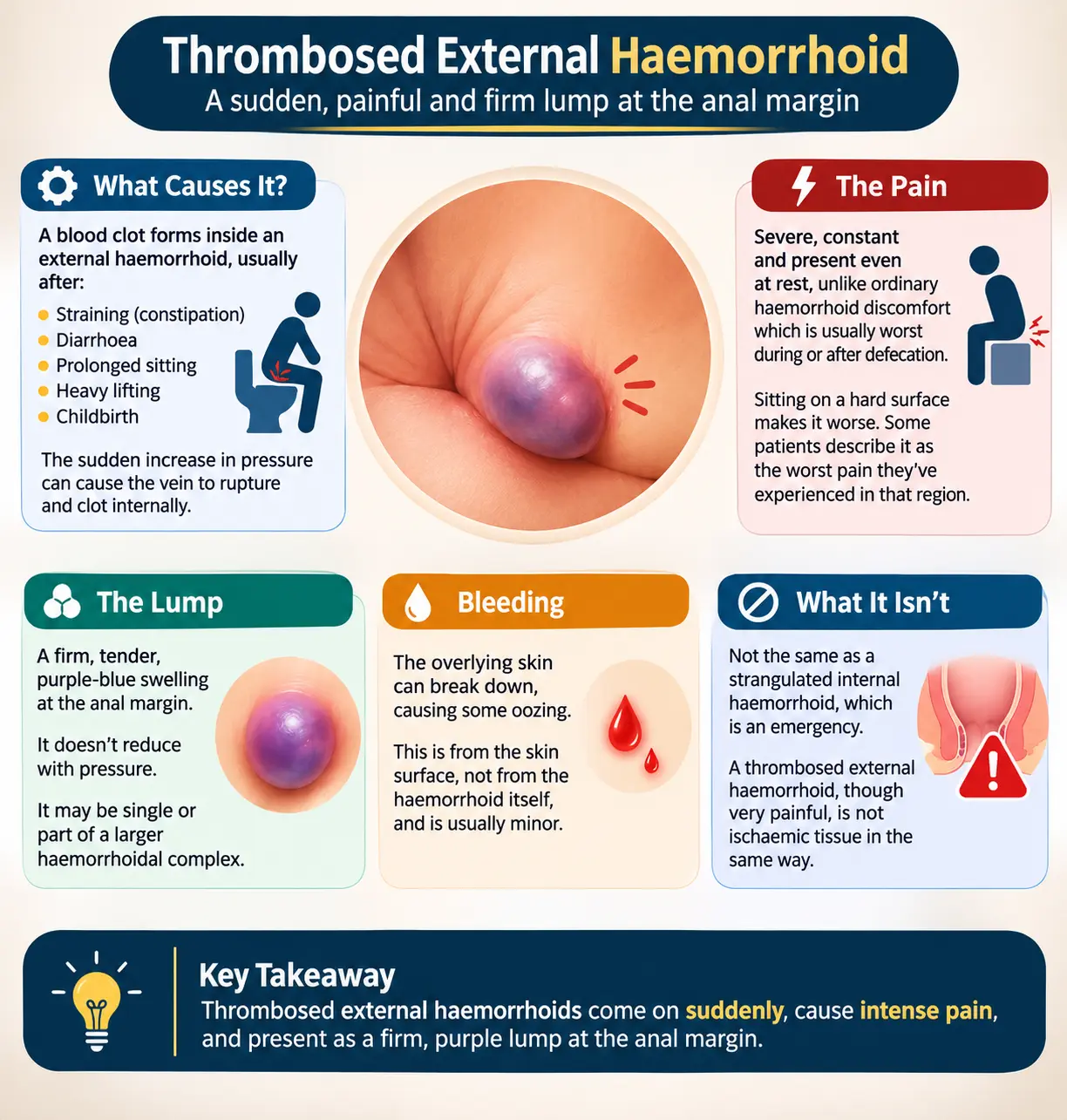
For a detailed look at the different types of piles and what a full examination involves, our piles treatment section covers everything you need to know before a consultation.
What Are the Treatment Options?
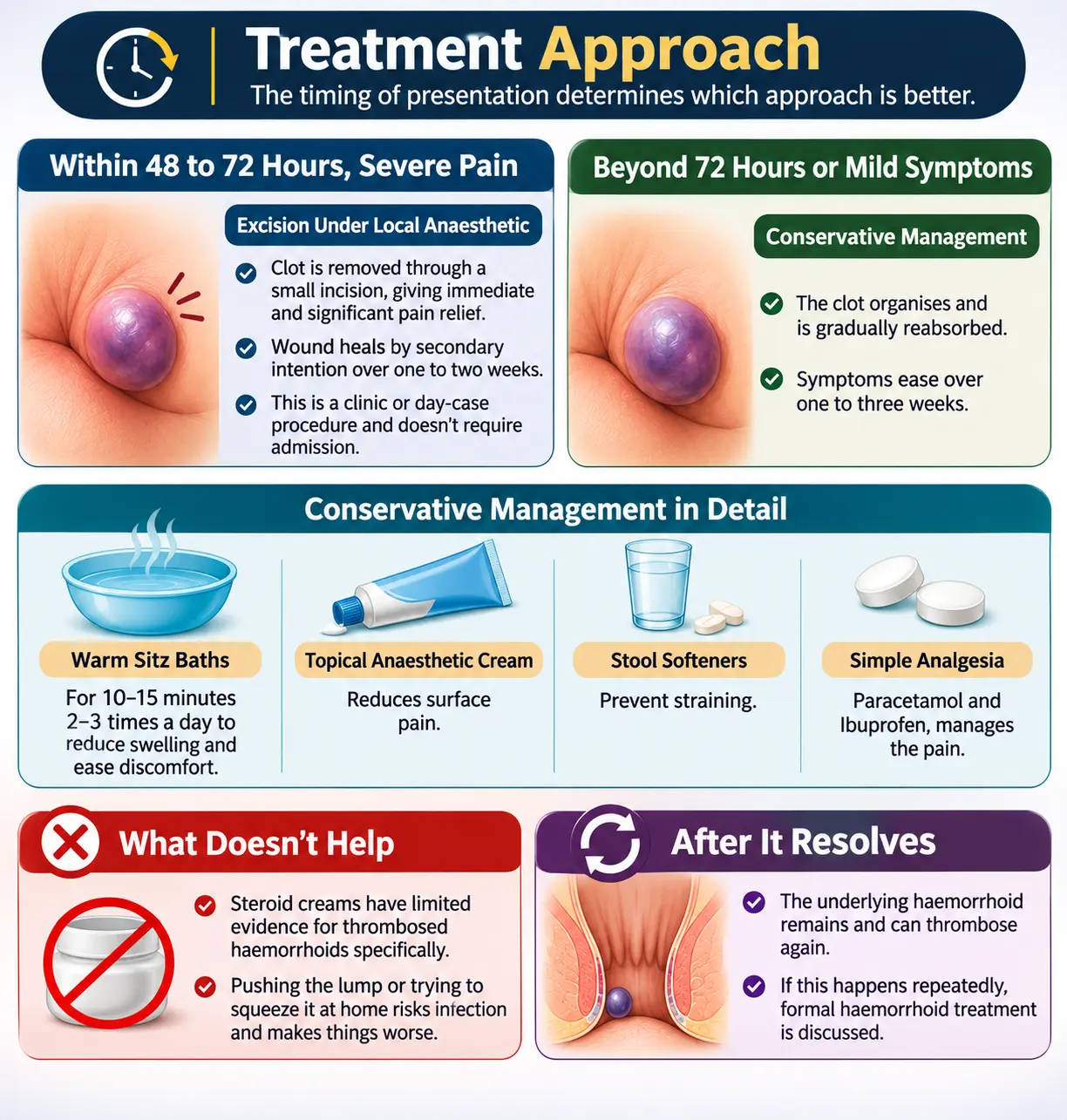
Our blog on can piles come back after laser treatment covers what happens to the underlying haemorrhoid once the acute episode has settled.
What Determines the Right Treatment Approach?
The timing, the severity and the patient’s overall health all go into the decision.
- Time since onset: Within forty-eight to seventy-two hours and severe pain, excision gives the best result. Beyond that window, the clot has begun to organise and excision is technically harder with less benefit over conservative treatment.
- Severity of pain: Patients with mild to moderate pain, or those who present late but are coping, are managed conservatively. Patients in severe pain who can’t sit or work are offered excision regardless of exact timing if the clot is still soft.
- Pregnancy: Thrombosed haemorrhoids are common in the third trimester and postpartum. Conservative management is first line. Excision under local anaesthetic can be done in pregnancy if pain is severe and unresponsive to conservative treatment.
- Anticoagulants: Patients on warfarin, rivaroxaban or similar need their anticoagulation discussed before excision. Conservative management is preferred where anticoagulation cannot be safely paused.
Sudden severe pain and a hard lump near the back passage?
FAQs
How long does a thrombosed haemorrhoid last?
Pain peaks in the first two to three days and gradually eases over one to three weeks with conservative management. Excision within seventy-two hours speeds recovery significantly.
Should I go to hospital for a thrombosed haemorrhoid?
If the pain is severe and within the first forty-eight to seventy-two hours, yes. Excision under local anaesthetic gives immediate relief. After that window, conservative management at home is usually sufficient.
Can a thrombosed haemorrhoid burst on its own?
The overlying skin can break down and release some clot, which temporarily eases the pain. This is not the same as a formal excision and the haemorrhoid still needs to be assessed.
Will a thrombosed haemorrhoid go away without treatment?
Yes, over one to three weeks with conservative management. The clot is gradually reabsorbed, though the underlying haemorrhoid remains.