

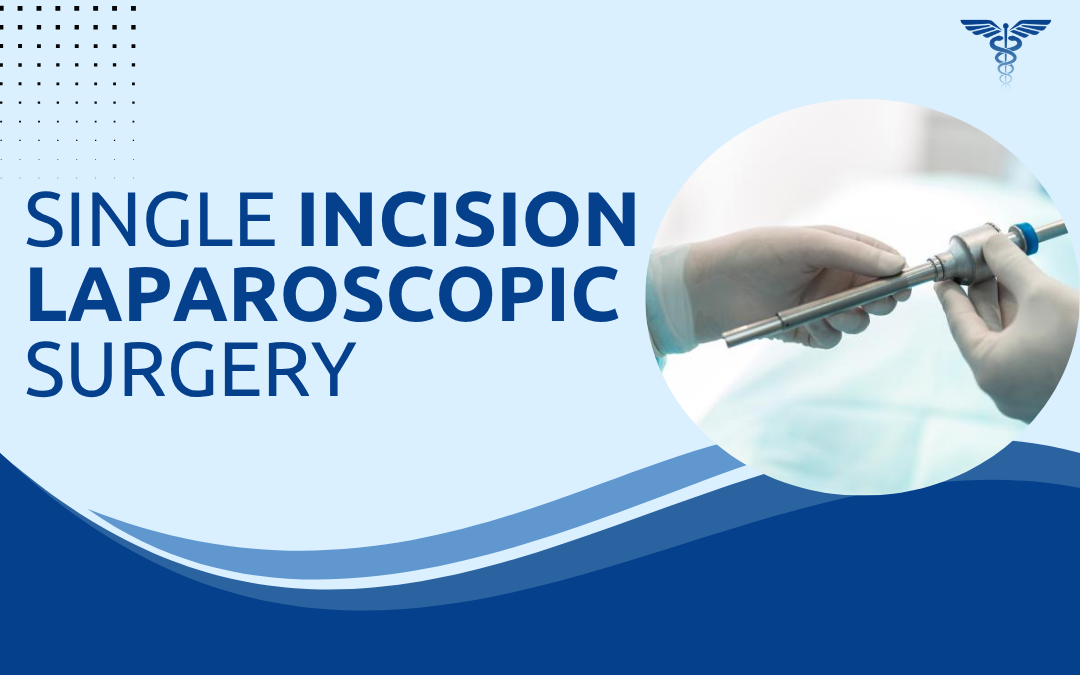
Single incision laparoscopic surgery performs the same operation as standard laparoscopy through one umbilical incision instead of three to five. Everything enters and exits the same point. No visible scar once healed. The steps don’t change. The geometry does, and that’s what makes it significantly more demanding to perform well.
According to Dr. Rajeev Premnath, a Leading Laparoscopic Surgeon in Bangalore, SILS is technically more demanding than standard laparoscopy because all the instruments crowd through one entry point and the usual triangulation is gone. Getting trained for it specifically is what separates a surgeon who can do it safely from one who just attempts it.
How Does SILS Differ From Standard Laparoscopic Surgery?
The operative goal doesn’t change. The geometry, instruments, access point, and technical demands on the surgeon all do.
- Port count: Standard laparoscopy uses three to five incisions. SILS uses one umbilical port for everything. Smaller total wound area despite the single cut being slightly larger than any individual standard port.
- Triangulation loss: Standard ports let instruments approach the target from different angles. SILS removes that. Everything enters from the same point, instruments clash, working angles are restricted. Articulating instruments help but don’t fully compensate.
- Cosmesis: Incision heals inside the navel. No visible marks anywhere on the abdominal wall. The only SILS advantage with no surgical tradeoff.
- Conversion rate: Five to ten percent of cases need one or two extra ports to finish safely. Converts to standard laparoscopy, not open surgery. Patients are told before every case.
SILS requires specific training before it can be offered safely. Our previous blog on laparoscopic surgery covers what laparoscopic surgeons do and when they are needed.
Who Is Suitable for SILS and What Is It Used For?
Case selection is everything. Right patient, works well. Wrong patient, it just makes an operation harder with no benefit to show for it.
- Procedures performed: Cholecystectomy is the most common SILS case. Appendectomy, hernia repair, and selected colorectal procedures are also done via single incision in experienced centres.
- Patient selection: BMI under 35, no prior surgery leaving dense adhesions, no active inflammation at the operative site. Each criterion directly affects how workable the single access point is intraoperatively.
- Who it isn’t for: Multiple prior abdominal operations, active infection, very large organs, or complex anatomy. Imaging and assessment determine candidacy. Not patient preference.
- Recovery: Same-day discharge for most cases. Light activity within one to two weeks. Single incision doesn’t change internal operative steps or healing timeline.
SILS outcomes depend on surgeon training and case volume more than any other factor. Our previous blog on hernia surgery covers the day surgery versus inpatient decision for laparoscopic hernia repair.
Why Choose Dr. Rajeev Premnath?
Dr. Rajeev Premnath completed dedicated SILS training at the National University Hospital, Singapore, and holds MBBS, MS (Gen Surg.), FRCS (Glasg.), FEBS, FICS, FACS, FIAGES, FMAS, and a Diploma in Laparoscopy from France. Over 20 years at Ramakrishna Super Speciality Hospital performing single incision cholecystectomy, appendectomy, and hernia repair alongside the full standard laparoscopic caseload every week.
Patient selection drives every SILS decision here. If the clinical picture doesn’t support it, the conversation ends there regardless of what the patient came in expecting.
Fissure that keeps coming back despite treatment?
FAQs
What is single incision laparoscopic surgery?
SILS is a minimally invasive technique using one umbilical incision for all instruments, leaving no visible scar after healing.
How is SILS different from standard laparoscopic surgery?
Standard laparoscopy uses three to five ports. SILS uses one umbilical incision, eliminating triangulation and leaving no visible scar.
Which operations can be performed with SILS?
Gallbladder removal, appendectomy, hernia repair, and selected colorectal procedures in appropriately assessed patients.
Is every patient suitable for single incision laparoscopic surgery?
No. BMI, prior abdominal surgery, inflammation, and organ size all influence candidacy. A surgical assessment determines suitability.
Disclaimer:
This blog is for educational and informational purposes only and should not be considered professional advice.