

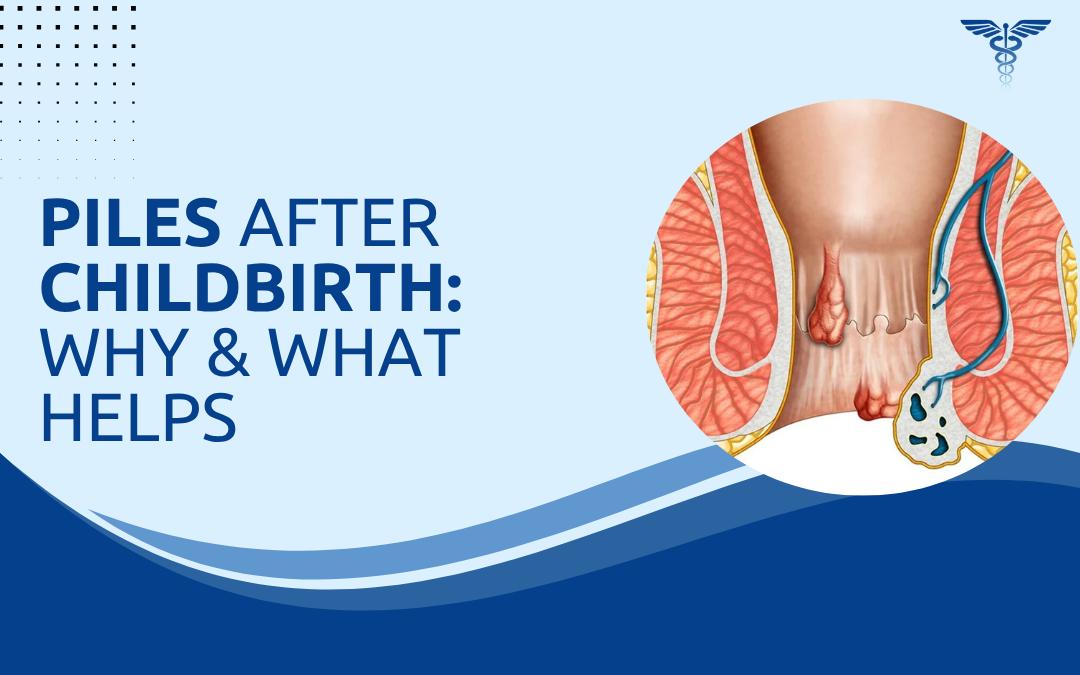
Piles after delivery are swollen blood vessels in the rectum and anus that develop due to the physical pressure of pregnancy and intense pushing during labour, frequently worsened by postpartum constipation. Postpartum hemorrhoids affect nearly 25 to 35 percent of women during the first six weeks after childbirth. Symptoms include pain, bleeding, itching, and visible swelling around the anal region. Most cases resolve on their own within a few weeks and can be managed with at-home care like fibre intake, hydration, sitz baths, and stool softeners. Persistent bleeding or prolapse needs clinical evaluation.
According to Dr. Rajeev Premnath, a trusted name in piles treatment in Bangalore, Postpartum piles aren’t rare, and most resolve with proper fibre intake and stool softeners, but bleeding that lasts beyond six weeks or visible prolapse always needs clinical assessment.
Why Do Piles Develop After Childbirth?
Pregnancy and labour pile pressure on the pelvic veins for months, and the rectal area takes the hit.
Vein Pressure: Months of carrying a growing uterus presses down on pelvic veins constantly. Walls weaken. So by the time labour adds its own strain, those vessels are already half-stretched and ready to swell.
Pushing Strain: That second-stage pushing forces blood into anal vessels at pressures most women never experience otherwise, and once the veins balloon outward, some of them just don’t snap back.
Hormonal Shifts: Progesterone slows gut muscles right through pregnancy and well past delivery, leaving new mothers fighting constipation for weeks when their body’s still trying to recover.
Postnatal Strain: Pain meds make stools harder. Dehydration makes it harder still. And limited movement after birth means every bowel trip becomes a battle, which is exactly when piles flare.
Symptoms usually hit peak around the first two weeks and start easing once bowel habits get back to normal.
For mothers with swelling that just won’t go down or visible external lumps, an experienced proctologist can check whether it’s settling naturally or needs proper intervention.
What Helps Postpartum Piles Actually Heal?
Healing comes down to three things: less pressure, softer stools, less inflammation. Right combination depends on how bad it is.
|
Severity Stage |
What Helps Most |
|
Mild (Grade 1) |
Fibre intake, hydration, sitz baths |
|
Moderate (Grade 2) |
Topical creams, stool softeners, lifestyle correction |
|
Persistent (Grade 3) |
Rubber band ligation or laser treatment |
|
Severe (Grade 4) |
Surgical intervention |
Fibre Load: Hitting 25 to 30 grams of fibre a day through fruits, oats, lentils, and vegetables makes stools softer and stops the straining that keeps those veins puffed up.
Warm Soaks: Ten to fifteen minutes in a warm sitz bath, a few times daily. It calms the spasm, eases the swelling. Simple, and it actually works.
Topical Care: Prescription creams with local anaesthetic or hydrocortisone shrink the swelling and dull the pain, but they aren’t a long-term answer, which is why doctors weigh whether laser treatment for piles makes sense for cases that just don’t settle.
Movement: Once the second postpartum week hits, gentle walking keeps blood moving, stops it pooling in pelvic veins, and gets the gut working faster than lying in bed ever will.
If you’re breastfeeding, double-check every cream and oral medication for lactation safety before using it.
For mothers wondering whether what they’re seeing is something worse than piles, reading up on the difference between rectal prolapse and prolapsed piles can sort out a routine flare-up from something that needs surgery.
Why Choose Dr. Rajeev Premnath?
Dr. Rajeev Premnath is a General and Laparoscopic Surgeon and Proctologist with more than 20 years of clinical experience. He trained in minimal access surgery across France, Italy, and Germany, performed Karnataka’s first VAAFT procedure, and currently heads a Day Care Surgery department.
Postpartum patients get treatment that actually fits their life breastfeeding safety, recovery time around a newborn, and what a sleep-deprived mother can realistically follow. No generic protocols. No unnecessary procedures.
Swelling or bleeding still bothering you weeks after delivery?
FAQs
Do postpartum piles go away on their own?
Yes, most mild cases resolve within four to six weeks after delivery.
Are piles more common after vaginal delivery or C-section?
Vaginal delivery has higher risk due to pushing and pelvic pressure.
Can I use piles cream while breastfeeding?
Some creams are safe, but always confirm with your doctor first.
When should I see a doctor for postpartum piles?
Consult if bleeding, pain, or swelling persists beyond six weeks postpartum.