

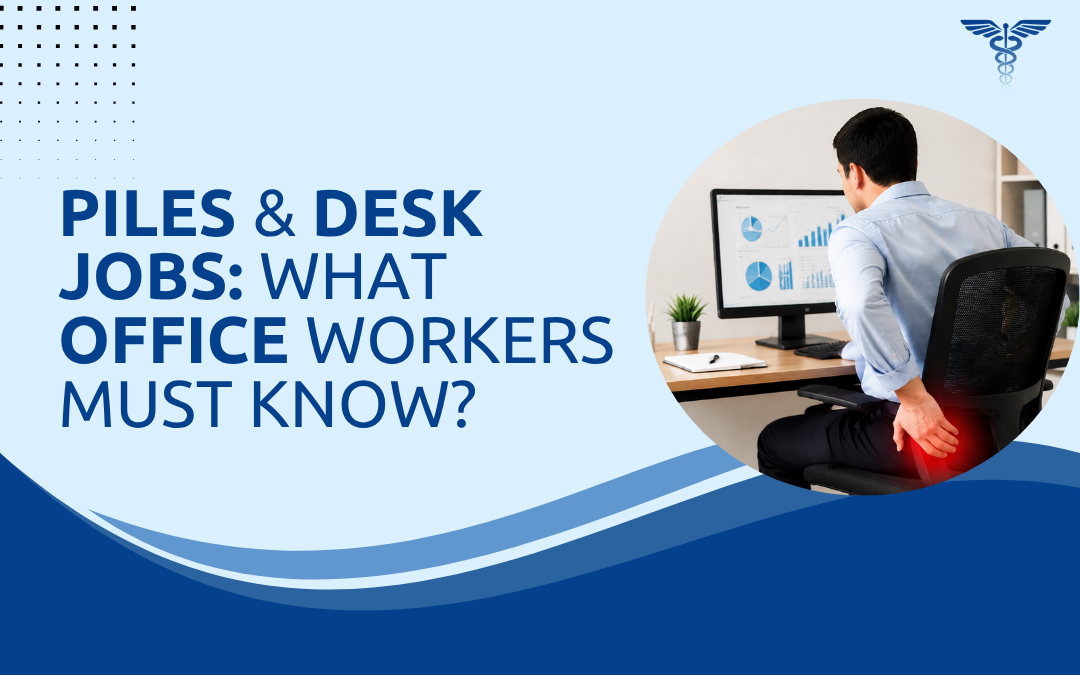
Prolonged sitting in desk jobs heavily raises the risk of piles, also called hemorrhoids. Sitting for hours puts steady pressure on the rectal veins, slows blood flow and lets blood pool in the area, which weakens the surrounding muscles and anal cushions. Office workers can cut this risk through hourly movement breaks, a proper seat cushion, plenty of water and a high-fibre diet. Skipping fibre, holding back bathroom visits and slouching at the desk make things worse. That’s why piles show up so often in people who work seated jobs.
According to Dr. Rajeev Premnath, a trusted name in piles treatment in Bangalore, Most desk workers I see don’t realise their chair time is the actual culprit. They blame food first. The blood pooling from continuous sitting is what really sets the process off.
Why does sitting for long hours cause piles?
Steady pressure on the pelvic floor and rectal area chokes the blood return, and that’s the main mechanical reason piles show up in office workers.
Pressure buildup: Sitting squeezes the perianal veins for hours on end, and that nonstop squeeze wears down the vein walls, which eventually start to bulge out.
Poor circulation: Blood flow to your lower body drops sharply once you’re parked in a chair, so fluid and waste end up gathering around the rectal tissue instead of moving along.
Strained posture: Slouching or leaning forward adds extra weight on the belly, which then pushes down on the rectal veins, and honestly, most people never catch themselves doing it.
Bathroom delay: Holding it in because of back-to-back meetings dries out the stool and forces you to strain later.
Movement beats fancy chairs every time. A quick walk every 45 minutes isn’t optional if you want to skip hemorrhoid treatment later.
What signs should office workers watch for?
Early symptoms usually feel small, but brushing them off lets the condition slide into the painful, bleeding stage.
Bleeding: Bright red blood on toilet paper or in the bowl is usually the first sign people notice, and it doesn’t hurt, which is why folks shrug it off.
Itching: A nagging itch around the anal area, mostly by evening, often means internal piles are slipping a bit through the day.
Lump feeling: A small swelling near the anus that pops up and disappears, sometimes after bowel movements, means the hemorrhoids are starting to prolapse.
Discomfort: A dull ache or heavy feeling while you’re seated that eases up when you stand. Classic desk worker thing.
Anything lasting more than a week needs a proctologist’s look. Sitting it out just stretches the timeline.
For more on similar anorectal conditions, see Rectal Prolapse vs Prolapsed Piles.
Why Choose Dr. Rajeev Premnath?
Dr. Rajeev Premnath is a General and Laparoscopic Surgeon and Proctologist with 20+ years of clinical practice. He performed Karnataka’s first VAAFT surgery and trained in advanced techniques across France, Italy, Germany and Singapore. He heads the Day Care Surgery department.
Piles patients here benefit from his work in stapled hemorrhoidopexy and laser hemorrhoidoplasty, which mean faster healing and same-day discharge for most. No long hospital stays. No prolonged downtime.
Noticing bleeding or itching after long desk hours?
FAQs
Can piles go away without surgery?
Yes, early stage piles often resolve with diet, hydration and lifestyle changes.
How long does piles surgery recovery take?
Most patients return to desk work within 3 to 7 days after minimally invasive procedures.
Are piles dangerous if left untreated?
Untreated piles can progress, bleed chronically and sometimes prolapse permanently.
Can young office workers also get piles?
Yes, piles are increasingly common in adults between 25 and 40 in sedentary jobs.