

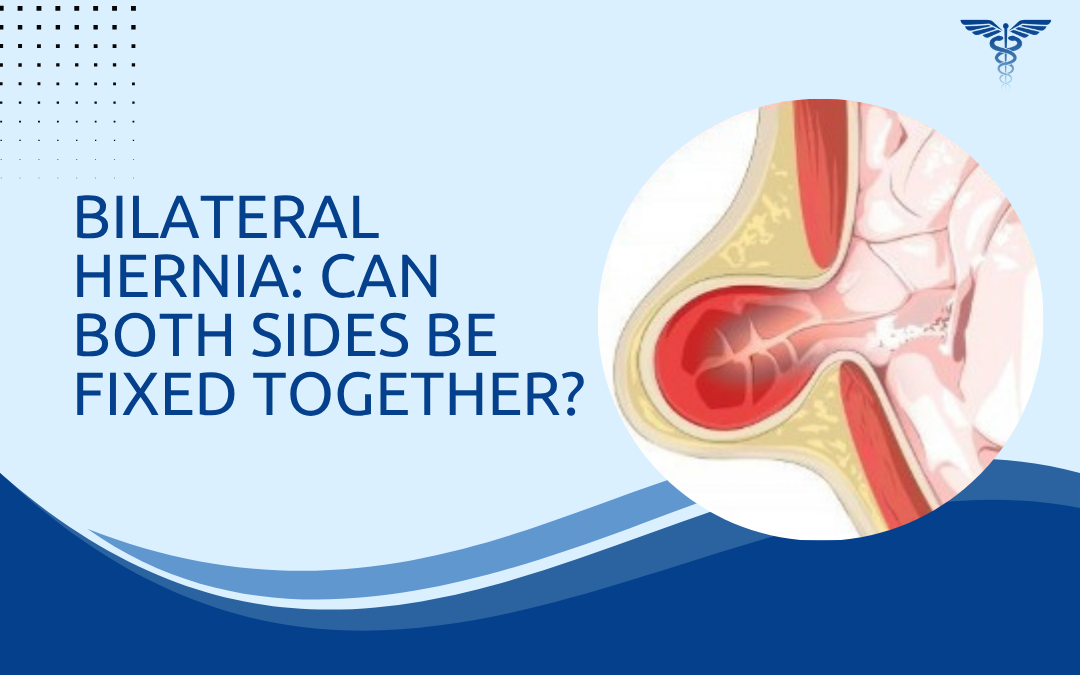
Yes. Both sides fixed in one procedure. One anaesthesia. One recovery. Home the same day in most cases. That’s genuinely what bilateral hernia repair looks like with laparoscopic surgery today. People assume fixing both sides means twice the surgery and twice the recovery. It doesn’t work that way. The laparoscopic approach accesses both sides through the same small incisions making simultaneous bilateral repair not just possible but often the preferred option.
“Bilateral inguinal hernia repair done laparoscopically in one sitting is safe, effective and significantly more convenient for the patient than two separate procedures,” says Dr. Rajeev Premnath, General and Laparoscopic Surgeon.
One surgery. One recovery. One set of restrictions to follow. For most patients with hernias on both sides that’s a much better outcome than going through everything twice.
Why Do Bilateral Hernias Get Repaired Together and How Does It Work?
The logic is straightforward. Two hernias need fixing. The laparoscopic approach already creates a working space inside the abdomen that gives the surgeon access to both sides without additional incisions. Hernia surgery done bilaterally in one sitting covers both defects, places mesh on both sides and sends the patient home once instead of scheduling a second procedure weeks later.
- Same incisions cover both sides. Laparoscopic bilateral repair uses the same two to three tiny incisions as a single side repair. The camera and instruments reach both inguinal canals from the same internal working space without any additional cuts.
- Mesh placed on both sides simultaneously. A single sheet of mesh or two separate pieces get placed to reinforce both inguinal canals at the same time and both sides are secured before the instruments come out and incisions close.
- Operating time is longer but not double. A bilateral laparoscopic repair typically takes thirty to forty minutes longer than a unilateral one. Not double the time. And the patient goes through anaesthesia once not twice which matters especially for older patients.
- Recovery is the same as single side. This is the part that surprises people most. Recovery from bilateral laparoscopic repair follows exactly the same timeline as single side repair. Walking from day two. Light activity by week two. Full clearance at six weeks.
Doing both sides together isn’t always possible for everyone. High risk patients, significant prior abdominal surgery or other complicating factors sometimes mean staged repairs make more clinical sense. But for the right patient same session bilateral repair is genuinely the smarter option.
Patients wanting to understand exactly what same day bilateral hernia repair looks like from admission through to discharge should look at day care inguinal hernia surgery which covers the whole experience honestly.
What Are the Real Advantages of Fixing Both Sides at Once?
Two procedures versus one isn’t just a scheduling preference. It has real practical consequences for the patient’s body, work, recovery and overall experience of getting this sorted.
- One anaesthesia exposure only. Every general anaesthetic carries a small risk and older patients or those with underlying health conditions benefit meaningfully from reducing that exposure to once rather than twice.
- Single recovery period. Instead of two separate six week recovery periods with all the activity restrictions that come with each one the patient goes through it once, follows the restrictions once and gets back to normal life once.
- Stops the second hernia getting worse. When one side is symptomatic the other side often gets ignored. Fixing both together stops the asymptomatic side growing larger and becoming a more complicated repair down the line.
- Cost and time efficiency. One hospital admission, one surgical fee, one set of post-operative appointments and one block of time away from work rather than doing it all twice with months in between.
Two procedures done separately isn’t automatically worse. For some patients it’s the right call. But for most healthy adults with bilateral inguinal hernias doing both in one sitting makes practical sense across every dimension that matters.
Anyone sitting on a hernia on one or both sides and still unsure whether surgery is actually necessary right now should read this piece on do all inguinal hernias require surgical intervention which gives an honest answer without pushing anyone toward unnecessary treatment.
Why Choose Dr. Rajeev Premnath?
Dr. Rajeev Premnath has spent over 20 years performing bilateral and unilateral hernia repairs including high risk and complex presentations. Every single day without exception. Trained at IRCAD in France, genuinely one of the most respected minimally invasive surgery institutions anywhere in the world. Advanced single incision laparoscopic training completed in Singapore on top of that. Hundreds of real hernia repairs done. Patients going home same day. Recovering faster than they expected every time.
Call Now: +91 90082 04466 – same day appointments available for urgent cases.
Having hernias on both sides and delaying repair of either one doesn’t make the situation simpler. One consultation tells you whether both can be fixed together and what that actually looks like for your specific situation.
FAQs
Is bilateral hernia repair more risky than fixing one side at a time?
No, laparoscopic bilateral repair in one sitting carries comparable risk to single side repair for healthy patients and avoids a second anaesthetic exposure entirely.
Does fixing both hernias together mean a longer hospital stay?
No, most bilateral laparoscopic repairs are still done as day care procedures with patients discharged the same evening just like single side repairs.
How much longer does bilateral hernia surgery take compared to one side?
Bilateral laparoscopic repair typically takes thirty to forty minutes longer than a single side repair, not double the time.
Is recovery harder after bilateral hernia repair than after single side surgery?
Recovery follows the same week by week timeline for bilateral repairs as for single side ones with full clearance expected at the six week follow-up.
A proper consultation gives specific answers around your hernia size, type and health situation. Come in and speak directly with Dr. Rajeev Premnath.
References