

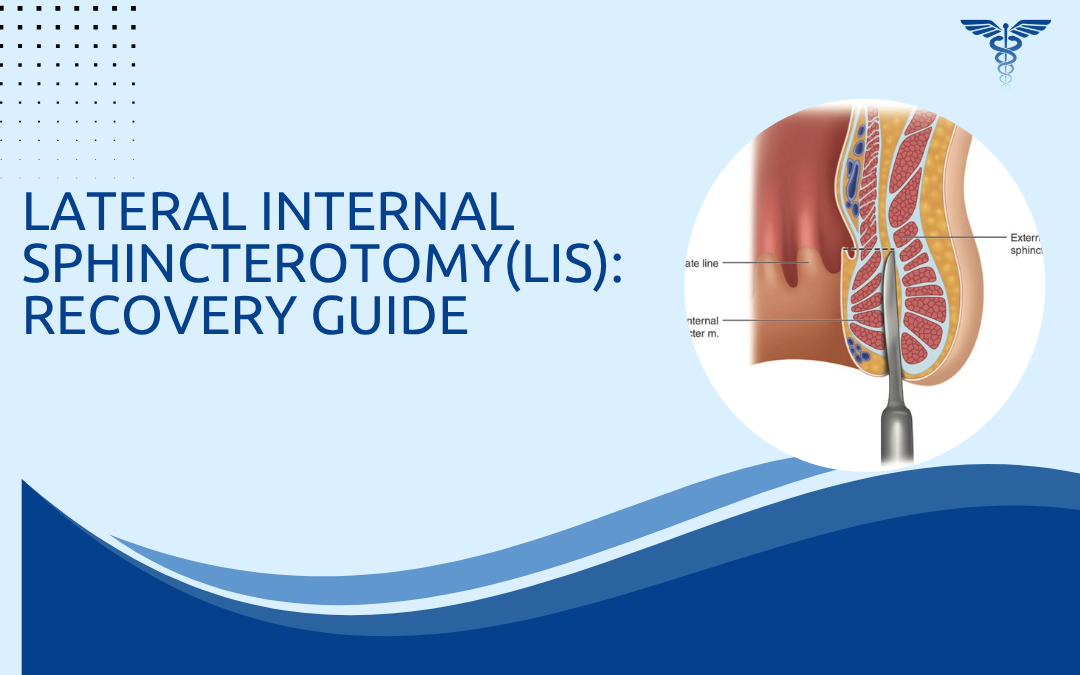
LIS recovery typically takes four to six weeks for full healing with significant pain relief within one to two weeks of surgery. The procedure divides a small portion of the internal anal sphincter to relieve the elevated tone causing chronic anal fissure. Most patients go home the same day. Pain during bowel movements reduces dramatically within the first week. Incontinence risk is under 5% when the correct amount of sphincter is divided by an experienced surgeon.
According to Dr. Rajeev Premnath, fissure treatment, “LIS gives faster and more reliable fissure healing than any medical treatment but recovery depends almost entirely on the sitz bath routine, fibre intake and avoiding straining during those first four weeks.”
Getting post-operative care right is what separates a clean four-week recovery from one that drags on with complications.
What Happens Week by Week During LIS Recovery?
The recovery timeline after LIS is more predictable than most patients expect. Pain improves faster than after almost any other anorectal procedure. But the wound still needs consistent care to reach full healing without setbacks.
- Days one to seven. Expect pain, swelling and possible minor bleeding managed with doctor-prescribed pain relief or ice packs. A small amount of blood on toilet paper is normal. Perform warm water sitz baths three times daily and after every bowel movement. Rest but take short walks to promote circulation.
- Weeks one to two. Pain reduces significantly. Most patients return to desk work during this window. Use stool softeners to prevent constipation. Gently pat the area dry after sitz baths rather than scrubbing. Baby wipes or medicated pads instead of dry toilet paper reduce irritation considerably.
- Weeks two to four. Light activities resume but avoid heavy lifting completely. Wound healing progresses steadily. The internal sphincter division site is consolidating. Straining during bowel movements is the biggest risk to recovery at this stage and high fibre intake is what prevents it.
- Weeks four to six. Full healing expected for most uncomplicated cases. Regular activity and exercise typically resume after the six week follow-up clears the patient. Fissure wound closes completely and bowel movements become consistently pain-free.
The most common reason recovery extends past six weeks is constipation and straining. One hard stool forced through a healing wound sets things back significantly. High fibre diet and fluids from day one aren’t optional.
For the complete picture of when LIS is indicated over medical management and what non-surgical fissure options look like first, see the full fissure treatment page.
What Are the Essential Precautions During LIS Recovery?
Simple rules. Consistent application. The patients who follow all of them reliably are the ones at the six week appointment who look healed and feel healed. The ones who pick and choose which precautions to follow are the ones who don’t.
- Prevent constipation actively. High fibre diet with plenty of fluids and stool softeners or laxatives if needed keeps stools soft and formed. Use a small stool to elevate feet during bowel movements to reduce straining effort. Squatting position genuinely makes a mechanical difference.
- Sitz baths three times daily. Warm water sitz baths three times daily and after every bowel movement throughout the healing period. Gently pat dry. Never scrub. Baby wipes or medicated pads like Tucks reduce irritation between sitz baths compared to standard dry toilet paper.
- Avoid heavy lifting and prolonged sitting. No heavy lifting for four weeks minimum. Get up and move every forty-five minutes when sitting. Extended sitting creates sustained direct pressure on the healing wound that slows tissue repair and increases discomfort throughout the day.
- Know when to call a doctor. Inability to urinate within eight hours of surgery, high fever, excessive or constant heavy bleeding and persistent severe pain not managed by prescribed medication all need same day contact with the surgical team. Don’t wait.
The when-to-call-a-doctor signals are not there for decoration. Urinary retention after anorectal surgery needs same day catheterisation. Fever with wound swelling means infection developing. Both need prompt attention.
This piece on top precautions after fistula surgery covers overlapping anorectal post-operative care principles including sitz bath technique and dietary management that apply across all proctological procedures.
Why Choose Dr. Rajeev Premnath?
Dr. Rajeev Premnath is a General and Laparoscopic Surgeon with over 20 years treating chronic anal fissures including complex cases requiring LIS after failed medical management. MBBS, MS General Surgery, FRCS Glasgow, trained at IRCAD France. Advanced laser and proctology training completed. Head of Day Care Surgery, Ramakrishna Group of Hospitals.
Patients who follow the protocol are pain-free at six weeks. Those who skip the sitz baths, eat dal and rice without fibre and go back to the gym at week two come back at eight weeks with a wound that hasn’t healed.
Call +91 90082 04466 to book your consultation.
FAQs
How long does full recovery from LIS take?
Full healing typically takes four to six weeks with significant pain relief already present within one to two weeks.
How many sitz baths are needed daily after LIS surgery?
Three warm water sitz baths daily and after every bowel movement are recommended throughout the four to six week healing period.
When should someone call a doctor after LIS surgery?
Call immediately if unable to urinate within eight hours, fever develops, bleeding is excessive or severe pain isn’t controlled by prescribed medication.
When can normal exercise resume after lateral internal sphincterotomy?
Light walking is fine from day one but regular exercise and heavy activity only resume after the four to six week follow-up clears it.