

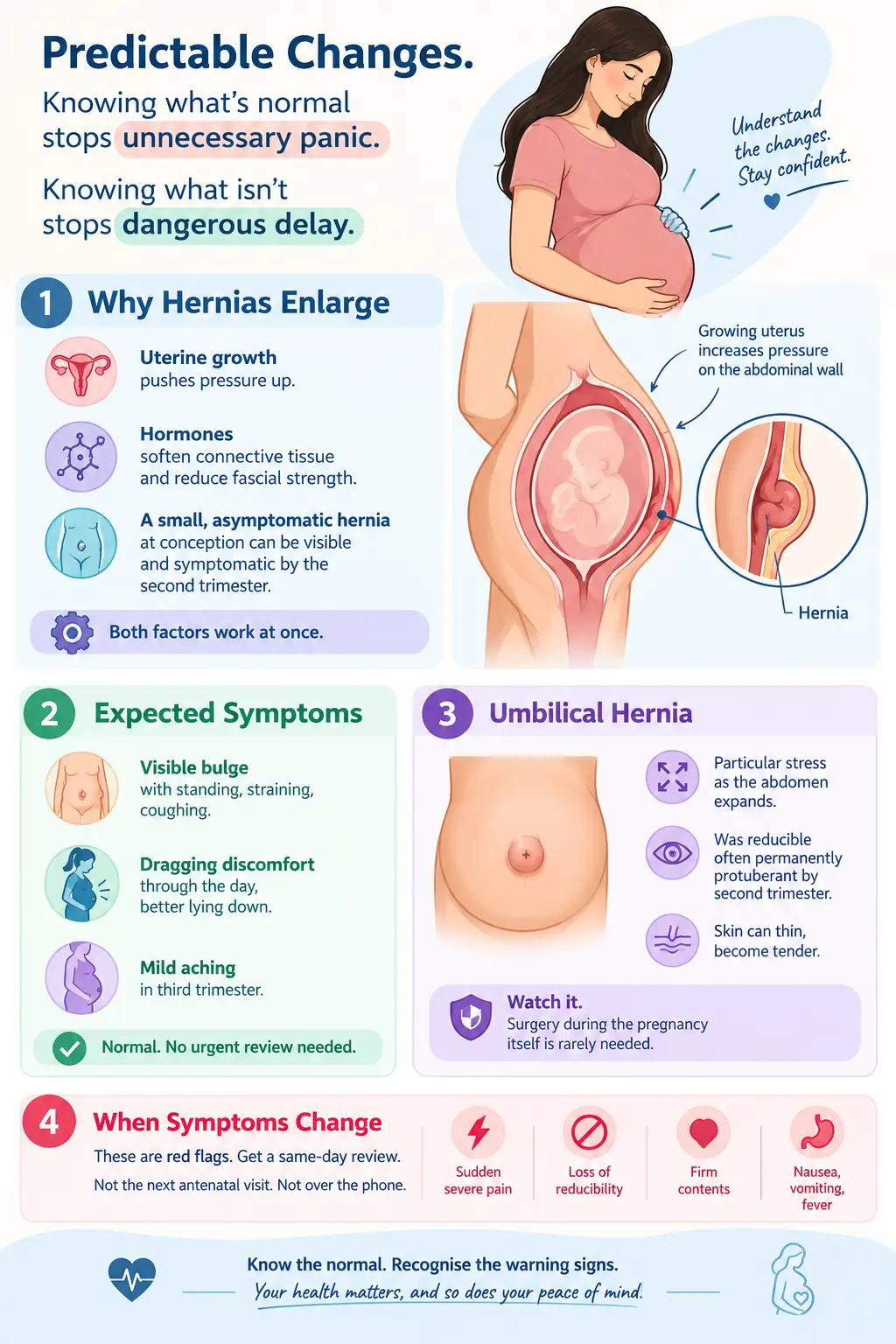
Most hernias in pregnancy don’t need surgery until after delivery. The uterus grows. Pressure rises. Hernias that were quiet get bigger. New ones show up. Umbilical and inguinal are the most common. Discomfort expected. Serious complications are not common, but they happen. Surgery stays off the table. Anaesthesia carries foetal risk. Elective repair waits. Strangulation doesn’t. That’s the one situation that operates regardless of gestation.
According to Dr. Rajeev Premnath, General and Laparoscopic Surgeon in Banglore, “Pregnant patients with a hernia are managed conservatively in the vast majority of cases. Hernia gets bigger as pregnancy progresses expected, manageable. What I tell every patient to watch for is a change. Suddenly painful. Hard. Not reducing. Vomiting alongside it. That’s not normal enlargement. Incarceration or strangulation. Same-day surgical assessment, regardless of gestation. Not a phone call. Not waiting to see if it settles.”
Who Qualifies for Antibiotic Treatment of Appendicitis?
For a full overview of hernia repair options, our hernia surgery section covers everything you need to know.
When Does a Hernia During Pregnancy Need Urgent Attention or Surgery?
Conservative management is the default. These situations end it.
- Incarceration: Contents stuck. Won’t go back. Pain persisting, swelling firm, discomfort climbing. Urgent surgical assessment. Trimester doesn’t matter.
- Strangulation: Blood supply gone. Constant severe pain, hard tender swelling, fever, vomiting, deterioration. Surgical emergency. Every hour of delay raises perforation and foetal loss risk.
- Timing if surgery is needed: Second trimester safest window. Organogenesis done, uterus not yet blocking access, preterm labour risk lower than third trimester. Emergency operations at whatever gestation. Obstetric team in throughout.
- Postpartum repair: Six to eight weeks after delivery. Wall partially recovered. Breastfeeding factors into anaesthetic planning covered at pre-operative assessment.
Most hernias reach delivery without surgery. Our blog on high risk hernia surgery covers how comorbidities affect surgical planning.
What Can a Pregnant Patient With a Hernia Do to Manage Symptoms?
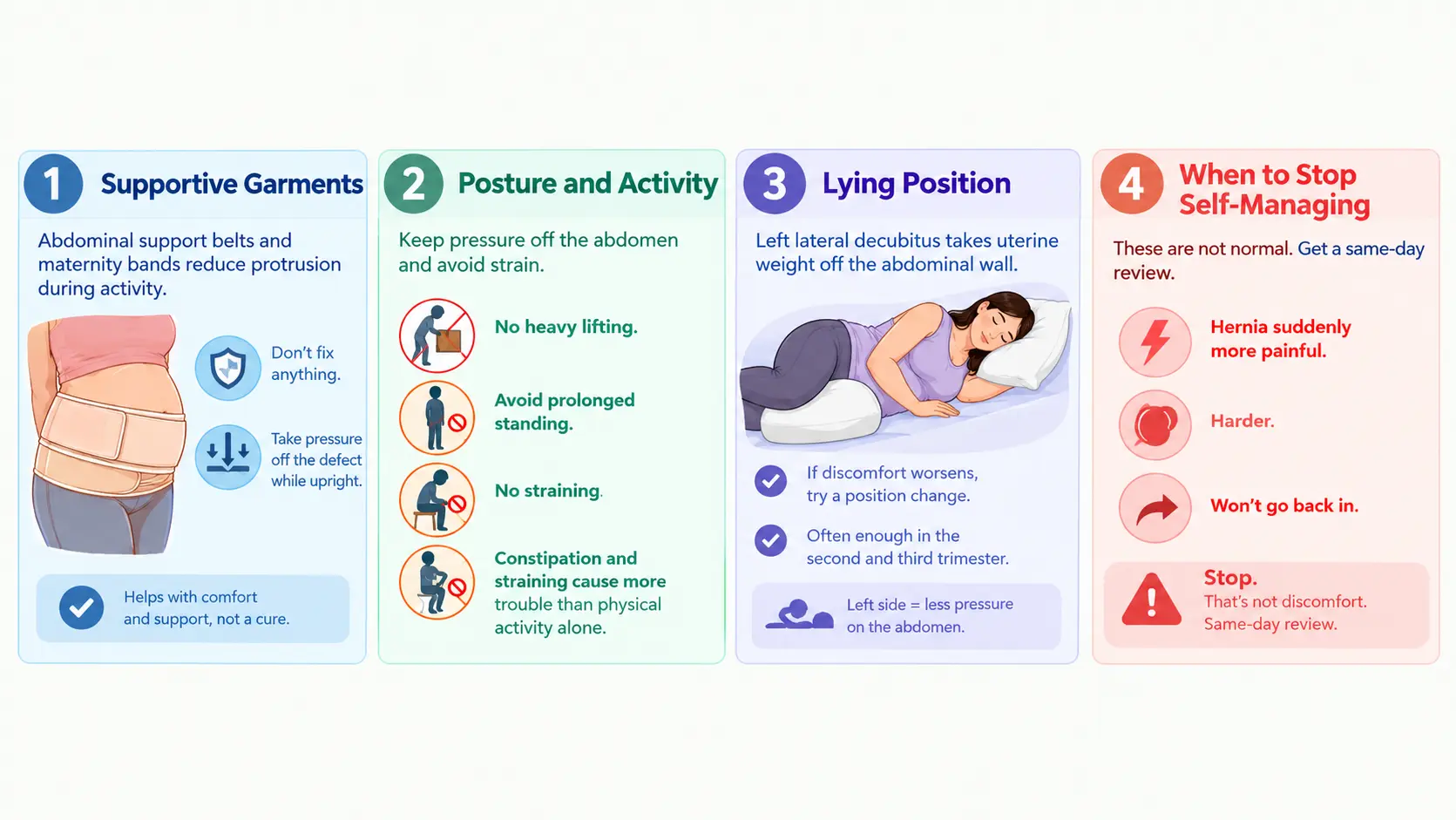
Symptoms stay predictable and manageable with these rarely escalate. Our blog on recurrent hernia after repair covers what happens when hernias become more complex over time.
Key Takeaways
- Most hernias in pregnancy are managed conservatively and repaired after delivery
- Gradual enlargement with mild discomfort is expected sudden pain, firmness, loss of reducibility are not
- Strangulation is a surgical emergency at any gestation waiting is not an option
- Second trimester is the safest window if emergency surgery is unavoidable
- Elective repair planned at six to eight weeks postpartum once the abdominal wall has recovered
- Supportive garments, activity modification, and bowel management reduce symptoms without intervention
Hernia causing pain or changing in appearance during pregnancy?
FAQs
Can a hernia be operated on during pregnancy?
Only if absolutely necessary. Strangulation or incarceration that won’t resolve. Elective repair waits until after delivery in almost all cases.
Is it normal for a hernia to get bigger during pregnancy?
Yes. Pressure and hormonal changes drive it. Gradual painless growth is expected.
What hernia symptoms during pregnancy need urgent attention?
Sudden severe pain, loss of reducibility, firm tender swelling, fever, or vomiting. Same-day surgical review for any of these.
When is hernia repair done after pregnancy?
Six to eight weeks postpartum. Abdominal wall partially recovered, patient medically stable.